Charity Mudarikwa
BY MUNYARADZI BLESSING DOMA
A Mashonaland East entrepreneur has credited the First Lady Dr Auxillia Mnangagwa’s gastronomy programme, for inspiring her to champion traditional foods for healthier living, further boosting her business.
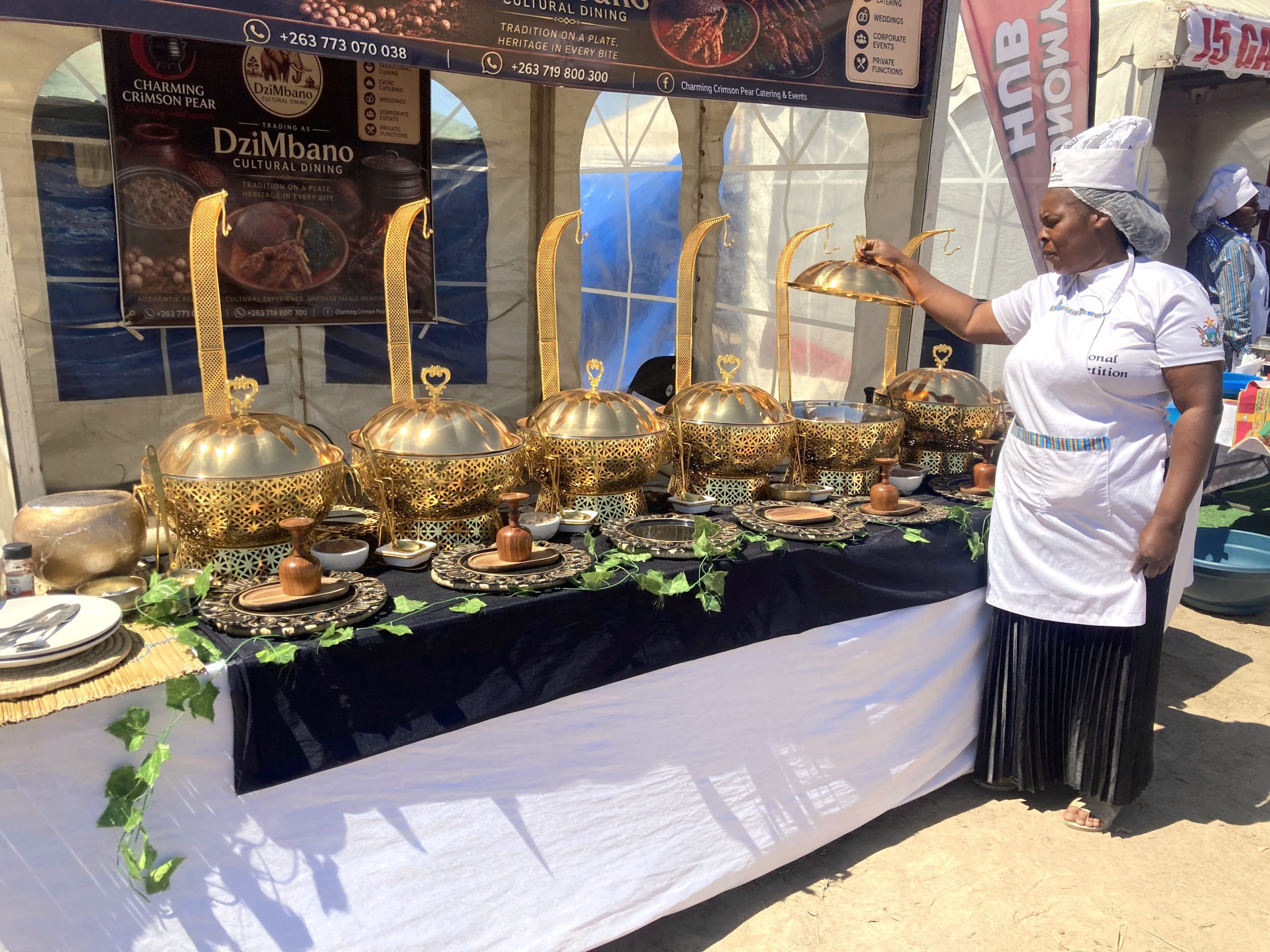
Charity Mudarikwa, the founder of Charming Crimson Pear, said participating in Amai’s Traditional Cook-Out Competitions, motivated her to expand into the traditional food business.
Mudarikwa was speaking on the sidelines of the recently held Sanganai/Hlanganani Dzimbabwe 2026 World Tourism Expo in Masvingo, at Gymkhana Events and Conference Centre.
She thanked the First Lady for spearheading the gastronomy programme, saying it had opened opportunities for people to showcase and commercialise traditional foods.
According to Wikipedia, gastronomy is the study of the relationship between food and culture, the art of preparing and serving rich or delicate and appetizing food, the cooking styles of particular regions, and the science of good eating.
And gastronomy tourism is travel where people explore local food and drink as the main reason for their trip.
“I want to thank Our Mother, the First Lady, Dr Auxillia Mnangagwa, for allowing us this opportunity and also to spearhead the gastronomy initiative,” said Mudarikwa.
Mudarikwa said she started her business in 2023, but was not into traditional foods, but the coming of Amai’s Traditional Cook-Out Competitions, inspired her to expand.
“I started my catering business in 2023, but was motivated by Amai’s Cook-Out Competitions in 2025.
“In 2023 to 2024, I was not doing traditional foods, so in 2025 after being motivated by Dr Amai’s programs, I introduced traditional meals which boosted my business.
“I’m now growing zviyo, mapfunde nyimo, nyemba, nzungu at my plot and drying mufushwa and cooking, keeping roadrunners,” said Mudarikwa.
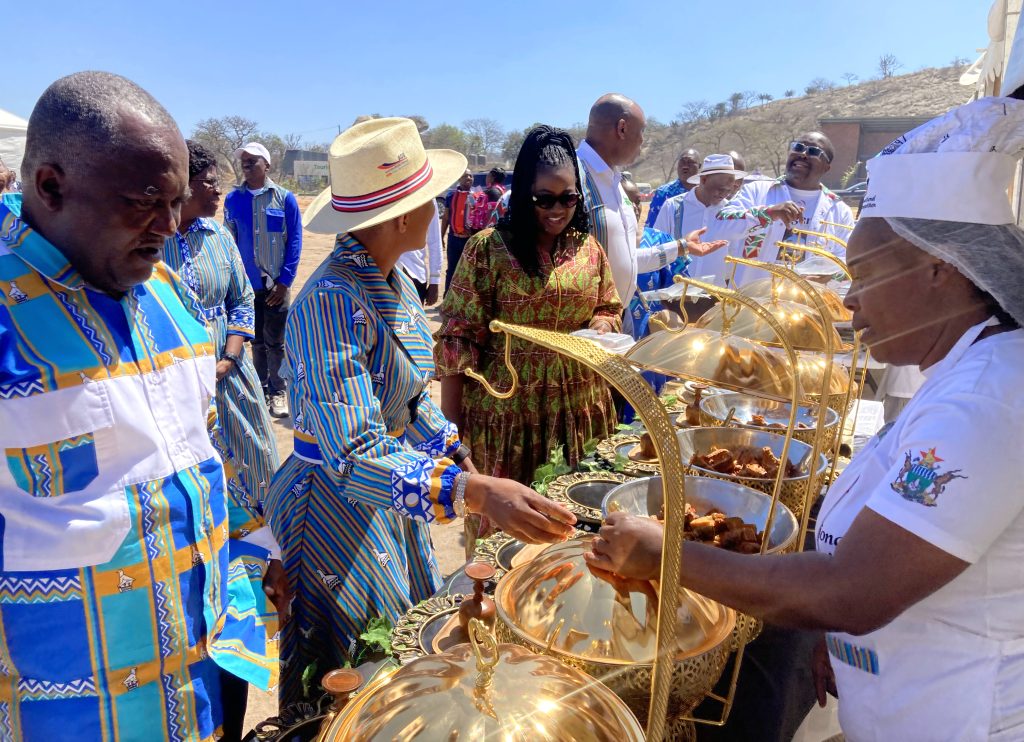
Charity Mudarikwa showcases her food to officials during the Sanganai/Hlanganani Dzimbahwe 2026 Tourism Expo at Gymkhana Events and Conference Centre
She also participated in the national competitions held in Beitbridge, an experience which she said further inspired her to establish her own catering business.
“I was really inspired by the First Lady’s gastronomy programme because it has taught me a lot, it has motivated me and encouraged me to start my own catering company, kitchens and most importantly cooking traditional foods,” she said.
Mudarikwa said the gastronomy programme had also encouraged her to advocate for healthier eating by promoting traditional foods.
“The First Lady taught us that we should go back to cooking and eating our traditional foods, because that’s the healthy thing to do,” she said.
“Most of these foods which people eat nowadays are not as healthy, but if you look long back, some of these health conditions like hypertension which we have were non-existent.
“We should eat mealie meal from small grains, dried vegetables, among other traditional foods. That’s what we should be encouraged to do.
“Even in our homes, that is what we are eating and our families are happy.”

The National Library of Medicine notes that traditional foods are not only a reflection of culture, but can also provide important nutrients.
“Traditional foods are not just a reflection of culture; they are frequently also a source of vital nutrients. These foods are rich in vitamins, minerals, antioxidants, and dietary fiber, contributing to overall health and well-being,” the National Library of Medicine says.
It further notes that traditional diets have been associated with reduced risks of chronic diseases such as heart disease, diabetes and obesity, adding that incorporating traditional foods into modern diets can promote healthier eating patterns and help prevent diet-related health problems.
And for Mudarikwa, the gastronomy programme has therefore become more than a platform for showcasing food, as it has given her an opportunity to build a business while encouraging families to reconnect with traditional foods.
She adds : “I’m not just a Chef but a Chef different from other Chefs because of my Zim traditional cuisines.”