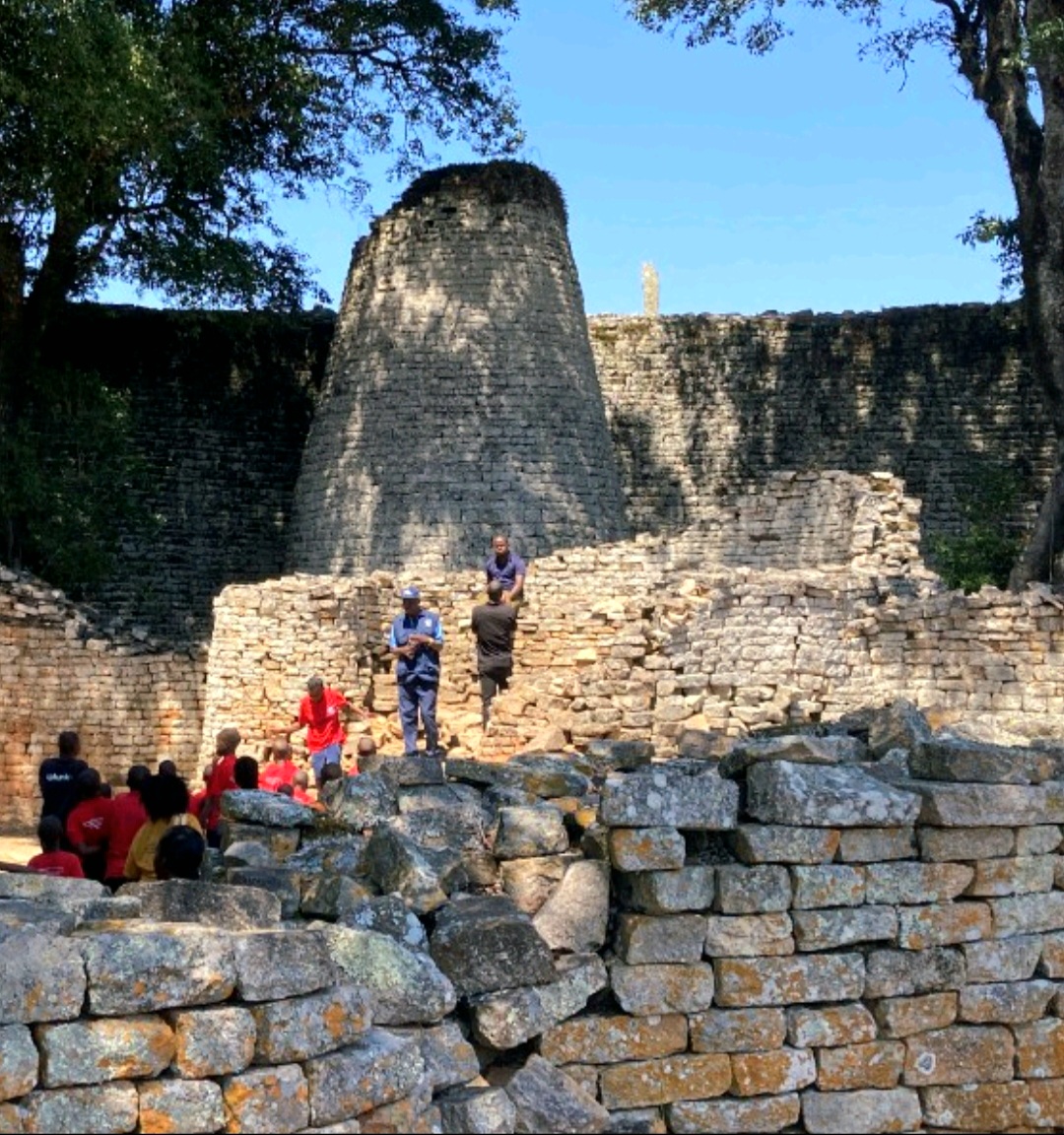
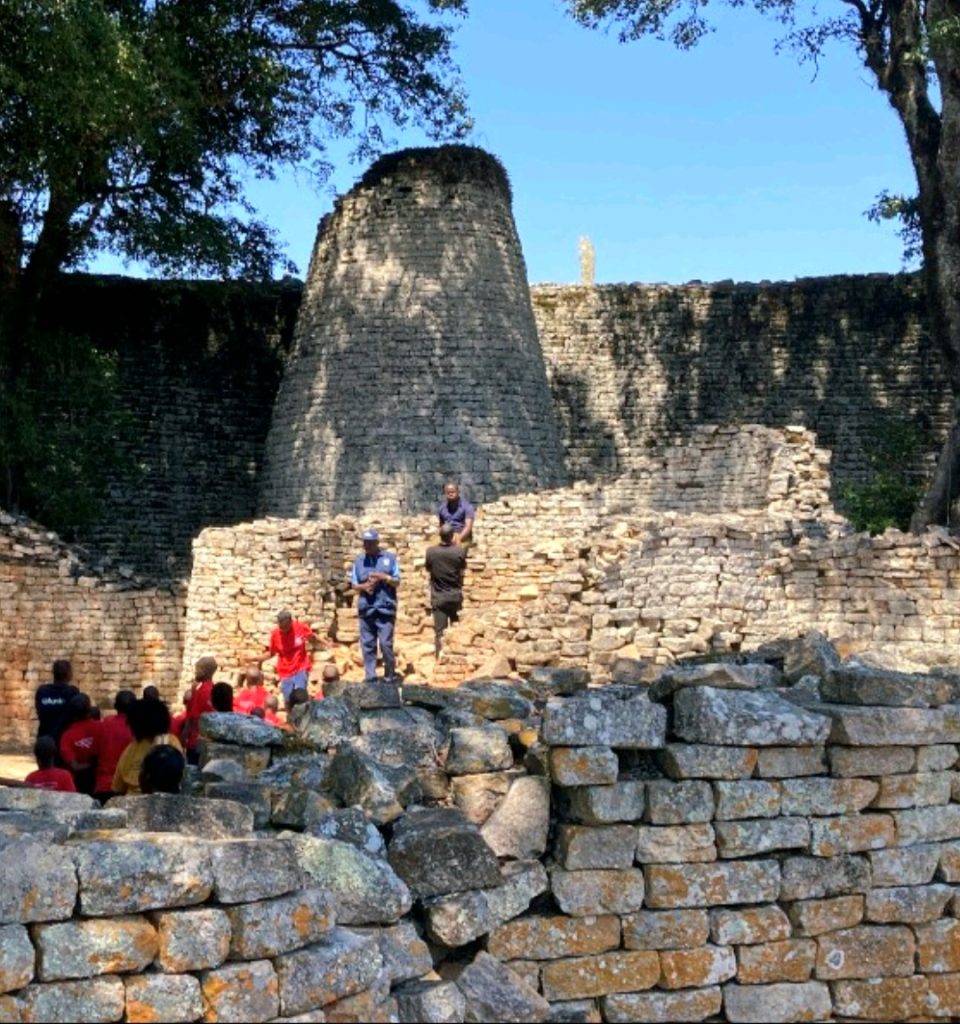
 the Great Zimbabwe Monuments
BY MUNYARADZI BLESSING DOMA
One thing is for sure, standing before the massive stone walls of the Great Zimbabwe Monuments, it is difficult to hide your amazement.
For some, the first reaction is simply silence, while for others, it is question after question.
You look at the huge granite stones, carefully placed on top of each other, without mortar and begin to ask; how did people build this centuries ago?
And indeed for tour guides at this UNESCO World Heritage Site, such questions are common, with visitors from different parts of the world often struggling to understand how such an impressive structure was constructed without modern machinery.
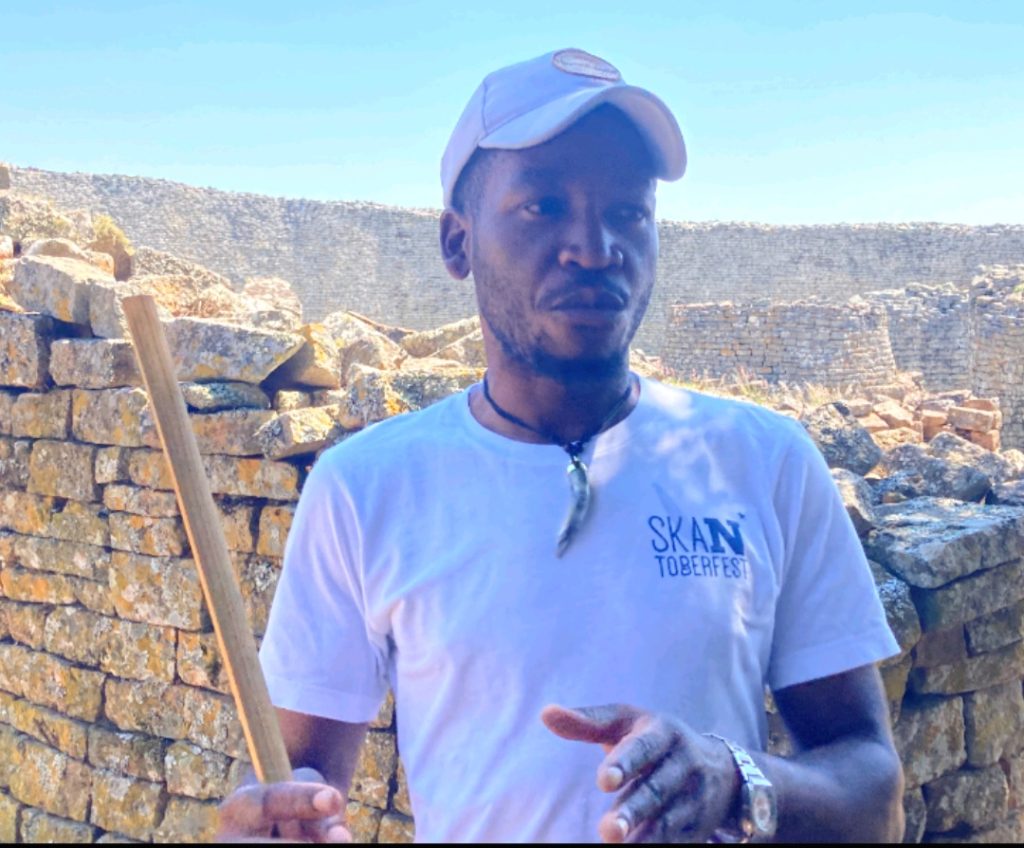
Tour Guide, Alois Chipamaunga
Tour guide Alois Chipamaunga said many visitors, particularly white tourists, are amazed by the monuments and want to know who and how they were built.
“Most visitors, especially whites, are amazed at how the monuments were made. Some wonder who made them. Some even ask if it is true that black people made them,” Chipamaunga said.
He said some visitors also wanted to know how the construction was allowed and what laws governed the building of such structures.
This great structure, built between about 1100 and 1450 AD, consists of the Hill Complex, the Valley Enclosure and the Great Ruins, Great Enclosure.
And as you go through the walls of this great structure, one cannot help but admire the ingenuity behind the monuments.
Whilst the great walls are the main attraction, one should also look forward to the museum and the Shona Village.
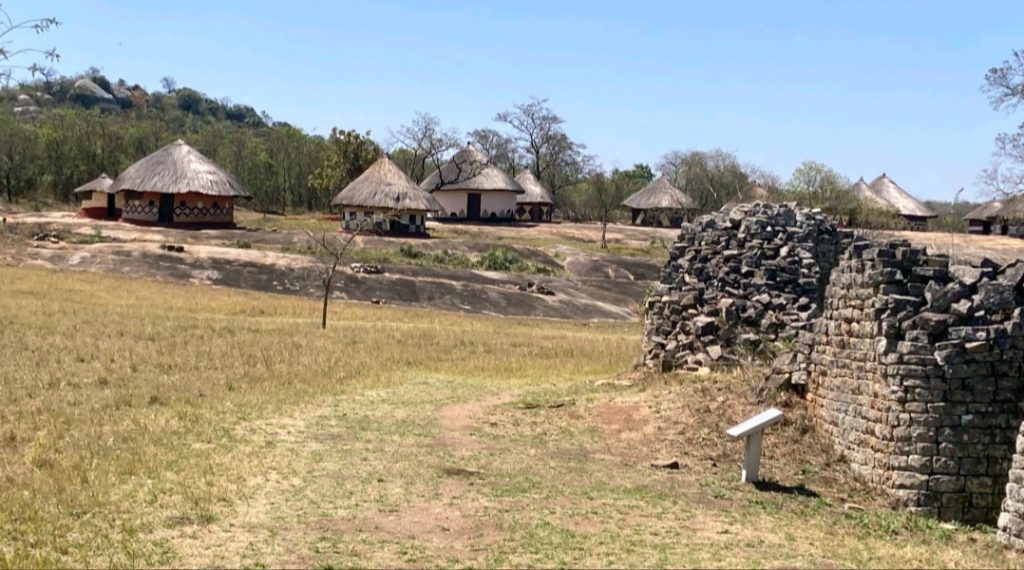
Shona Village
Chipamaunga says “the museum is a compliment to the site, housing artefacts which are found around Great Zimbabwe, most importantly the sculptures of the Zimbabwe bird.”
And for President Emmerson Mnangagwa, the monuments are not only about the stones and walls that have survived for centuries.
They are a powerful reminder of the knowledge, skill and ingenuity of Zimbabwe’s ancestors.
“Eeh Great Zimbabwe yedu iyi, varungu vakatambura kuti zvokwadi vanhu vanopfeka madhumbu vanga vaka zvinhu zvakadai,” President Mnangagwa said, drawing applause when he officially opened Sanganai/Hlanganani Dzimbahwe World Tourism Expo in Masvingo recently.
He added that there had been attempts in the past to attribute the construction of Great Zimbabwe to Europeans.
“Vakayedza kunyora kuti kuda kwakangouya varungu vakavaka vakazoyenda havo zvikaramba.”
President Mnangagwa clarified that the monuments were built by the ancestors of Zimbabweans, saying “takaivaka Great Zimbabwe, isu namadumbu edu.”
He also had praises for the construction of the walls, which have stood for centuries despite being built without mortar.
“Rusvingo rwakavakwa haruna kana dhaga ruripo, asi rwamira centuries and centuries rusingadonhe.”
President Mnangagwa added that the monuments are therefore a reflection of the knowledge possessed by ancient Zimbabwean communities.
“Woona kuti isu mhuri ye Zimbabwe tiri mhodzi yakabva kuvanhu vanga vane ruzivo rwakadzama kare ikoko.
“We were more civilized than the current civilisation.”

President Emmerson Mnangagwa
President Mnangagwa emphasised that the achievements of the builders of Great Zimbabwe demonstrated the sophistication of the civilisation that existed on the continent.
The Great Zimbabwe Monuments also carry a special meaning for the country because Zimbabwe derives its name from the ancient site- Dzimba Dzamabwe, loosely translated to mean House of Stone.
The President added that the ingenuity of the country’s forefathers should continue to inspire Zimbabweans today.
He said the monuments should not only make Zimbabweans proud of their past, but should also give them confidence as they develop the country today.
“Ruzivo nohungwaru nenjere dzamadzitateguru edu kana nanhasi tinoshaya kuti kune imwe nyika here yaungataura yanga ine ruzivo kunguva idzodzo, hakuna.”
“It is a source of inspiration when we develop today, when we modernise today, we industrialise today, we are proud to say we are the product of earlier civilisation on the African continent.”
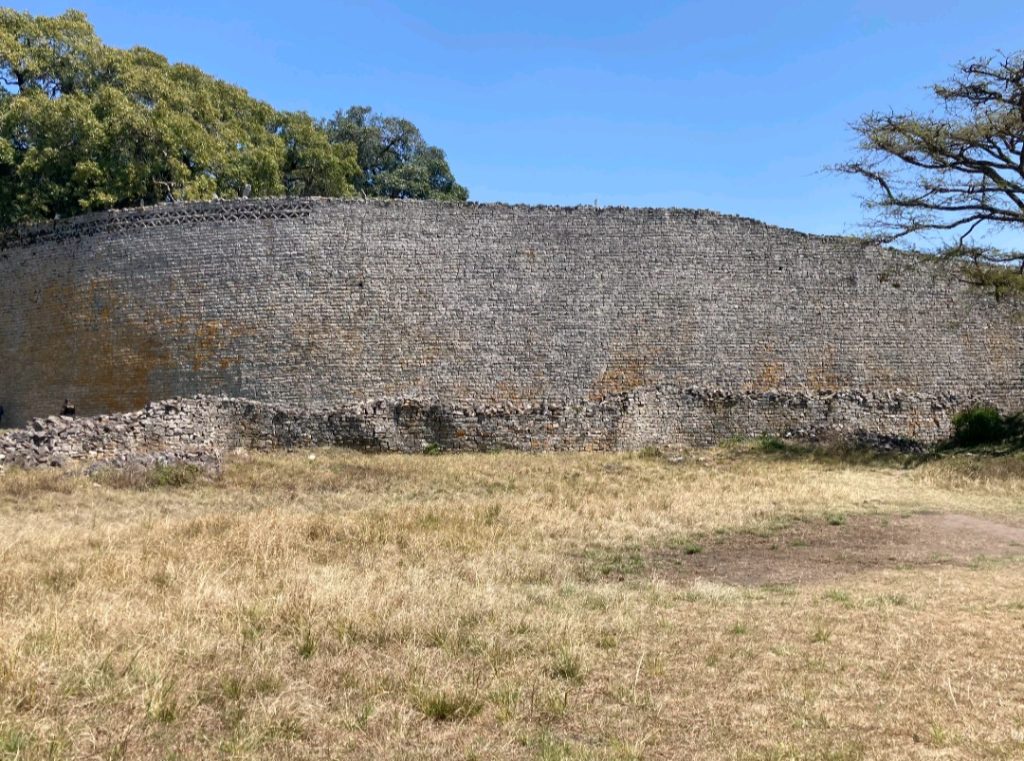
the great walls
The towering stone structures therefore tell a story that goes beyond their physical appearance.
Great Zimbabwe was the centre of a powerful Shona civilisation and an important trading centre. At its height, the city is believed to have had more than 10 000 people.
And today, visitors walk through the same stone passages, climb the Hill Complex and stand inside the Great Enclosure.
Yet even with the explanations from tour guides and researchers, the questions continue.
How were the massive stones moved?
How did the builders achieve such precision?
How did the walls remain standing for centuries without mortar? And how did the knowledge used to construct the monuments, develop at a time when modern construction equipment did not exist?
These questions are part of what makes Great Zimbabwe such a powerful tourism attraction.
For Zimbabweans, the monuments are a reminder of an advanced African civilisation that existed centuries ago.
While for international visitors, it is history brought to life in stone.
And for guides such as Chipamaunga, every group that arrives brings another opportunity to explain a civilisation whose achievements continue to leave visitors staring in awe.
One thing is true, Great Zimbabwe may be centuries old, but the mystery, wonder and admiration surrounding its massive stone walls remain very much alive.