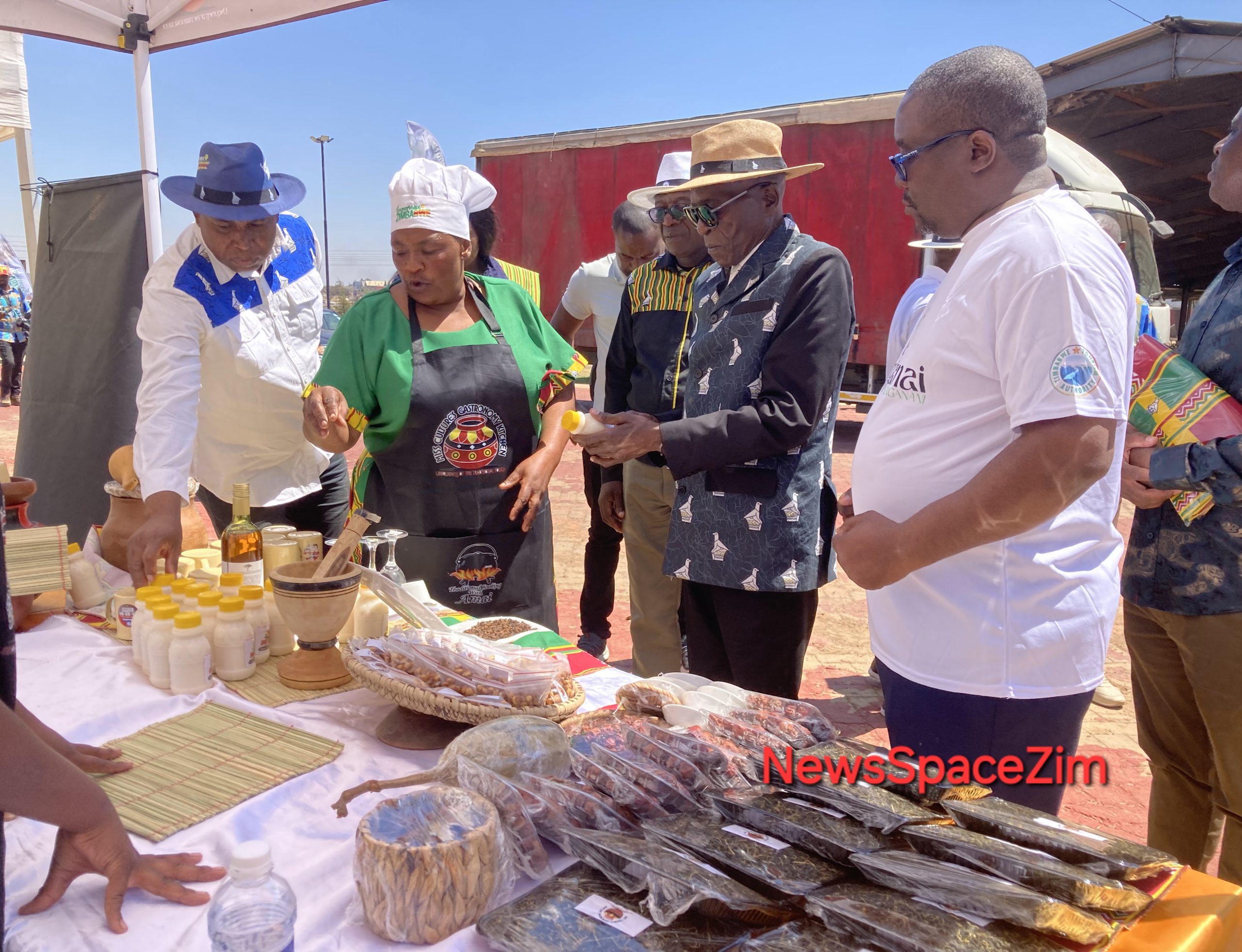
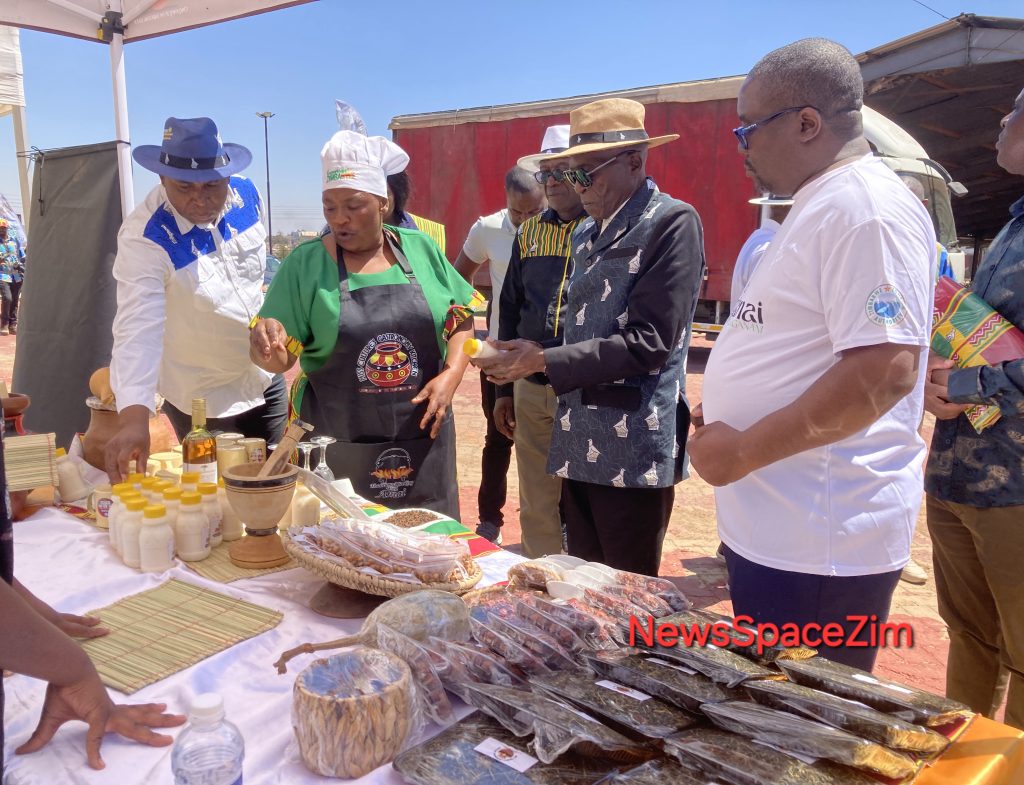
Shelter Chitsungo (in chef’s gear) shows her food to Deputy Minister Tongai Mnangagwa (right), Minister Senator Charles Tawengwa (second from right) and other officials during the World Tourism Day commemorations at Heritage Village in Harare
BY MUNYARADZI BLESSING DOMA
Zimbabwe is turning gastronomy tourism into a socio-economic tool that is helping preserve the country’s culinary heritage while creating opportunities for communities, women, youths and smallholder farmers.
Tourism and Hospitality Industry Minister Barbara Rwodzi said gastronomy tourism, championed by Tourism and Environment Patron, First Lady Dr Auxillia Mnangagwa through her Amai’s Traditional Cook-Out Competitions, had helped elevate Zimbabwe onto the global stage.
Minister Rwodzi said this in a speech read on her behalf by her Deputy, Tongai Mafidi Mnangagwa, during World Tourism Day commemorations held at Heritage Village in Harare on Saturday.
Rwodzi said gastronomy tourism was an important part of Zimbabwe’s Culture and Heritage tourism cluster, which seeks to turn the country’s history, traditional architecture and heritage sites into experiences for both local and international tourists.
“Importantly, an inseparable pillar of Culture and Heritage cluster is our vibrant culinary legacy-Gastronomy Tourism introduced by our Tourism and Environment Patron, Her Excellency the First Lady of the Republic of Zimbabwe, Dr A Mnangagwa.
“The concept has elevated Zimbabwe on a global scene with the First Lady being crowned the Queen of Gastronomy Tourism in Africa,” said Minister Rwodzi.
According to Wikipedia, gastronomy refers to the relationship between food and culture, including the preparation and serving of food and the cooking styles of particular regions.
And Gastronomy Tourism therefore allows tourists to travel and experience local food and drinks as an important part of their travel experience.
Minister Rwodzi added that Zimbabwe was now using its traditional foods not only to showcase its culture, but also to create economic opportunities for communities.
“Gastronomy is no longer just about food; it is a powerful socio-economic tool.
“By promoting indigenous dishes-from our nutrient-rich sadza rezviyo to mupunga une dovi and organic wild fruits-we are doing more than celebrating our heritage.”
The Minister said the gastronomy drive was also opening opportunities for smallholder farmers, women and youths to participate directly in the tourism value chain.
“This initiative ensures that communities, particularly our smallholder farmers, women, and youths, supply their organic produce directly to major hotels and restaurants across the country,” she said.
“By showcasing to the world the authentic taste of Zimbabwean cuisine, we are keeping our heritage alive while empowering communities through economic sustenance.”
The gastronomy drive has been championed by the First Lady through the Amai’s Traditional Cook-Out Competitions, which have brought traditional foods and cooking methods into the spotlight while encouraging communities to value their culinary heritage.
The initiative has also created a platform for Zimbabweans to showcase traditional dishes and ingredients that can form part of the country’s tourism offering.
Minister Rwodzi said the gastronomy initiative was part of wider efforts by the Ministry to unlock tourism opportunities through different strategic clusters, including Sports, Religious and MICE/Business tourism.
She said the Culture and Heritage cluster was particularly important as it “defines who we are”.
The cluster seeks to preserve Zimbabwe’s rich history, traditional architecture and heritage sites while converting them into immersive and educational travel experiences for both local and international visitors.
And more importantly through gastronomy tourism, Zimbabwe is therefore positioning food as more than something to be eaten, but as a way of telling the country’s story, preserving traditions and connecting communities to the tourism economy.