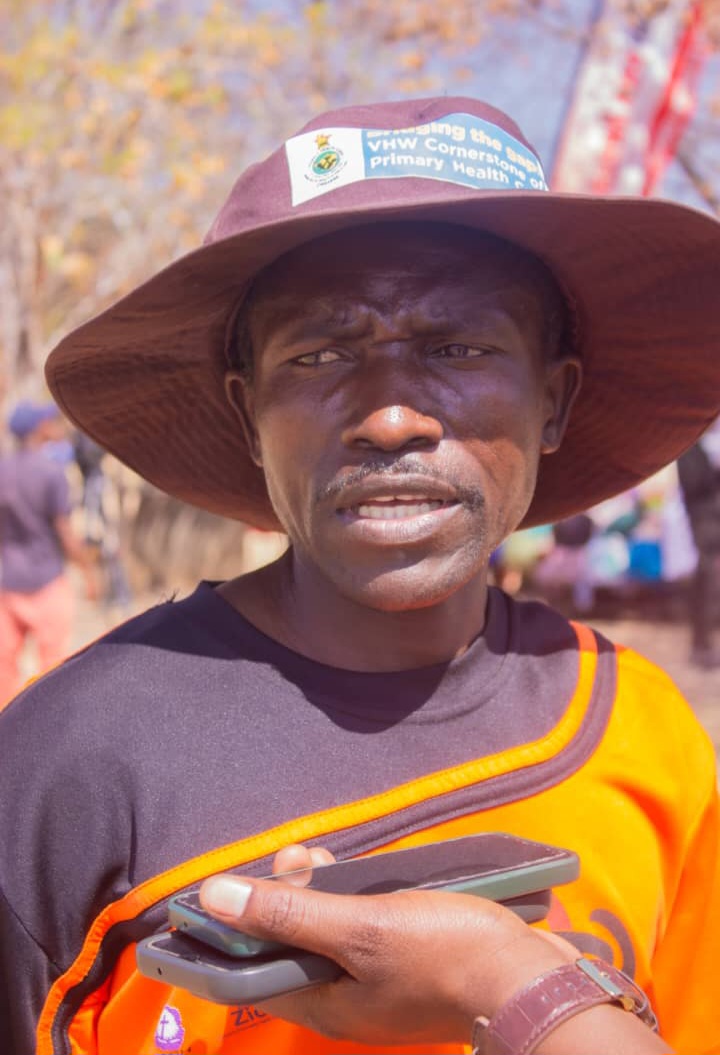
Village Health Worker Tizirai Tafira (pic by Daphne Machiri)
BY MUNYARADZI BLESSING DOMA
In many rural communities, the role of a Village Health Worker is often seen as work for women. But in Siyamwanja Village, Ward 22 in Gokwe South District, one man chose to challenge that belief.
Tizirai Tafira, has been serving as a Village Health Worker since 2018, walking long distances every day to bring health information and services closer to his community.
When authorities came to the area looking for volunteers to become Village Health Workers (VHWs), most men shied away from the opportunity.
“Many men said it was a job meant for women,” Tafira recalls.
But he saw things differently.
“I asked myself why we should think like that, especially when people always talk about gender equality. So I decided not to follow what others were saying and I volunteered.”
After his decision, the Village Head announced to the community that Tafira would take up the role of Village Health Worker for the area.
However, the journey was not easy.
“Many men looked down upon me. Some even laughed at me. At first, even my own wife used to ridicule me, although she later changed her mind,” he said.
In the beginning, Tafira says speaking about health issues in the community often attracted mockery.
“In our communities, when you start talking about health matters, some people will laugh at you,” he said.
Others questioned his motives.
“Some people accused me of doing it only for the money and not because I cared. Others would use the opportunity to complain about the health delivery system in the country. It can be difficult, but I am not deterred.”
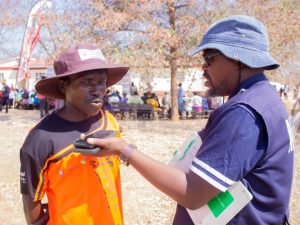
Tizirai Tafira narrates his journey to this reporter (pic by Daphne Machiri)
Despite the criticism, Tafira says he remains focused on his mission.
“I always tell myself that this is something I chose. I cannot stop doing what I love because of what people say. No amount of criticism will make me stop.”
One aspect he appreciates about the work is the flexibility it gives him to balance family responsibilities.
“What I like about this job is that I can plan my time well. I arrange my schedule so that I visit people when they are free to talk.”
During his door-to-door visits, Tafira discusses various health issues with families while also listening to their concerns.
“When I get to a homestead, I talk about issues affecting their health and they also share their challenges. Together we try to find solutions,” he said.
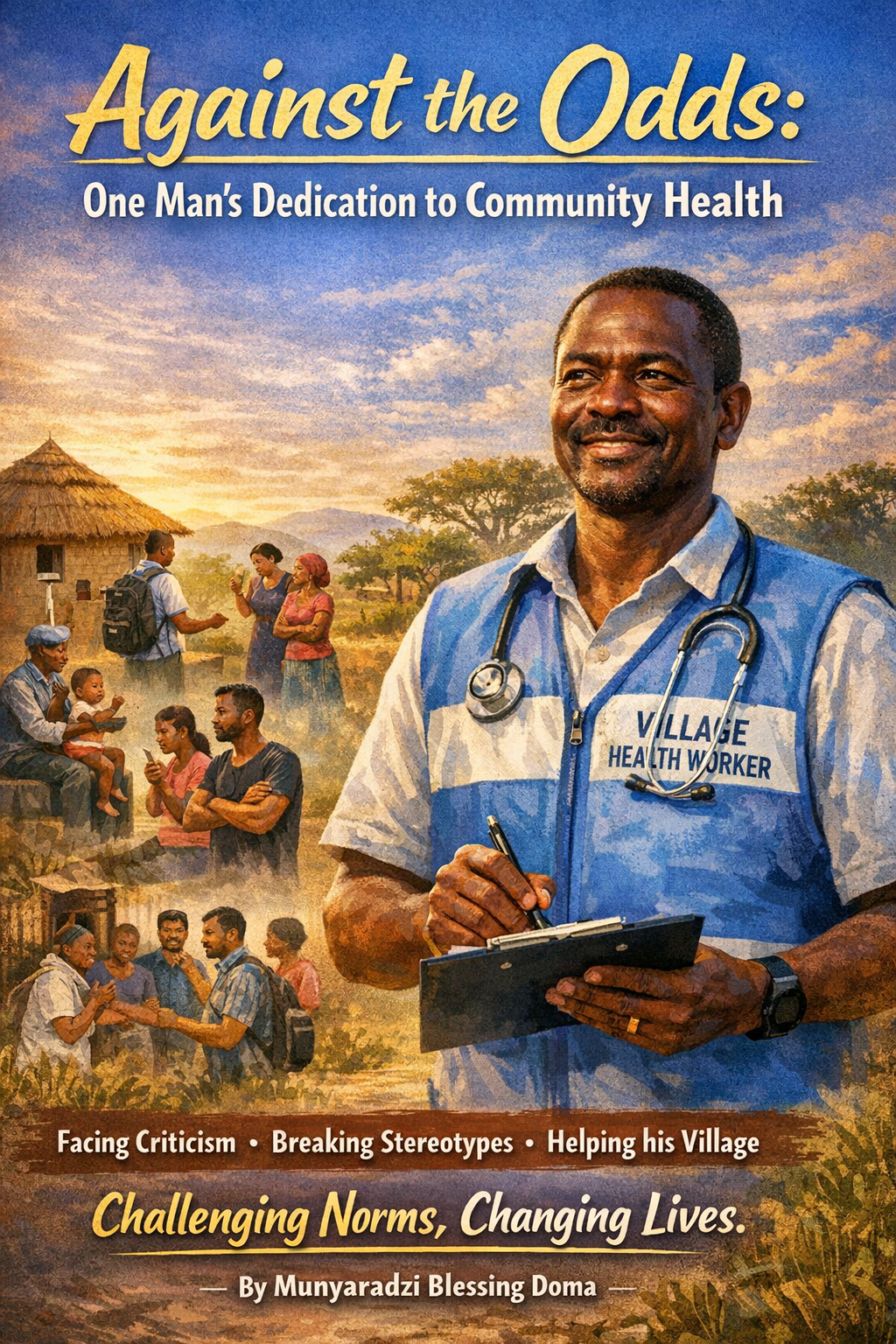
Tafira’s story illustrated
But the work also comes with its own challenges.
Tafira says some men in the community resist health interventions and refuse to allow their families to receive services.
“Sometimes men will openly say they do not want you to talk to their wives. That creates a big information gap.”
In some cases, resistance even comes from community leaders.
“Some Village Heads will say things like ‘zvavazvebasa here izvi, endai kuchipatara’, meaning they believe people should only go to the clinic instead of receiving information at home.”
He recalls one incident where he was chased away while trying to offer health advice.
“At one house I was actually chased away and I had to leave,” he said.
To overcome these challenges, Tafira and other health workers sometimes organise community meetings where villagers gather to discuss health issues together.
However, he says some women are still prevented from attending by their husbands.
Despite these setbacks, Tafira continues with his work, often walking about 15 kilometres a day around the village.
His duties include weighing children, following up on people who have defaulted on anti-retroviral therapy and helping community members access health services.
Over the years, he says the community has slowly begun to appreciate his work.
“We are now seeing improved health outcomes and some people are starting to understand and value what we do.”
For Tafira, the journey may have begun with ridicule and resistance, but his dedication to serving his community remains stronger than ever.
According to the Ministry of Health and Child Care, VHWs in Zimbabwe act as the primary, community-based frontline link in the health delivery system, focusing on prevention, promotion and basic care in rural and peri-urban areas.
They are trained by the ministry and they (VHWs) they help reduce mortality by educating communities on safety, facilitating referrals, managing minor ailments and supporting maternal/child health.