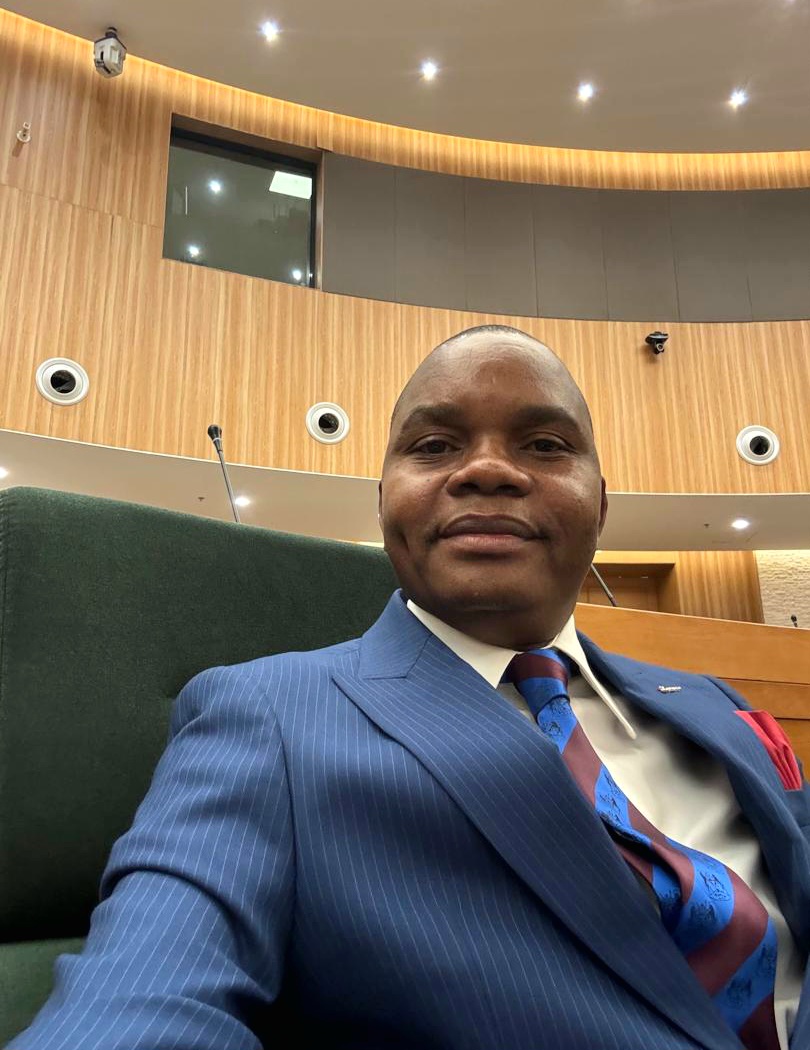
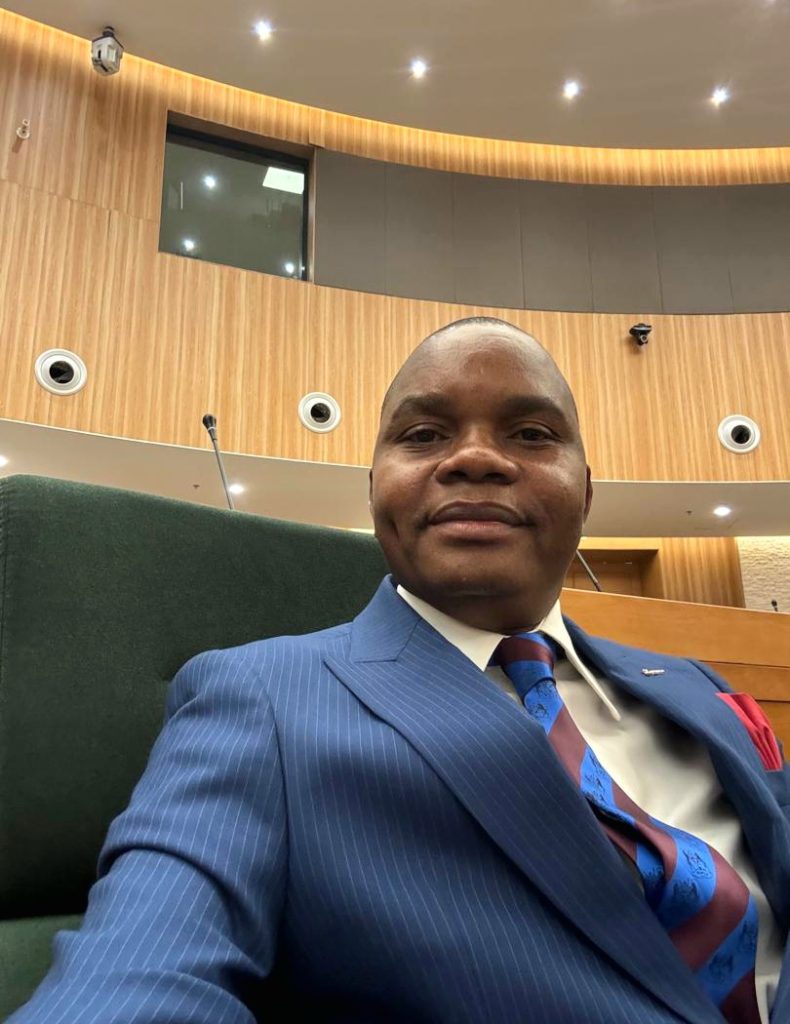
Honourable Wellington Chikombo, MP for Glen Norah
BY MUNYARADZI BLESSING DOMA
Glen Norah Member of Parliament Honourable Wellington Chikombo has called for urgent action to address Greater Harare’s worsening wastewater crisis, saying the situation has gone beyond failing infrastructure and has become a major public health and governance concern.
Honourable Chikombo made the remarks in Parliament on Thursday (September 24), while contributing to a report by the Parliamentary Portfolio Committee on Environment, Climate and Wildlife following its assessment of wastewater management in and around Greater Harare.
He said the extent of the sewage crisis was disturbing, particularly the continued discharge of raw and inadequately treated sewage into rivers which eventually feed into Lake Chivero, the city’s major raw water source.
“What confronts Greater Harare is no longer simply blocked sewers, broken pumps or unpleasant spilling rivers.
“We are confronting the convergence of infrastructure failure of the highest proportion, environmental degradation, institutional weaknesses and a serious public health risk,” Chikombo said.
He said one of the most worrying findings was that about 80 megalitres, equivalent to 80 million litres, of raw sewage were reportedly being discharged every day at the collapsed Amalinda crossing into the Mukuvisi River.
Chikombo said the problem was particularly serious for communities in his Glen Norah constituency, which he said had been affected by Mukuvisi pipe bursts and sewage problems in areas including Glen Norah C, Makonye, Tadhinhiwa, Tasvika Kumba, Kundayi Primary School and Zuvarabuda.
He said the Amalinda trunk mains had reportedly remained collapsed for more than 15 years.
“A pipe that failed yesterday is an engineering problem. A pipe that remains failed for 15 years becomes a governance crisis.”
Chikombo also questioned the lack of reliable information on the amount of wastewater being generated and treated in Greater Harare.
He said available technical information indicated that about 550 megalitres of wastewater were generated daily, while only around 120 megalitres reached treatment works.
“This House must not hide behind euphemism. Whatever limited treatment occurs at Firle, the brutal reality is that the Greater Harare wastewater treatment system is effectively dead,” he said.
Chikombo said Greater Harare needed to know exactly what infrastructure it owned, its condition, how much wastewater was flowing through the system and who was responsible for its performance.
He recommended the use of Geographic Information System mapping, asset coding, CCTV condition surveys and a complete infrastructure register to establish the condition of the more than 5 500 kilometres of sewer infrastructure under the city.
And he also called for bulk flow meters, improved laboratory capacity and digital information systems to provide accurate information on wastewater flows and pollution.
Chikombo said the city could not continue relying on outdated infrastructure and manual methods to maintain a metropolitan sewer network.
“One does not maintain a metropolitan sewer network with picks and shovels. The city needs modern jetting equipment, inspection capability, excavators and the essential machinery necessary to reach the infrastructure quickly,” he said.
He also called for investment in modern wastewater treatment and water recovery systems, pointing to cities such as Windhoek and Cape Town which have invested in wastewater reuse.
Chikombo said Greater Harare should eventually move towards treating wastewater as a resource from which water, energy and, where appropriate, nutrients could be recovered.
However, he stressed that the immediate priority remained fixing the basic wastewater system.
“However, first, the basic plans must work.”
Chikombo also raised concern over pharmaceutical residues, industrial chemicals and antimicrobial-resistant organisms potentially entering the city’s watercourses through poorly managed wastewater.
He warned that the consequences could extend beyond rivers and dams to food produced through urban agriculture.
“The contamination does not end in the river. It can end on the dinner table,” he said.
On financing, Chikombo said there was a reported US$750 million investment proposal for the Greater Harare Wastewater Programme, which had reportedly gone through the transaction advisory process and been submitted to the Zimbabwe Investment and Development Agency (ZIDA).
He said authorities should provide clarity on what was delaying the proposal.
“An investment proposal is not yet an investment. It must pass technical, legal, financial and public interest scrutiny,” Chikombo said.
“However, the transaction advisor has completed its work. Recommendations are already before ZIDA and the proposal is credible. Then the country deserves a clear answer. What remains outstanding? What risks have been identified and what exactly is delaying a decision?”
He also called for the release of devolution funds to support urgent rehabilitation of water and sanitation infrastructure.
Chikombo said the Parliamentary Committee had specifically called for the release of US$5 million for the Amalinda trunk mains and US$3.8 million for urgent water and sewage works.
He said while local authorities should answer for their failures, central Government also had a responsibility to intervene where the scale of rehabilitation was beyond municipal resources.
“Central Government cannot remain a spectator to the collapse of the water and wastewater system,” he said.
Chikombo said Parliament should now focus on four key questions: what infrastructure the authorities own and its condition, what exactly is flowing through the system, who is responsible for its performance, and what credible capital is available to fix the system.
“Once those four questions are answered properly, we stop managing crisis by anecdote and begin managing infrastructure by evidence,” he said.
He warned that continued inaction could have serious public health consequences, recalling the 2008-2009 cholera outbreak in which more than 98 000 cases and approximately 4 200 deaths were recorded.
“The time for merely diagnosing this crisis has passed,” Chikombo said.