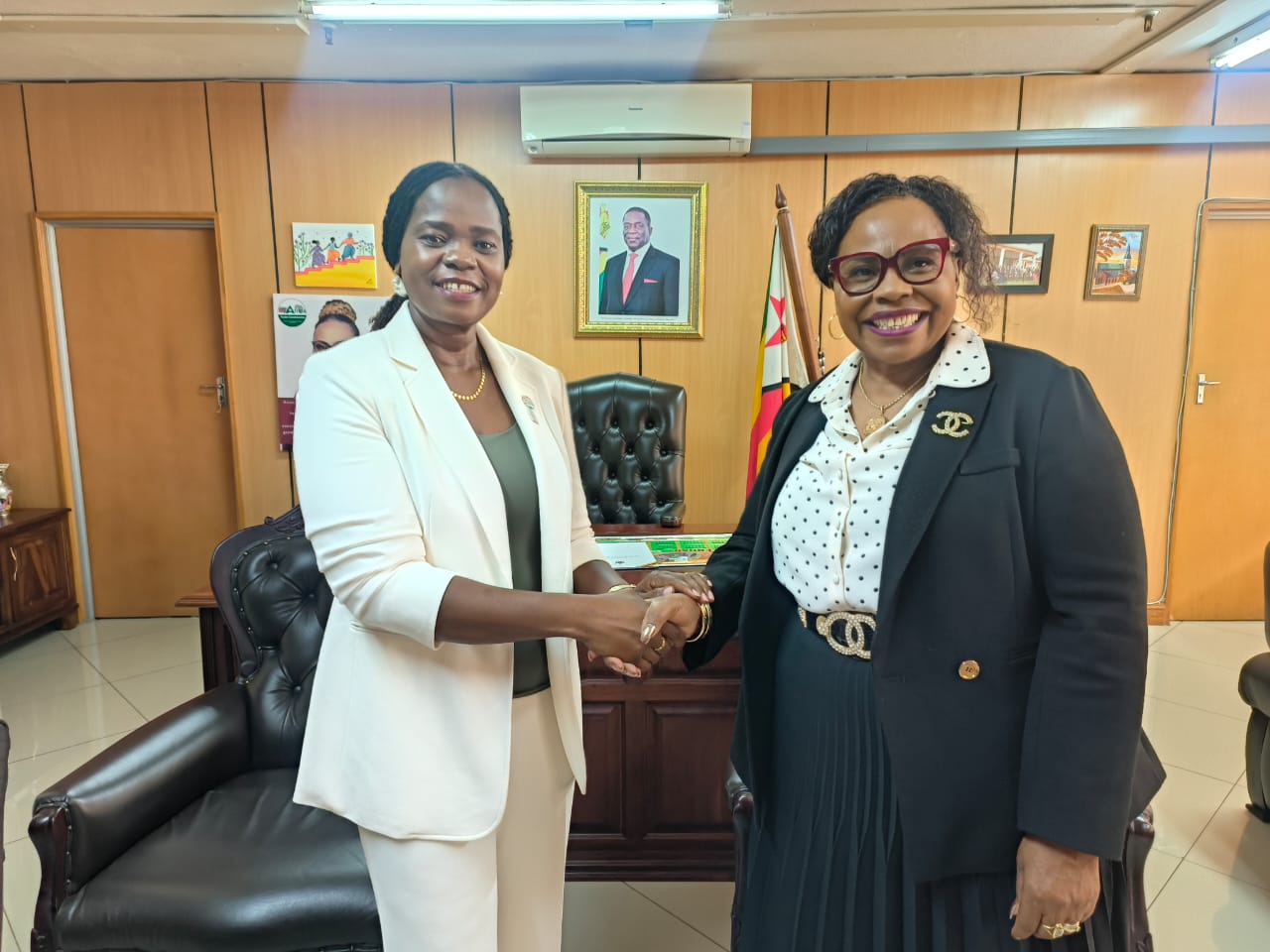
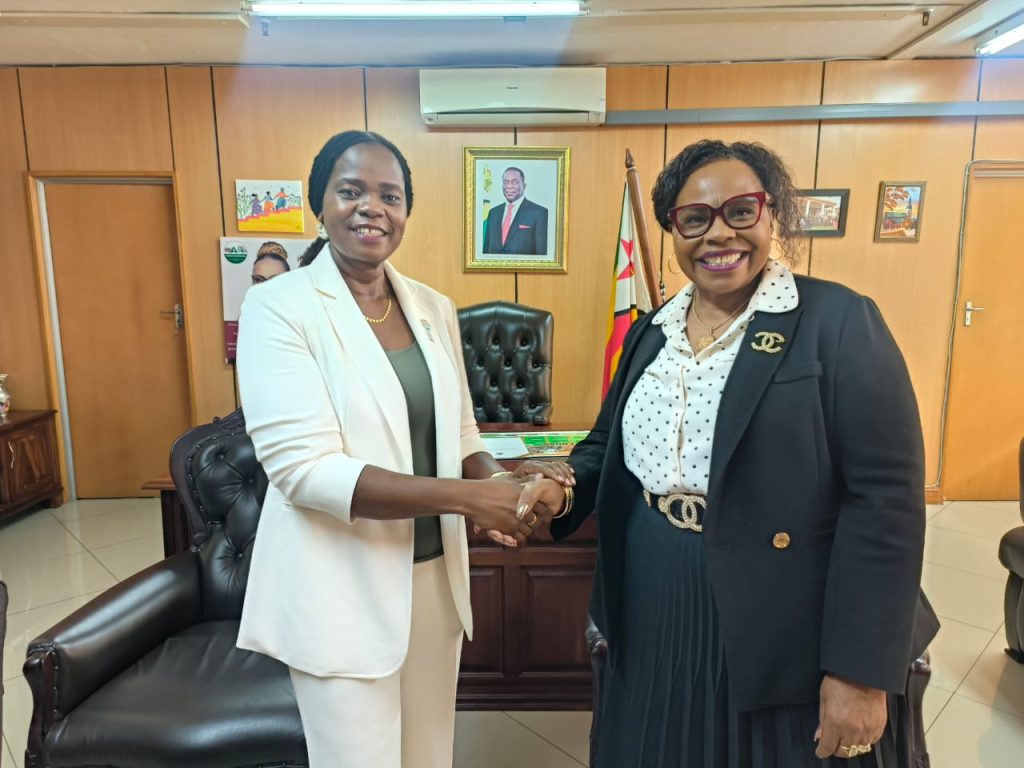
Minister Monica Mutsvangwa (right) and UN Women Regional Director for East and Southern Africa Anna Mutavati
BY MUNYARADZI BLESSING DOMA
UN Women Regional Director for East and Southern Africa, Anna Mutavati has commended Zimbabwe for putting in place policy and legal frameworks aimed at protecting women and girls and advancing gender equality.
Mutavati said Zimbabwe had demonstrated its commitment to the empowerment of women and girls at a time when gains made in gender equality were facing growing threats globally.
She made the remarks during her engagements with several officials, including Minister of Women Affairs, Community, Small and Medium Enterprises Development Senator Monica Mutsvangwa.
“The Government of Zimbabwe is commended for the policy and legal frameworks it has established to advance gender equality,” Mutavati said.
She said Zimbabwe’s recent signing of the African Union Convention on Ending Violence Against Women and Girls (AUCEVAWG) was an important milestone in strengthening the protection of women and girls.
“The recent signing of the African Union Convention on Ending Violence Against Women and Girls (AUCEVAWG) marks an important milestone, demonstrating Zimbabwe’s commitment to preventing and responding to all forms of violence against women and girls, strengthening protection mechanisms, promoting accountability, and advancing the rights, dignity and safety of women and girls.”
Mutavati however said Zimbabwe now needed to ensure that the policy commitments and legal instruments were translated into tangible improvements in the lives of women and girls.
“Progress cannot end with policy commitments and legal instruments. The next and most critical step is implementation,” she said.
Mutavati said this should include strengthening prevention efforts, improving access to justice and survivor-centred services, enhancing accountability mechanisms and ensuring that women and girls lived free from violence, discrimination and harmful practices.
She said sexual and gender-based violence remained one of the most urgent challenges facing women and girls.
“Every woman and girl has the right to live free from violence, abuse and harmful practices,” she said.
And she also commended the National Prosecuting Authority of Zimbabwe for strengthening the collection and analysis of gender-based violence data.
“Reliable and timely data is essential for understanding trends, informing policy decisions, allocating resources effectively, and ensuring accountability.”
She said Zimbabwe’s election as a non-permanent member of the United Nations Security Council for 2027-2028 also presented an opportunity for the country to advance the Women, Peace and Security Agenda.
“UN Women remains committed to supporting the Government of Zimbabwe in promoting women’s leadership, participation in peacebuilding, and gender-responsive peace and security initiatives at national, regional and global levels,” she said.
Mutavati said gender equality should remain central to Zimbabwe’s development agenda, with the new United Nations Cooperation Framework aligned to the country’s National Development Strategy 2 (NDS2).
“The framework recognises gender equality as both a cross-cutting issue and a stand-alone development priority,” she said.
She said national gender equality mechanisms and institutions must be fully operationalised and adequately resourced, adding that achieving gender equality required the involvement of Government, civil society, development partners, women’s rights groups, communities, traditional leaders, faith-based organisations and citizens.
Mutavati further called for greater private sector involvement in women’s economic empowerment, citing the partnership between UN Women and Econet’s Omni Contact as an example of how collaboration can create opportunities for women in entrepreneurship, technology and innovation.
She said women and girls should not be left behind as economies become increasingly digital.
Mutavati also called for innovative financing for gender equality, including stronger domestic resource mobilisation, gender-responsive budgeting and increased private sector investment.
She said climate change and recurrent crises also placed a heavy burden on women and girls, making investment in their resilience through climate-smart agriculture, entrepreneurship, social protection and sustainable livelihoods critical.
Mutavati said the fight against gender-based violence should also continue throughout the year.
“Ending violence cannot be a conversation reserved for the annual 16 Days of Activism Against Gender-Based Violence campaign. Commitment must extend throughout the year. Action is required not for 16 days, but for 365 days,” she said.
She added that UN Women’s strategic priorities for 2027-2031 would focus on strengthening women’s capacities and agency, supporting economic empowerment and gender-responsive budgeting, as well as strengthening laws, policies and institutions that prevent and respond to gender-based violence and harmful practices.
Mutavati said while Zimbabwe had made important progress, gaps remained.
“Achieving gender equality requires sustained political will, adequate investment, effective institutions and collective responsibility,” said Mutavati.