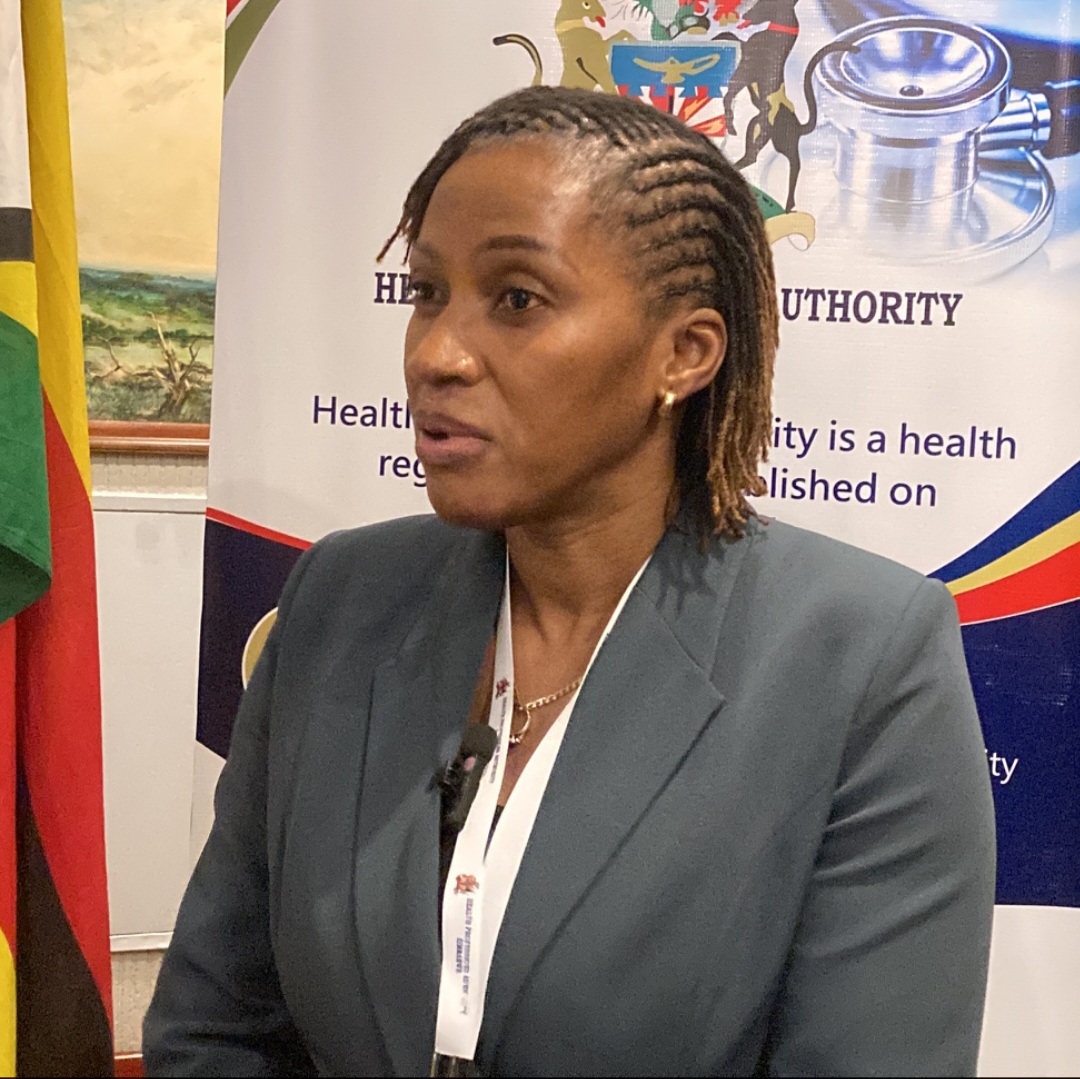
Clotilda Chimbwanda, Secretary General of Health Professions Authority Zimbabwe
BY MUNYARADZI BLESSING DOMA
The Health Professions Authority (HPA) Zimbabwe has closed 48 health facilities across the country this year, over various violations, including the use of bogus practitioners and operating without registration.
The facilities were closed through the police.
Secretary General of HPA, Clotilda Chimbwanda revealed this today (Thursday, September 24, 2026) at the HPA, Medical Rehabilitation Practitioners’ Council and Medical and Dental Practitioners’ Council Annual General Meeting held in Harare.
Chimbwanda said some of the facilities were being operated by people without medical training, while others were not registered with the authority.
“This year alone, up to date, we have closed 48 facilities, and these closures have been done through the police.
“There are a number of reasons for these closures. Some of them involve bogus practitioners. These are practitioners who have not trained, or non-medical people who are carrying out medical work, which is in contravention of Section 126 of the Act,” said Chimbwanda.
Chimbwanda added that the HPA had also encountered unregistered rehabilitation facilities, particularly those purporting to deal with drug and substance abuse.
“We also have facilities that are not registered. “For example, we have the scourge of drug and substance abuse, and there are some people who have rehabilitation practices that are not registered and are not run by medical personnel,” Chimbwanda said.
She said in one case, a purported drug and substance abuse rehabilitation centre was operating from a two roomed facility and during an inspection, there were 20 patients.
“And there was no running water at the facility, so the people were bathing at a stream which was at the back of the house.”
She urged members of the public to check whether health facilities are registered before seeking services.
“You will see that we have tried to put in the newspaper a list of those practices that are registered with the Authority, so that people can know which facilities to go to,” she said.
Chimbwanda said even some registered practitioners were operating facilities without HPA registration.
She said registration was important as it allowed the authority to inspect facilities and ensure that they met minimum standards.
“HPA registration is important because we inspect the facility and make sure that it meets the minimum standards so that we can protect citizens,” she said.
Chimbwanda added that some unregistered facilities were also offering unorthodox treatments under conditions that posed serious risks to patients.
“Some of them do not even meet the required standards. Some of them do not even have running water.
“This is a danger to the patient. It is a danger in terms of infection control. It is also dangerous because we have someone who is not a medical professional carrying out medical activities and they do not know what they are doing.”
She said the consequences could be serious, including loss of life.
“The outcomes can be very negative, and we can even lose lives. So that is the danger that it poses,” Chimbwanda said.
She also raised concern over beauty therapies being carried out by non-medical personnel, saying some procedures required qualified medical professionals.
Chimbwanda gave an example of a case where the HPA found a hairdresser administering intravenous drips to clients seeking skin-lightening treatment.
“For example, we went into a pharmacy and found a hairdresser who was giving drips. “These drips were meant to lighten the skin.
“This is a non-medical person who is injecting someone with a substance that we are not aware of. They do not have what is required to be able to save that person.”
She said the HPA was not against the expansion of health services, but wanted such growth to be matched by safety and compliance.
“Let me first say that, as a regulator, ours is not to prohibit expansion. Ours is to facilitate. We want to play a facilitative role.
“Ours is to protect the citizen, make sure that they get the right care and make sure that we have universal health coverage.”
She said facilities opening across the country should meet the minimum standards required for their respective services.
“We are just talking about minimum standards-to say, for a hospital to be called a hospital, what should it have? For a pharmacy to be called a pharmacy, what should it have?
“That way, when a patient goes in, they have that assurance when they see the HPA certificate that this is a facility that has been inspected and that they will be taken good care of,” added Chimbwanda.