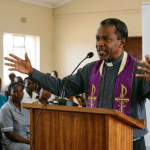

Chief Director of Public Health in the Ministry of Health and Child Care, Dr Celestino Dhege (pic by Tsitsi Ndabambi)
BY MUNYARADZI BLESSING DOMA
Government has applauded the AIDS Healthcare Foundation (AHF) for its significant contribution to Zimbabwe’s HIV response over the past decade, particularly in strengthening treatment, prevention and care services across the country.
Speaking at AHF Zimbabwe’s 10th anniversary dinner celebrations in Harare on Thursday evening, Chief Director of Public Health in the Ministry of Health and Child Care, Dr Celestino Dhege, said AHF had become an important partner in strengthening the country’s health system through its sustained investment and collaboration with Government.
Dr Dhege, who delivered the remarks on behalf of the Ministry’s Permanent Secretary, Dr Aspect Maunganidze, said AHF’s contribution went beyond supporting HIV programmes to include infrastructure development, provision of medical equipment and strengthening the capacity of health institutions.
“Since commencing operations in Zimbabwe in September 2016, following the signing of a Memorandum of Understanding with the Ministry, AHF has grown into an important partner in strengthening HIV prevention, treatment and care services,” he said.
He said the organisation had supported Opportunistic Infection and Antiretroviral Therapy clinics at major central and provincial hospitals, including Parirenyatwa, Mpilo and Sally Mugabe Central Hospitals, helping strengthen the institutions as centres of excellence.
Its support also extends to provincial and primary healthcare facilities, as well as selected correctional health institutions.
“Beyond service delivery, we acknowledge AHF’s investment in infrastructure rehabilitation, medical and laboratory supplies, equipment, ICT systems and human resources.
“These interventions have contributed to improving the environment in which healthcare is delivered and strengthening the capacity of Government facilities to serve our communities,” said Dr Dhege.
He added that the partnership was particularly important at a time when the health sector was facing constrained financial resources and changing patterns of development assistance.
Dr Dhege said AHF’s continued commitment to investing in Zimbabwe despite the changing global health financing environment was commendable, adding that such partnerships were critical in building a resilient and sustainable health system.
“It is therefore particularly encouraging that, amidst these changing financing realities, AHF continues to demonstrate confidence in Zimbabwe and remains committed to investing in our partnership.
“This sustained commitment is both reassuring and commendable. It speaks to a partnership that goes beyond short-term programme support towards a shared, long-term investment in the health and well-being of our people,” he said.
He urged AHF to continue working closely with the Ministry to ensure its investments complemented national priorities and contributed to sustainable healthcare delivery.
Dr Dhege also highlighted the importance of embracing emerging innovations in HIV prevention and treatment, particularly long-acting medicines such as Lenacapavir, which offers protection against HIV through twice-yearly injections.
He said Zimbabwe should work with partners such as AHF to ensure that scientific advancements translated into tangible benefits for communities.
Dr Penninah Iutung, AHF Executive Vice-President said the organisation’s achievements over the past decade demonstrated the importance of partnerships in expanding access to healthcare and saving lives.
She said the milestone was not only about institutional achievements but also the people whose lives had been transformed through improved access to HIV services.
“Witnessing the progress of AHF’s impact in Zimbabwe over the last decade is truly inspiring.
“Today is a celebration of partnership, service, and a commitment to save lives. It is a demonstration of what our mission, cutting-edge services and advocacy regardless of ability to pay, looks like in practice,” she said.
Dr Iutung, however, said the fight against HIV was not over, calling for stronger collaboration and increased domestic investment to protect the gains made.
She said the changing global health financing environment required countries to move towards sustainable health systems that were less dependent on external funding.
And she also emphasised the need to strengthen the entire HIV treatment cascade, particularly retaining people on treatment and ensuring they achieved viral suppression.
“Success cannot be measured only by the number of people tested or initiated on treatment. It must be measured by the number of people who are retained in care, achieving viral suppression, and living healthy and productive lives,” she said.
Zimbabwe National Network of People Living with HIV (ZNNP+) also commended AHF for its contribution over the past decade, particularly its recognition of communities as important players in the HIV response.
The organisation said its partnership with AHF had helped strengthen community-led advocacy, promote treatment literacy, address stigma and discrimination and amplify the voices of people living with HIV.
It said the impact of the partnership extended beyond the number of facilities supported or people reached through services, as it had also improved the dignity and quality of life of individuals and communities.
ZNNP+ said people living with HIV should not merely be recipients of services but active participants, leaders and decision-makers in shaping interventions that affect them.
It called for continued investment in community-led programmes, differentiated service delivery and meaningful engagement of people living with HIV.
The organisation also urged stakeholders to strengthen partnerships and ensure that communities remained at the centre of efforts to end HIV as a public health threat.
Several stakeholders attended the well subscribed dinner celebrations which were filled with glitz and glamour.