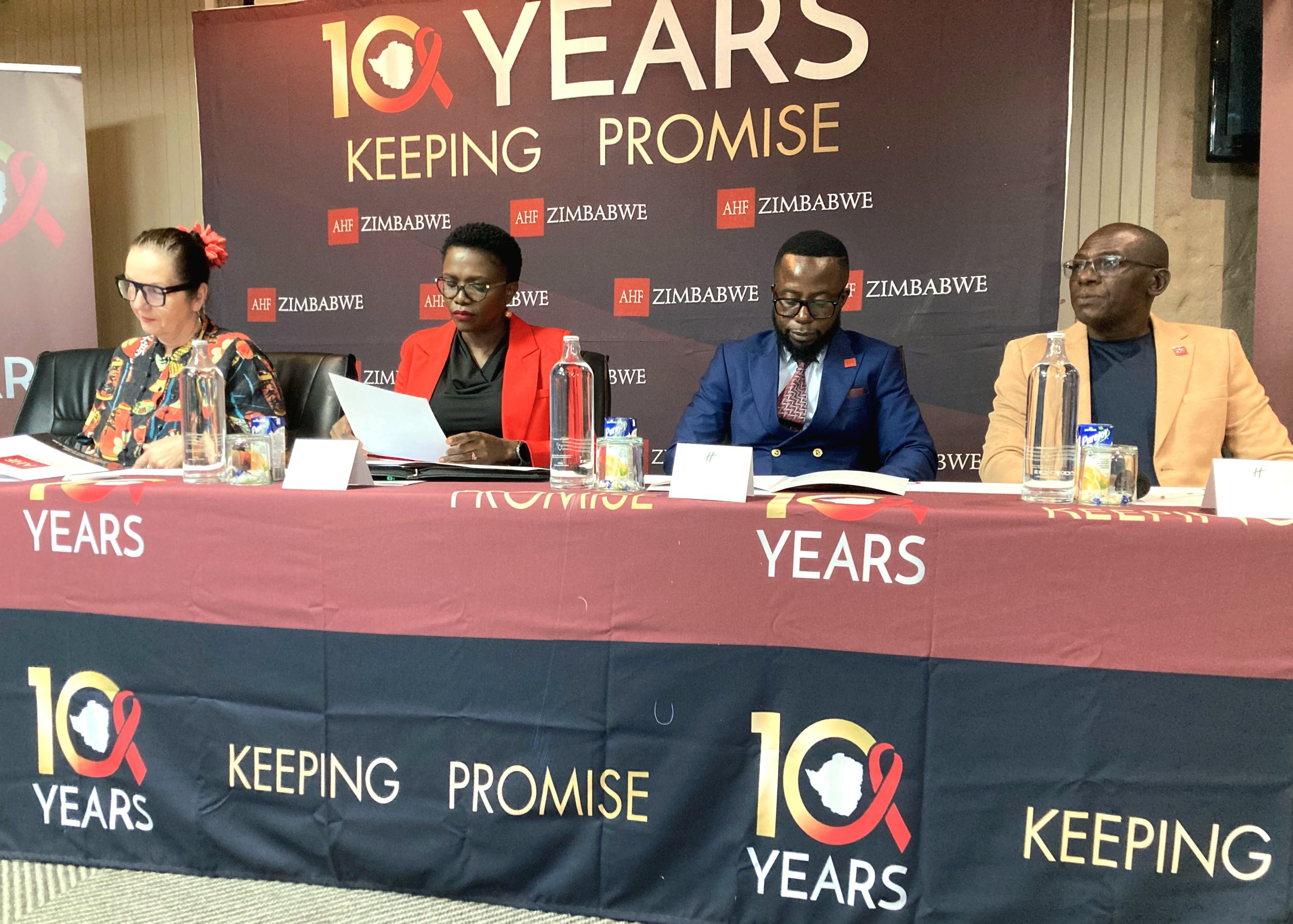
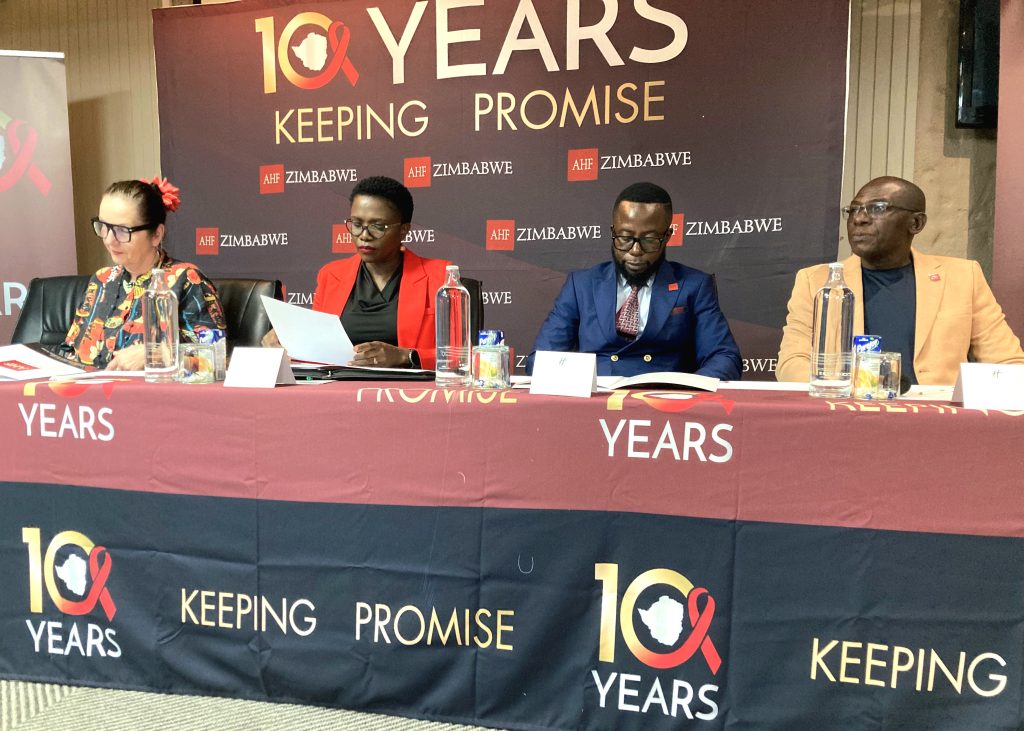
(from left) AHF Chief of Global Advocacy, AHF Executive Vice President Dr Penninah Iutung, AHF Africa Bureau Chief Martin Matabishi and AHF Zimbabwe Country Program Director Dr Ernest Chikwati
BY MUNYARADZI BLESSING DOMA
The AIDS Healthcare Foundation (AHF) has called for stronger collaboration among Government, Parliament, communities, civil society and development partners to sustain gains made in the fight against HIV and accelerate efforts to end AIDS as a public health threat by 2030.
Speaking during the organisation’s 10th anniversary celebrations press conference in Harare on Thursday, AHF Executive Vice President Dr Penninah Iutung said the expansion of HIV services and other achievements recorded over the past decade were a result of collective commitment rather than the efforts of one organisation.
AHF Zimbabwe marked 10 years of providing HIV prevention, testing, treatment and care services under the theme, “A Decade of Impact, A Future of Possibilities: Advancing the Fight to End AIDS.”
She said stronger partnerships would be critical in addressing emerging challenges, including sustainable health financing, stigma and discrimination, unequal access to healthcare and the need to strengthen health systems.
“Over the past 10 years, AHF Zimbabwe has worked alongside the Government of Zimbabwe, the Ministry of Health and Child Care, communities, civil society organisations and other development partners to expand access to HIV services, strengthen prevention efforts, address stigma and discrimination, and ensure that people living with HIV can access quality healthcare with dignity.
“We recognise that these achievements are not the work of one organisation. They represent the collective commitment of Government, communities, healthcare workers, development partners and the people of Zimbabwe,” said Dr Iutung.
She said the next decade required even stronger partnerships and sustained political commitment to ensure that the progress made in the HIV response was not reversed.
Dr Iutung further called for increased engagement with Parliament, particularly through portfolio committees and parliamentary caucuses, to strengthen policies that protect the right to health and promote equitable access to HIV services.
She said Parliament had an important role in ensuring that health remained a national development priority through legislation, budget approval, oversight and public accountability.
“We must also strengthen parliamentary oversight of health budgets and ensure that commitments made at national and international levels translate into tangible investments in communities.”
Dr Iutung also called for stronger regional collaboration among Southern African Development Community (SADC) countries, saying the HIV epidemic and other public health challenges required coordinated responses beyond national borders.
She said countries in the region needed to share successful interventions, strengthen cross-border health programmes and collectively advocate for affordable medicines and health technologies.
“The HIV epidemic does not recognise national borders. Neither should our response,” she said.
On health financing, Dr Iutung said there was a need for greater domestic investment in health programmes as international funding could not be guaranteed indefinitely.
She called for closer engagement between Government, Parliament, civil society, the private sector and development partners to strengthen domestic resource mobilisation and protect essential health services.
“For many years, international development partners have made significant contributions towards HIV prevention, treatment, care and support programmes. These investments have saved millions of lives and transformed the trajectory of the epidemic.
“However, we must acknowledge that external funding is not guaranteed indefinitely,” she added.
Dr Iutung said sustaining the HIV response went beyond keeping programmes operational, but required building strong health systems, empowering communities, retaining skilled healthcare workers and ensuring continued access to quality services.
Speaking at the same event, AHF Zimbabwe Country Programme Director Dr Ernest Chikwati said the organisation’s achievements over the past decade had been made possible through partnerships with Government, civil society, community-based organisations and other development partners.
He said AHF’s work went beyond clinical services to include HIV prevention, condom promotion, community mobilisation, advocacy, stigma reduction and health education, with particular attention to populations often left behind.
“Our next chapter must be defined by stronger partnerships, greater community ownership, sustainable health systems and renewed advocacy for equitable access to healthcare,” said Dr Chikwati.
AHF Chief of Global Advocacy Terri Ford also emphasised the importance of continued collaboration, particularly with the media, in sustaining public awareness and keeping HIV on the national agenda.
She said advocacy was not limited to demonstrations and public campaigns but also involved partnerships, policy engagement and service delivery.
“We can’t stop HIV and AIDS without the media. You’re very important to this,” she said, urging journalists to keep the HIV and AIDS story alive.
AHF Africa Bureau Chief Martin Matabishi said the anniversary was an opportunity to celebrate progress while recognising that more work remained to be done.
He urged stakeholders not to become complacent, noting that behind every treatment statistic was a person, family and community whose future depended on continued efforts.
“The greatest tribute we can pay to the past is not simply to celebrate what we have accomplished, but to be courageous enough to accomplish even more,” he said.