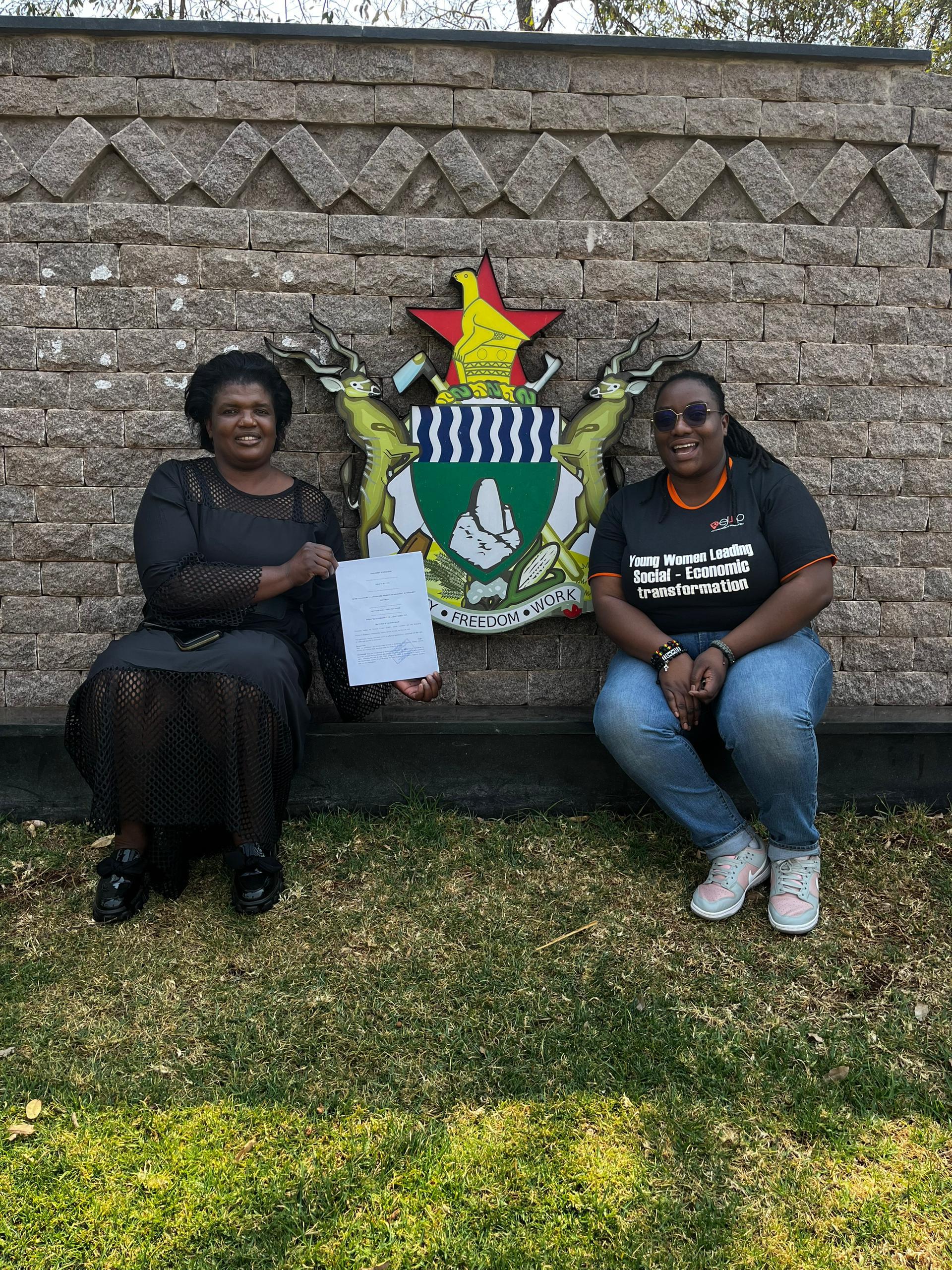
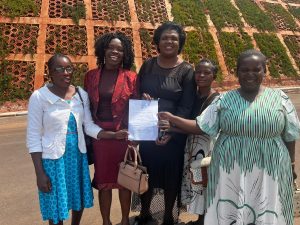
some of the members’ representatives who presented the petition to Parliament
BY MUNYARADZI BLESSING DOMA
Plans announced by government through the Minister of Local Government and Public Works, Daniel Garwe, to privatise water starting with Harare, Bulawayo and Victoria Falls, are unconstitutional and the burden will weigh heavily on women and girls as they carry the load of unpaid care work, the Economic Justice for Women Project (EJWP) has revealed.
Tanyaradzwa Juru, EJWP Programs Lead, revealed this on Monday, during a press conference, adding that they believe, privatisation plans are part of the austerity measures driven by central government’s efforts to reduce public debt and expenditure deficits by reducing public spending.
“This is coming at a time when the government has also introduced numerous taxes targeting the dominant informal economy.
“This decision risks undermining constitutional rights and increasing social inequalities, particularly gender inequality whilst compromising public health.
“The privatisation of water aligns with neo-liberal policy frameworks that emphasize profit at the expense of equity and accountability.
“The government is trusting market forces over human rights and is likely a reflection of government’s challenge to protect its people and defend equal access of a basic public good.
“This directly contravenes Section 77 of Zimbabwe’s Constitution, which guarantees every citizen the right to safe, clean, and potable water,” said Juru.
Juru added: “women and girls will bear the heaviest burden. They already spend hours fetching water, shoulder the burden of unpaid care work as they face sick family members, and face heightened risks of poor menstrual hygiene and time poverty.
“Water commodification will worsen gender injustice, undermining women’s health, dignity, and economic participation.”
Juru further revealed that in Harare, water access is already precarious characterised by high levels of water rationing in most high density suburbs with the highest population, making residents largely dependent on private boreholes, communal water pumps, and shallow unsafe wells.
“This is the reason why cholera, typhoid and other sanitation related diseases frequent Harare and Bulawayo’s suburbs exhausting struggling healthcare systems and taking lives. “With privatisation, the demand for cheap water will surge, making it even scarcer putting the lives of citizens at risk and putting more pressure on the lowly functional health centres.
“The commodification of a public good is a demonstration of government’s failure. “Women suffer the burden of this decisions that will overload the care burden as they carry the responsibility of home care (laundry, family hygiene and household sanitation, health security, fetching water, making healthy meals and taking care of the family).
“The intention to privatise the provision of a public good is a critical opportunity to advance women’s rights as it disrupts the household economy whose entire responsibilities have for centuries rested on women.
“While we’re in the process of advocating for the recognition, redistribution and reduction of social production, we acknowledge the significance of resisting neo-liberal approaches to economic development, particularly through the imposition of austerity measures which are leading to the commodification of public goods relinquishing government’s mandate to protect its citizens, ensure equity and practise accountability.”
Meanwhile EJWP and representatives of its members on Monday submitted a Petition amd Policy Brief to Parliament and respective critical stakeholders in this regard.
In the two documents, EWJP demanded that Parliament halts water privatisation and passes a Water Justice Bill to enshrine public ownership.
“Government invests in public and community-managed water systems instead of outsourcing to profit-driven private companies.
“A gendered human rights impact assessment is conducted before any water sector reforms are rolled out.
“Communities, especially women and marginalized groups, are meaningfully consulted and included in water governance.”
And EJWP reiterated that “water is life and is a basic human right, not a luxury. We call on Parliament and all duty-bearers to act with urgency to protect this fundamental right to water using a People over profit approach. Water for Life, Not for Profit!”
EJWP is a non-profit women’s rights organisation working with young women towards sustainable economic independence since January 2017.
Its inception is founded on the inspiration to facilitate elimination of the inequalities that exist between men and women in levels of participation, competency and returns in economic activities. It seeks to strengthen capacities of young women between 16-35 years of age with knowledge, skills and support for equal and full participation on economic governance, public resource management and platforms for young women to self-organize to advocate for their economic rights at all levels.