
Minister of Health and Child Care, Dr Douglas Mombeshora
BY MUNYARADZI BLESSING DOMA
Health and Child Care Minister, Dr Douglas Mombeshora says Government welcomes The Avenues Clinic’s interest in expanding its nursing training programmes to include General Nursing at Diploma level, recognising the role private healthcare institutions can play in increasing the country’s training capacity.
Speaking at The Avenues Clinic Post Graduate School of Nursing graduation ceremony on Friday, Dr Mombeshora said the Ministry intended to progressively open up private sector participation in nurse training, beyond the current pilot project being undertaken at the Dr Auxillia Mnangagwa School of Nursing in Kadoma.
Dr Mombeshora however said the expansion would be guided by evidence, with reviews and evaluations of the pilot project informing decisions on how and when other private institutions could participate.
“I am aware of The Avenues Clinic’s longstanding involvement in specialist nurse training and its intention to extend its programmes to include General Nursing at Diploma level.
“This is a welcome expression of interest, and Government recognises the potential contribution of private institutions in expanding our training capacity,” he said.
He encouraged The Avenues Clinic and other interested institutions to remain patient and engaged with the Ministry as it worked towards expanding participation in nurse training.
“I therefore encourage The Avenues Clinic and other interested institutions to remain patient and engaged with the Ministry as this process progresses.
“We value your interest, and our shared objective must be to expand training opportunities while safeguarding quality, professional standards and patient safety.”
The Minister said Government’s vision for nursing education went beyond simply increasing the number of nurses being trained, emphasising the need to develop a competent, ethical, adaptable and patient-centred workforce capable of responding to the country’s changing healthcare needs.
He said nurses and midwives remained the backbone of healthcare delivery, making it important to invest in their training, professional development and specialisation.
“Our vision for nursing education goes beyond simply increasing the number of nurses we produce. We must develop a competent, ethical, adaptable and patient-centred workforce, equipped to respond to the changing health needs of our population,” he said.
Dr Mombeshora added that this was central to President Mnangagwa’s Vision 2030 and the National Development Strategy 2, adding that Government was committed to expanding training opportunities, strengthening training institutions and embracing innovation.
He also highlighted the importance of developing specialist competencies in areas such as critical care, oncology, emergency medicine and neonatal care.
The Minister, who said he had a personal connection with The Avenues Clinic, having been among the pioneer heads of its Casualty Department when the institution was established, said he was pleased to witness its growth and transformation.
He said it was satisfying to see the institution evolve from a healthcare facility into one that was also contributing meaningfully to specialist nursing education.
He said the institution had trained 347 specialist nurses in the two disciplines, while its more recent introduction of Oncology and Palliative Care Nursing, together with its collaboration with the University of Zimbabwe in providing clinical attachment opportunities, demonstrated its continued commitment to strengthening nursing competencies.
 The Avenues Clinic Managing Director Sibusisiwe Ndhlovu
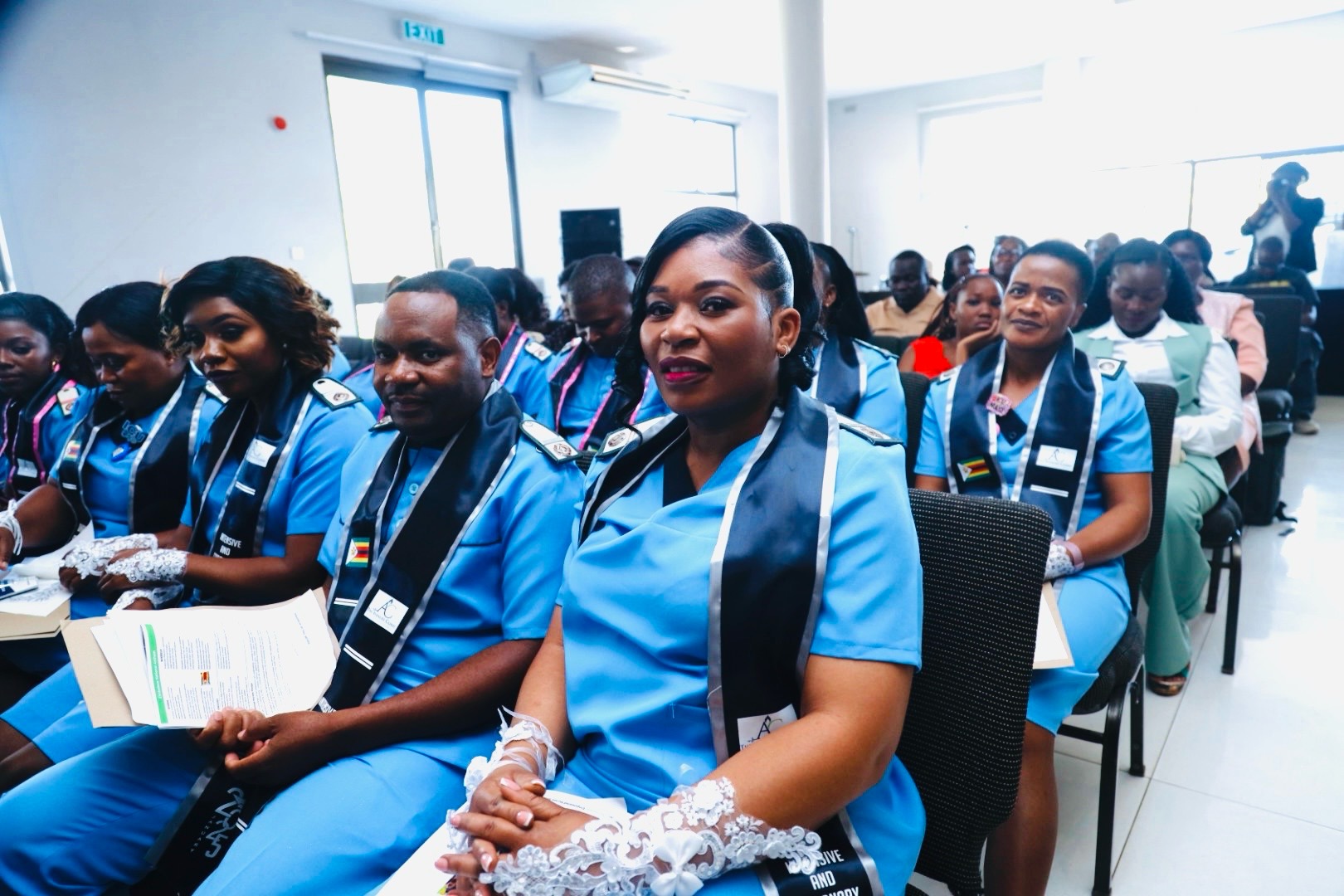
, speaking at the graduation of 38 specialist nurses, said the institution had a proud and longstanding legacy in specialist nursing education, built through years of investment in training and professional development.
She said the clinic had sustained its training programmes through the dedication of tutors, clinical instructors, nursing leadership and healthcare professionals who ensured students received both academic grounding and practical clinical experience.
Ndhlovu said the clinic had trained Intensive Care Nurses since 1998 and Operating Theatre Nurses since 1979, producing 185 Intensive Care Nurses and 162 Operating Theatre Nurses, bringing the total to 347 specialist nurses.
She said the introduction of Oncology and Palliative Care specialist nurse training this year marked another important step in the institution’s contribution to Zimbabwe’s healthcare sector.
“Today, therefore, is about much more than receiving a certificate. It is a celebration of our continued investment in healthcare, the advancement of specialist nursing practice, and our collective responsibility to build a stronger healthcare system for Zimbabwe,” she said.
Ndhlovu added that investing in people through education, clinical excellence, innovation and collaboration remained central to the clinic’s commitment to inspiring healthier communities.
She also acknowledged the support received from the Ministry of Health and Child Care and the Nursing Council of Zimbabwe as the institution expanded its specialist nurse training programmes.
Florence Ogwal, The Avenues Clinic Principal Nursing Officer said the graduation was an opportunity to celebrate the vital contribution nurses continued to make to Zimbabwe’s healthcare sector.
She said specialist nursing education was important in strengthening healthcare delivery, improving patient outcomes and ensuring patients received quality care closer to their homes.
Ogwal said this year’s International Nurses Day theme, “Our Nurses. Our Future. Empowered Nurses Save Lives”, aptly reflected the importance of investing in nursing education and professional development.
“Education empowers nurses to deliver safer, more effective care. Specialist training equips nurses to improve patient outcomes. When nurses are supported to lead, innovate, and practise to the full extent of their knowledge and skills, our healthcare systems become stronger,” she said.
She said Zimbabwe needed specialist nurses across the continuum of care, including theatre nurses to support increasingly complex surgical procedures, intensive and coronary care nurses to manage critically ill patients, and oncology and palliative care nurses to support cancer patients and their families.
Ogwal said the clinic had also invested in modern medical equipment to support nurses in delivering care that met international standards.
She said strengthening local specialist nursing capacity would enable more patients to access appropriate care closer to home, with the support of their families.
Ogwal also renewed the clinic’s request for approval to train General Nurses, saying the programme would complement its existing specialist nursing courses and support Government’s efforts to strengthen the national nursing workforce.
She said the institution was ready to work with Government, the Nurses Council of Zimbabwe and public sector training institutions to meet the required standards and establish collaborative approaches to classroom teaching and clinical placements.