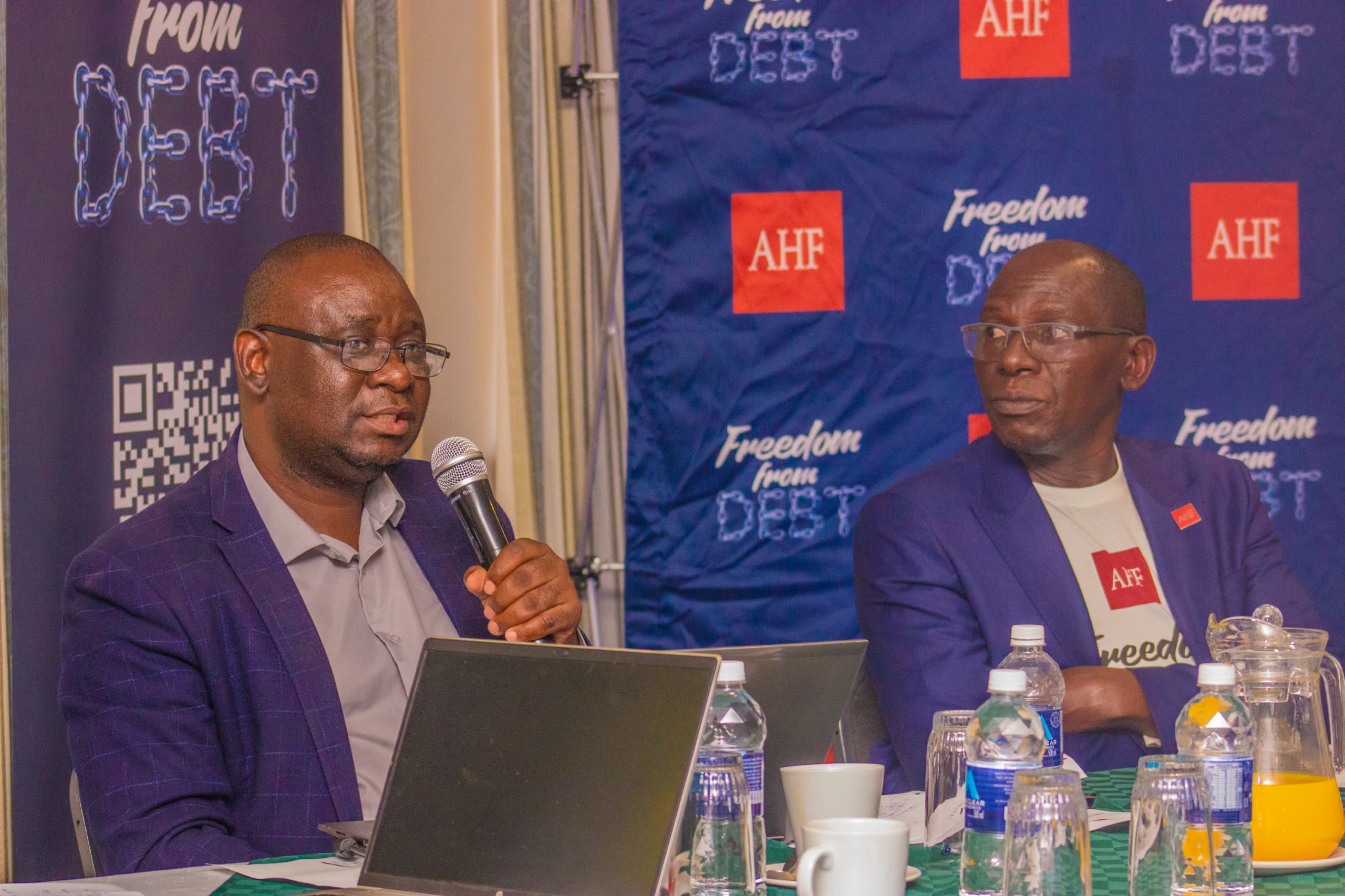
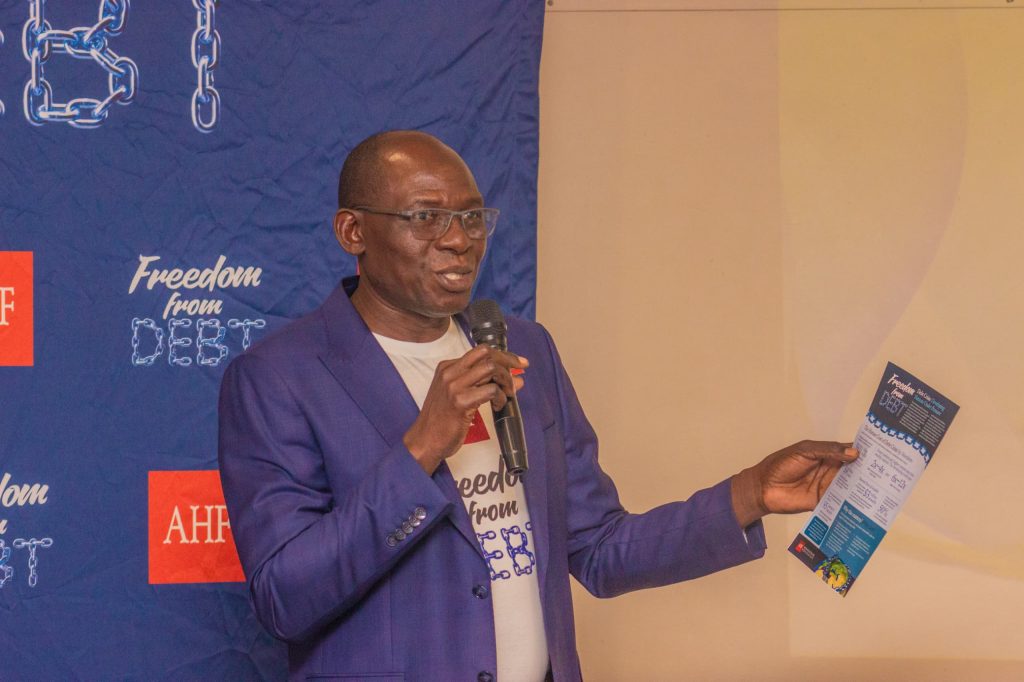
Dr Enerst Chikwati, AHF Zimbabwe Country Program Manager (all pics by Daphne Machiri)
BY MUNYARADZI BLESSING DOMA
Zimbabwe has been urged to join the proposed Borrowers’ Forum to strengthen its voice when negotiating debt repayment and restructuring with creditors.
This comes at a time the country’s public and publicly guaranteed debt stood at US$23.7 billion as at June 2026, representing about 39 percent of Gross Domestic Product (GDP).
AIDS Healthcare Foundation (AHF) Zimbabwe, Country Program Manager, Dr Enerst Chikwati, revealed this during a Freedom from Debt campaign media engagement on Friday, which sought to highlight the impact of debt on health and other social services.
Dr Chikwati said countries facing debt challenges needed to come together and amplify their voices when negotiating with creditors.
“At AIDS Healthcare Foundation, we have really assessed the effect of debt on not just the health side, but other social services.
“We have realised most governments, not just the government of Zimbabwe, but most governments, they struggle paying, repaying the debt, but other social responsibilities are affected,” said Dr Chikwati.
He revealed that they are pushing for governments to join the Borrowers’ Forum, an idea which he said was raised in Seville, Spain, and further amplified during the G20 in South Africa.
“The advantage of having a Borrowers’ Forum, you amplify your voices. You are better ahead when you are united as a group.
“So we are pushing for that, that governments join that borrower’s forum so that their voices are amplified in that Borrower’ Forum.”
He added that AHF was also calling for pauses on interest charges whenever countries face major crises such as pandemics.
“We are also pushing for the idea where we have got pauses in terms of interest charges on the debt. Whenever there’s a crisis like the last time there was COVID, there should be some pause in terms of interest charge to our debt,” Chikwati said.
AHF is also advocating for an Artificial Intelligence (AI) levy, with part of the revenue generated by AI businesses being channelled towards debt relief.
“The other area we are also pushing for is a levy, we are pushing that AI levy.
“Part of the income coming from AI business should be pushed towards debt relief, either debt repayment, because most of these AI companies, they are getting money from Africa, they are getting money from global south.
“So at least if you can get 1 percent of their revenue going towards debt relief, it will help a lot,” said Dr Chikwati.
Chikwati emphasised that AHF was supporting the Zimbabwean Government to join the Borrowers’ Forum.
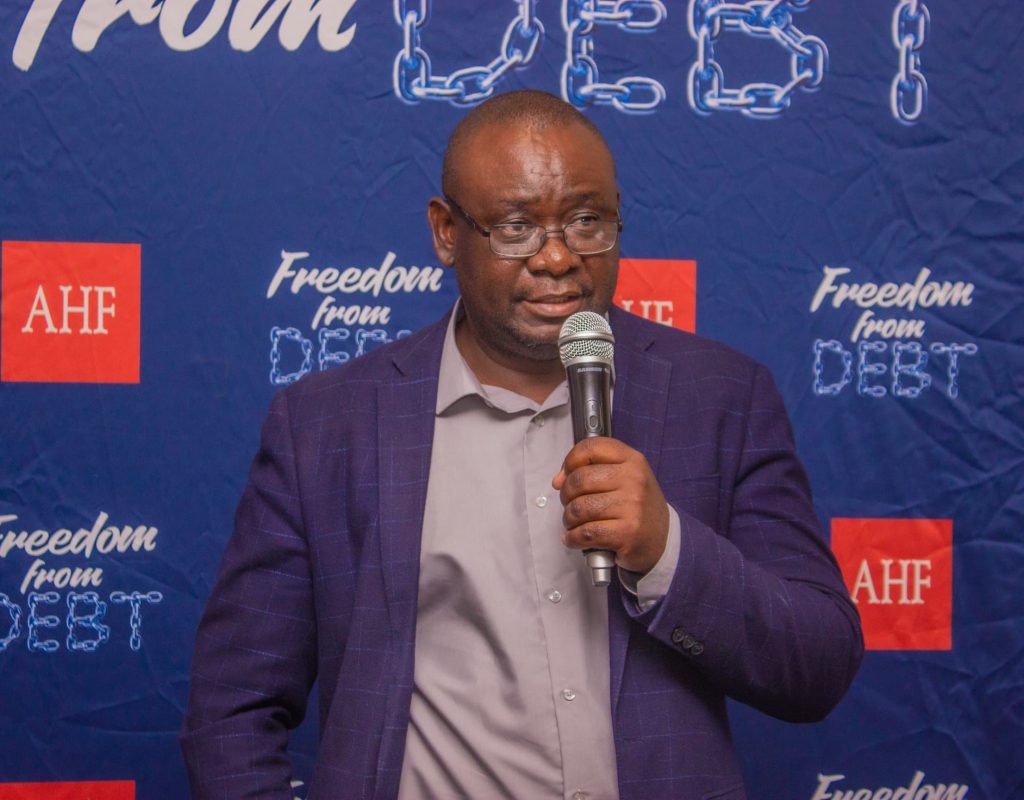
Dr Tichaona Zivengwa
Africa Economic Development Strategies (AEDS) Senior Economist Dr Tichaona Zivengwa said the country’s public and publicly guaranteed debt stood at US$23.7 billion as at June 2026, representing about 39 percent of Gross Domestic Product (GDP).
And according to Dr Zivengwa, the figure increased from US$23.4 billion in December 2025.
He said US$11.7 billion of the debt was external, while about US$10 billion was domestic debt.
Dr Zivengwa said a major concern was that about US$10 billion, or 46.3 percent of the total debt, consisted of arrears and penalties.
He said the county was in debt distress, as he attributed the situation to macroeconomic instability, persistent budget deficits, costly domestic borrowing and accumulating arrears.
It was also revealed that about 70.8 percent of the country’s external debt was in arrears and penalties, affecting Zimbabwe’s creditworthiness and access to concessional financing.
Dr Zivengwa said debt servicing was also putting pressure on resources that could otherwise be used to finance essential public services.
Zimbabwe paid US$220.3 million towards external debt between January and September 2025, while about 19.5 percent of export earnings went towards debt servicing.
He said the debt burden had implications for health, education and other social services.
Dr Zivengwa further revealed that the Ministry of Health and Child Care had utilised only 33 percent of its approved budget by mid-2026, while 92 percent of Zimbabweans were relying on out-of-pocket payments for healthcare.
“Resolving the debt problem and improving public financial management were therefore critical to creating fiscal space for social services,” said Dr Zivengwa.
He recommended measures including the Arrears Clearance and Debt Resolution Roadmap, the Medium-Term Debt Management Strategy 2026–2030, greater use of concessional financing and reducing reliance on costly domestic borrowing.