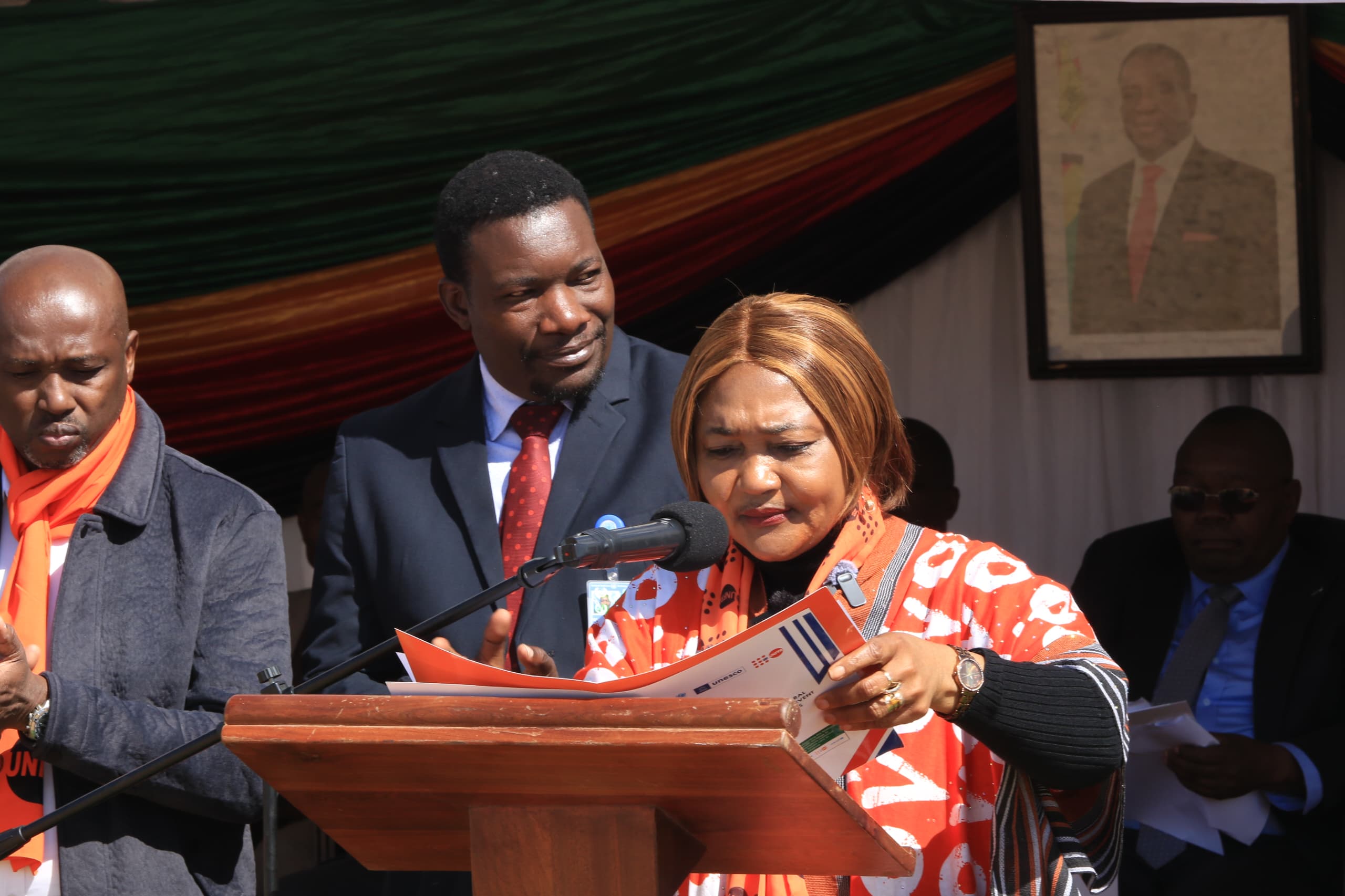
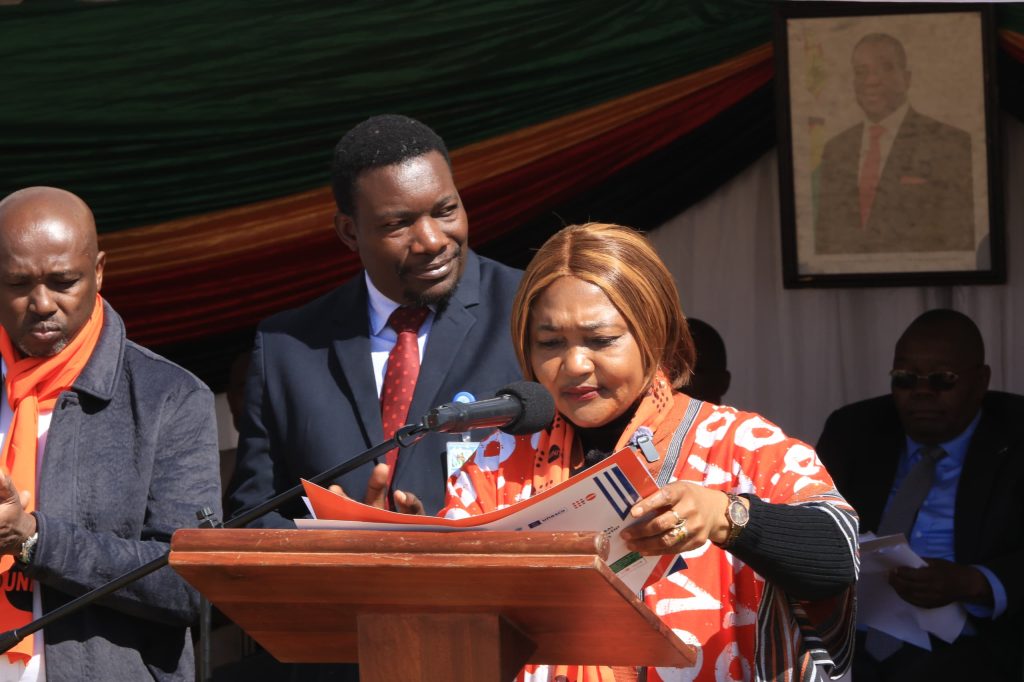
UNFPA Representative Miranda Tabifor
BY MUNYARADZI BLESSING DOMA
The Government of Zimbabwe, together with UNESCO, UNFPA and UNICEF, has launched the National Framework for the Prevention and Response to Adolescent Pregnancies in a move aimed at tackling rising teenage pregnancies across the country.
The framework which was officially launched at Goromonzi High School on Monday, seeks to strengthen efforts to prevent adolescent pregnancies while protecting the health, education and future of young people.
Zimbabwe is facing a growing challenge, with teenage pregnancy prevalence now standing at 23.7 percent, meaning nearly one in every four girls aged between 15 and 19 has begun childbearing.
The initiative comes at a time when almost 70 percent of the country’s population is under the age of 35, making investment in young people a national priority.
Speaking during the launch, United Nations Resident Coordinator Rosemary Kalapurakal, in a speech read on her behalf by UNFPA Representative Miranda Tabifor, said the framework marked a significant step towards protecting Zimbabwe’s youth.
“By establishing this framework, Zimbabwe is taking a decisive, historic step toward safeguarding the health, dignity, and future of its most valuable asset: its young people.”
She added: “the launch today represents not just a policy framework, it’s a strategic shift towards domestic and national ownership. By integrating the successful Not-In-My-Village campaign model to end adolescent pregnancy we are actually empowering traditional leaders to act as the primary accountability officers for our adolescent and young people.
“As a United Nations system, our joint effort and support for this initiative is a testament of our commitment to sustain these gains long into the future, moving from not only supporting aid but to ensure that we are collectively aligned and ensure that our young people’s potential are fulfilled,” said Kalapurakal.
The launch follows findings from the 2023 National Assessment of Adolescent Pregnancies, which showed an increase in pregnancies among adolescents, particularly in rural areas where the prevalence is twice that of urban communities.
Officially launching the framework, Minister of Public Service, Labour and Social Welfare, Edgar Moyo said adolescent pregnancy has become a major national challenge with lasting effects on individuals and the country’s development.
“When adolescents are denied opportunities, when they leave school prematurely, when they become trapped in cycles of poverty and vulnerability the consequences are felt far beyond individual households,” said Minister Moyo.
Minister Moyo added that the “adolescent pregnancy, therefore, is not simply a challenge affecting individual care. It is a challenge affecting our collective social and economic development.
“It has implications for educational attainment, labour productivity, health outcomes, social cohesion, and intergenerational poverty. It affects our ability to achieve the Sustainable Development Goals, our efforts to realise Agenda 2063, and our aspirations under Vision 2030.”
The launch is driven by sobering data from the 2023 National Assessment of Adolescent Pregnancies, which revealed a surge in pregnancy rates among adolescents, particularly in rural areas where prevalence is double that of urban centers.
Addressing adolescent pregnancy requires the collaborative efforts of the Ministries of Youth, Gender, Health, Social Welfare, and Law Enforcement, working in harmony to protect vulnerable adolescents. The Framework reinforces the Government’s commitment to youth development, following the recent launch of the National Youth Empowerment Strategy (2026–2030) and the National Youth Policy (2026–2030).
In the true spirit of the multi sectoral response to adolescent pregnancy various Ministries at the launch gave their solidarity remarks. These include the Ministries of Youth Empowerment, Development and Vocational Training, Health and Child Care and Primary and Secondary Education.
It is through the support of the Health Resilience Fund (HRF) programme that some these key investments are being made for young people’s development through UNFPA. The HRF is a pooled fund that benefits from financial contributions under the coordination of the Ministry of Health and Child Care to improve health care for vulnerable mothers, new-borns, children and adolescents in Zimbabwe.
Its funding partners are the European Union, the Governments of Ireland and the United Kingdom, and Gavi, the Vaccine Alliance.