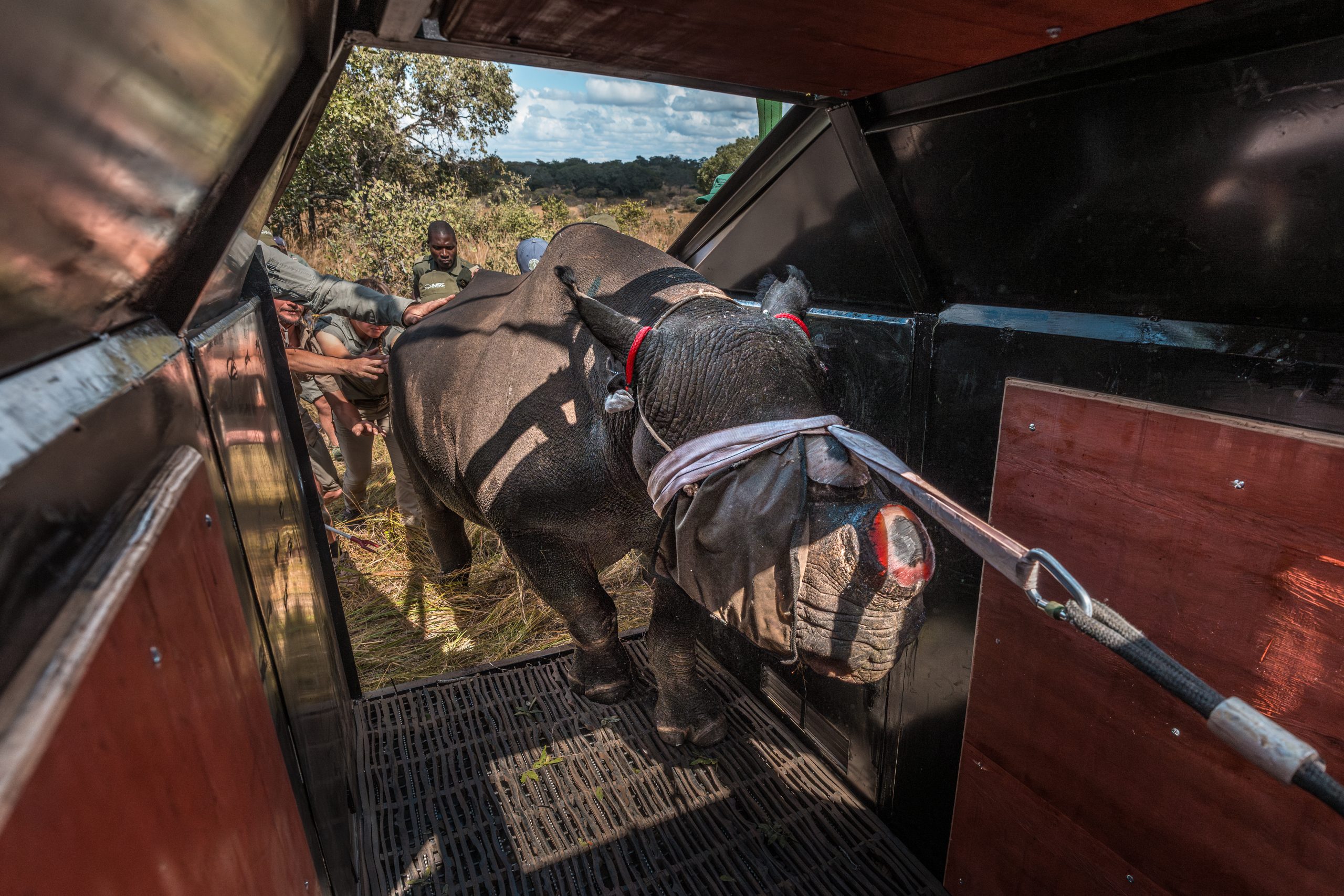
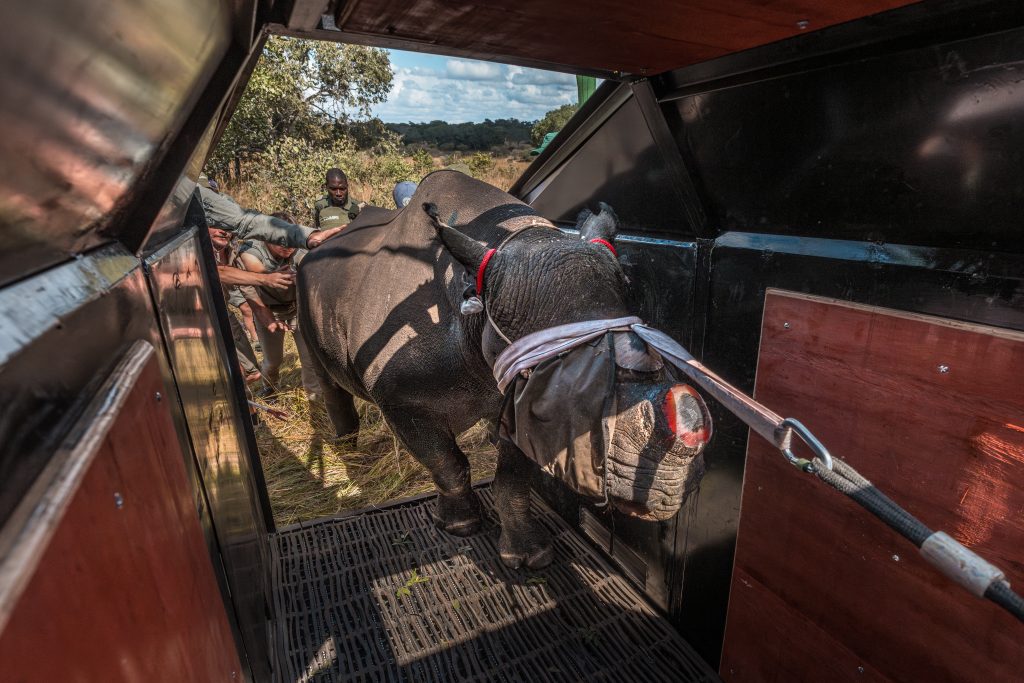
Black Rhino capture in Imire Rhino and Wildlife Conservancy, Zimbabwe (pic by Marcus Westberg)
BY MUNYARADZI BLESSING DOMA
In a major conservation milestone for Zimbabwe in decades, a group of critically endangered black rhino has been reintroduced into Matusadona National Park, marking a full-circle moment for the park.
It is reported that this reintroduction marks the return of a species that once defined this landscape.
Before the onset of organised poaching in the late 1980s and early 1990s, the Sebungwe region, with Matusadona at its centre, supported Zimbabwe’s largest contiguous population of black rhino.
And as the poaching crisis deepened, the Zimbabwe Parks and Wildlife Management (ZimParks) decided to remove surviving animals from high-risk areas and relocate them to safer sites across the country.
The animals, sourced from Imire Rhino and Wildlife Conservancy, Matobo National Park, and one other undisclosed location, were loaded into specially designed crates and airlifted to the park on the shores of Lake Kariba. The sustained effort and investment by organisations like Imire, Dambari Wildlife Trust and Matobo National Park in protecting these animals, has been central to this moment; without their commitment, this return would not have been possible.
ZimParks Director General Professor Edison Gandiwa, said: “the return of black rhino to Matusadona National Park is a historic event and a proud moment for Zimbabwe’s conservation efforts.
“It is a testament to what is possible when government, conservation organisations, and local partners work together with shared purpose.
“ZimParks has always known that Matusadona has the habitat and now, through this partnership, the security and management capacity to support a viable population. Today, that conviction has been realised.”
Similar sentiments were echoed by Reilly Travers, Conservancy Manager of Imire Rhino and Wildlife Conservancy who said: “words cannot describe the feeling of watching these rhino touch ground once again in Matusadona.
“It is a moment filled with pride, hope, and belief in the power of long-term partnership and shared vision. Today is not only about the rhino themselves, but about the extraordinary dedication shown over the past 25 years by rangers, conservationists, partners, and local communities who helped safeguard these animals for their eventual return to their rightful home range.”
Michael Pelham, Park Manager of Matusadona National Park said he had witnessed how the animals had been lost in 1990s as he also helped capture the last survivors.
“We crated them and flew them out to safety, not knowing if the species would ever come back.
“Having witnessed the rhino’s catastrophic decline in Matusadona, it is incredibly emotional to see their return. Matusadona is synonymous with black rhino, and walking through this landscape recently, there has been an overbearing sense that we are missing an icon. No words can describe the feeling of seeing these animals arrive back into Matusadona.
“The entire park team is incredibly grateful to every individual and partner who has helped make this moment a reality,” said Pelham.
Daniel Sithole, Country Manager of Matusadona Conservation Trust, said: “this is not a project imported from elsewhere. These animals carry the genetics of this landscape. Their return belongs to Zimbabwe, and to every Zimbabwean who always planned and hoped for their return.”
Peter Fearnhead, CEO of African Parks said he was in Matusadona in the early 1990s and witnessed the loss of black rhino.
“I also took part in the effort to try and save them. The management and funding challenges faced by the park at the time were an important driver in conceptualising African Parks as an organisation.
“It is therefore personally gratifying to have been a partner in the revival of Matusadona, together with ZimParks, local communities and so many dedicated people. Once again, the black rhino is an icon in this magnificent landscape,” he said.
Following a period of close monitoring in purpose-built bomas, the black rhinos will be released in phases into a secure 175-square-kilometre Intensive Protection Zone in the national park.
Each animal is fitted with a tracking device, enabling real-time monitoring and rapid response to any signs of stress or conflict after release.
This reintroduction directly supports Zimbabwe’s National Rhino Strategy by establishing a founder population that should, over the next 15 years, contribute to another metapopulation in the country.