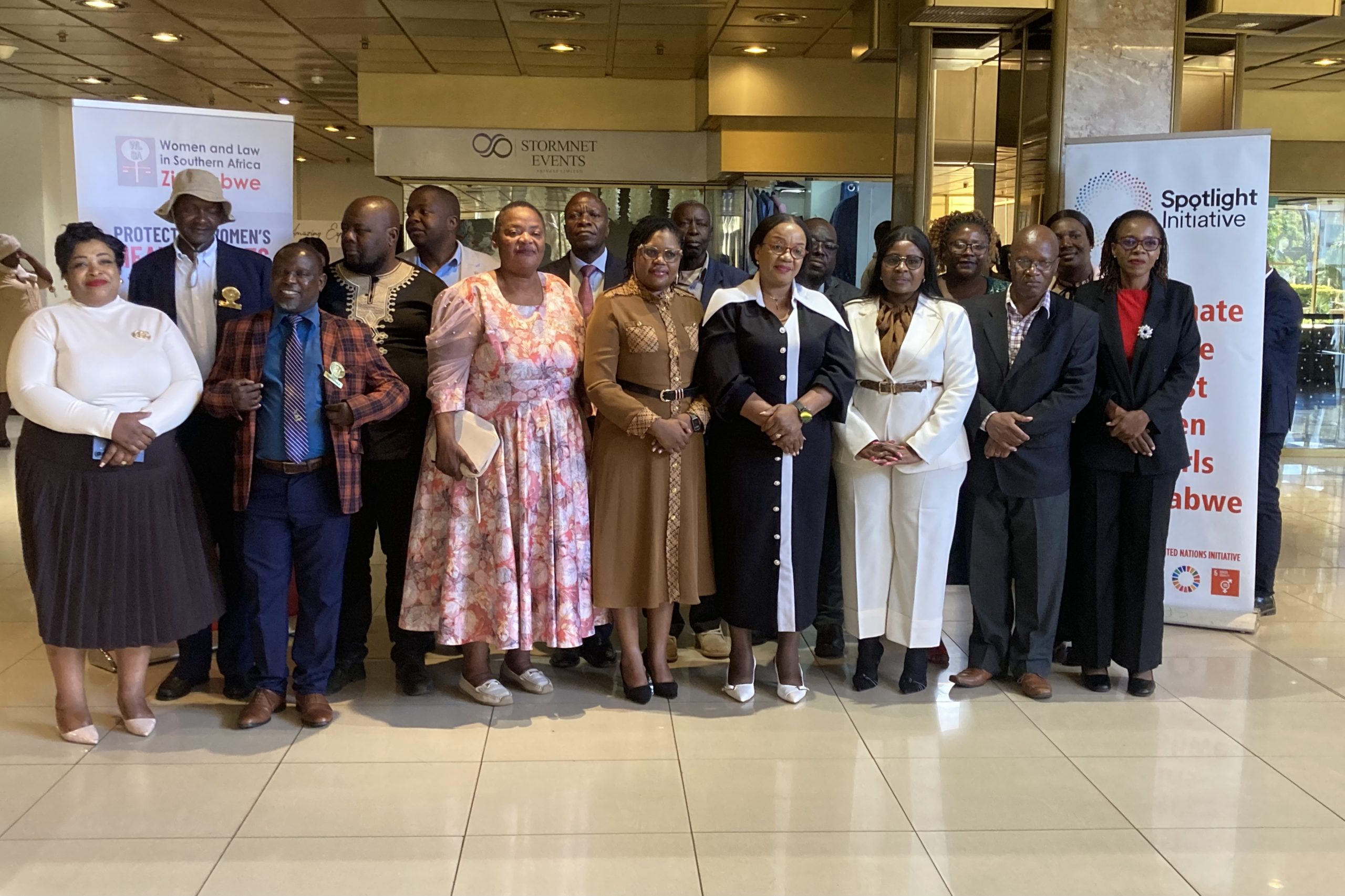
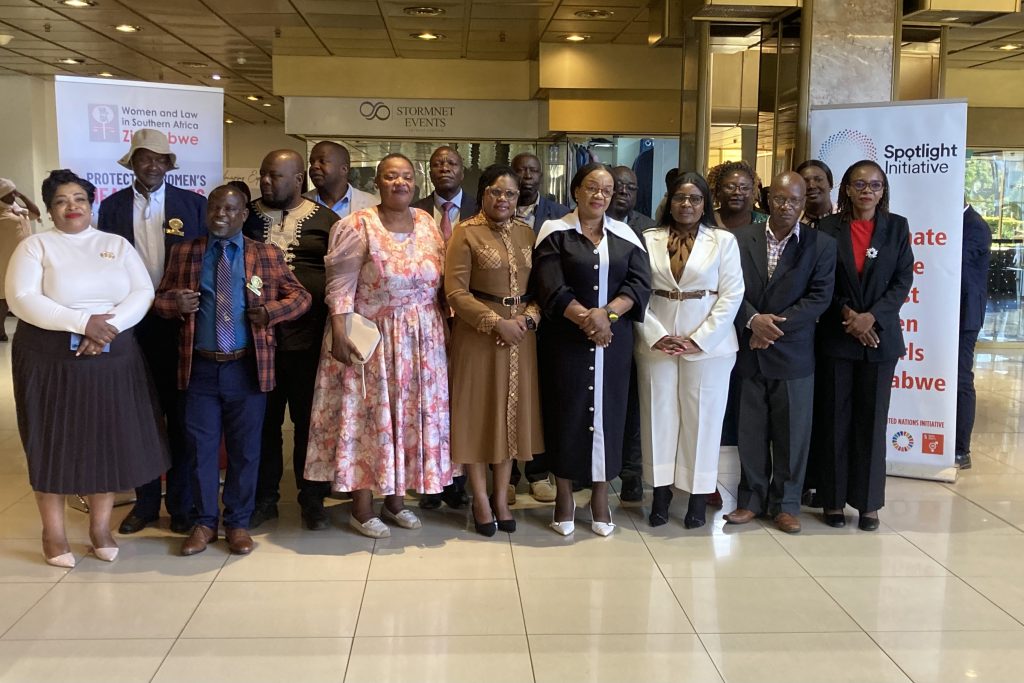
 some of the stakeholders pose for a fpr
BY MUNYARADZI BLESSING DOMA
Minister of Women Affairs, Community, Small and Medium Enterprises Development Senator Monica Mutsvangwa has called for properly coordinated efforts to ensure that women and girls get meaningful access to justice.
Minister Mutsvangwa said this on Wednesday (April 29) in a speech read on her behalf by Stephen Nyaruwata, Director of Gender Mainstreaming, Wellness and Inclusivity in her ministry, at a high-level meeting which was organised by Women and Law in Southern Africa (WLSA).
The meeting was a follow-up to the 70th Session of the Commission on the Status of Women (CSW70).
And the meeting was held under the theme: “Centering Women and Girls: Driving improved access to justice through inclusive systems.”
“Meaningful access to justice for women and girls requires a multi-sectoral and coordinated approach, no single entity can achieve this alone.
“It is therefore our collective responsibility to ensure that all women and girls have access to justice,” said Minister Mutsvangwa.
She emphasised that the meeting must move beyond dialogue to implementation and beyond commitments to resolving the issues.
“Let us leave this room with clear actions, assigning responsibilities and a shared timeline.
“The women and girls of Zimbabwe are waiting, we cannot afford to disappoint them.”
She added that the meeting was also important to promote inclusive and equitable legal systems, eliminate discriminatory laws, policies and practices, and address structural barriers.
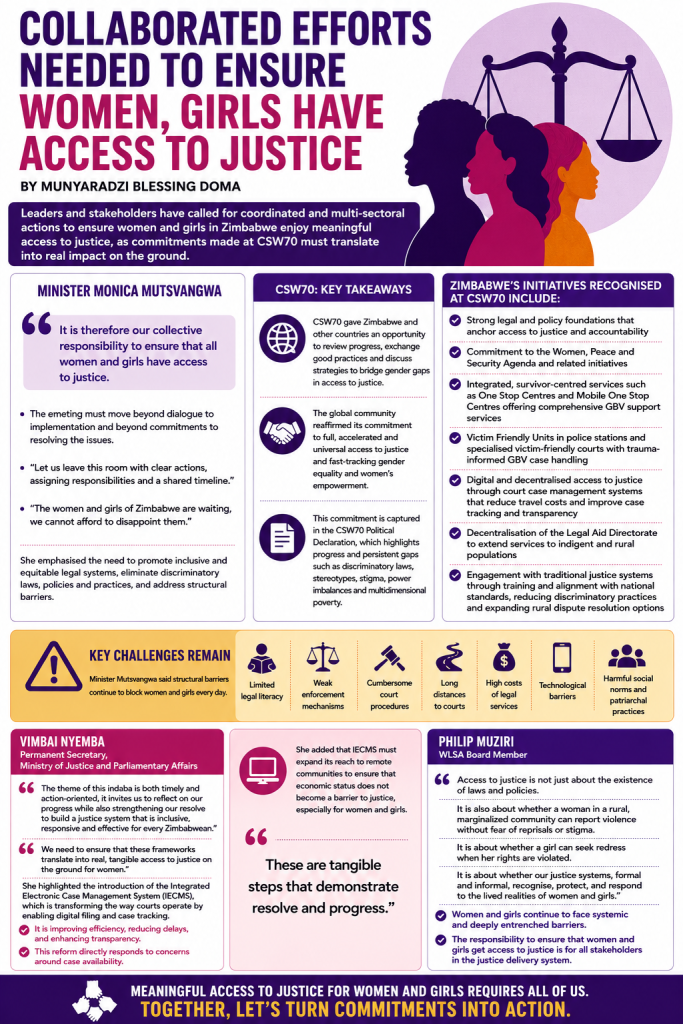
“CSW70 gave Zimbabwe, together with other countries, a clear opportunity to review progress, exchange good practices, and discuss concrete strategies to bridge the gender gaps that still block full and equal access to justice for women and girls.
“The global community reaffirmed its commitment to full, accelerated and universal access to justice, and to fast-tracking the implementation of all global agreements on gender equality and women’s empowerment.
“That commitment is captured in the CSW70 Political Declaration, which openly highlights both the progress achieved and the persistent gaps; discriminatory laws and practices, harmful gender stereotypes, stigma, power imbalances, and multidimensional and intergenerational poverty.”
She added that it was good to note that several of Zimbabwe’s initiatives were recognised as outstanding models at CSW70 for promoting inclusive and equitable access to justice for women and girls.
“These include our strong legal and policy foundations that anchor access to justice and accountability; Zimbabwe’s commitment to the Women, Peace and Security Agenda and related initiatives; integrated, survivor-centred service models such as One Stop Centres and Mobile One Stop Centres offering comprehensive GBV support services; Victim Friendly Units in police stations and specialised victim-friendly courts with trauma-informed GBV case handling; digital and decentralised access to justice through court case management systems that reduce travel costs and improve case tracking and transparency; the decentralisation of the Legal Aid Directorate to extend services to indigent and rural populations; engagement with traditional justice systems through training and alignment with national standards, which reduces discriminatory practices while expanding rural dispute resolution options.”
Minister Mutsvangwa said while the country was applauded and emulated for these practices, reality also demands acknowledgement of the need to do more.
“Key challenges remain, which include limited legal literacy, weak enforcement mechanisms, cumbersome court procedures, long distances to the courts, high costs associated with legal services, technological barriers and harmful social norms and patriarchal practices.
“These are not small gaps, they are structural barriers that block women and girls every day.”
Vimbai Nyemba, Permanent Secretary in the Ministry of Justice and Parliamentary Affairs, called for the promotion of the rule of law and ensuring equal access to justice for all, particularly for women and girls.
“The theme of this indaba is both timely and action-oriented, it invites us to reflect on our progress while also strengthening our resolve to build a justice system that is inclusive, responsive and effective for every Zimbabwean.”
She said while the country had made strides to ensure meaningful progress for women and girls, there is need to do more.
“We need to ensure that these frameworks translate into real, tangible access to justice on the ground for women.”
She also said it was good that there were some technological advancements in the justice delivery system, saying, “To strengthen access to justice in this regard, a practical example in the justice sector includes the introduction of the Integrated Electronic Case Management System (IECMS), which is transforming the way courts operate by enabling digital filing and case tracking.
“It is improving efficiency, reducing delays, and enhancing transparency.
“This reform directly responds to concerns around case availability.”
She added that they want to see IECMS expanding its reach to remote communities, ensuring that economic status does not become a barrier to justice, especially for women and girls.
“These are tangible steps that demonstrate resolve and progress.”
Philip Muziri, WLSA Board member, in his opening remarks said it was important to dialogue on the persistent barriers faced by women and girls in accessing justice and to also promote a just society where women and girls fully enjoy their rights and protection of the law.
“Access to justice is not just about the existence of laws and policies.
“It is also about whether a woman in a rural, marginalized community can report violence without fear of reprisals or stigma.
“It is about whether a girl can seek redress when her rights are violated.
“It is about whether our justice systems, formal and informal, recognise, protect, and respond to the lived realities of women and girls,” said Muziri.
He added that women and girls continue to face barriers that are systemic and deeply entrenched.
“And this includes the high cost of accessing legal services, long distances to courts, limited legal awareness and institutions that are not always responsive to gendered experiences of harm,” he added.
He added that the responsibility to ensure that women and girls get access to justice is for all stakeholders in the justice delivery system.