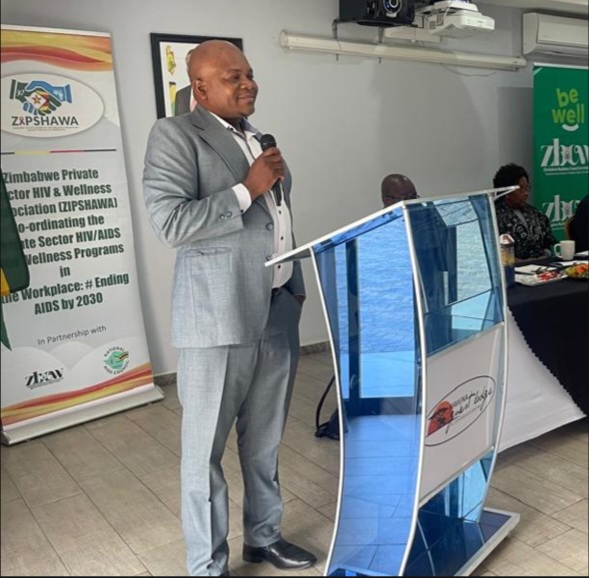
ZBCW Executive Director Reason Machengere
BY MUNYARADZI BLESSING DOMA
The Zimbabwe Business Council on Wellness (ZBCW) says the country stands at a critical juncture in its pursuit of a resilient, self-sustaining health system.
The ZBCW Executive Director Reason Machengere in a statement said government’s mobilisation of over US$190 million in 2025 (up from approximately US$144 million in 2024) through airtime and sugar-related levies demonstrates commendable commitment to strengthening domestic health financing.
“These resources have potential to contribute to key national priorities, including cancer care and the growing burden of non-communicable diseases (NCDs).
“At the same time, it brings into sharper focus the need to ensure that such efforts are efficient, balanced, and sustainable,” said Machengere.
He added that as an institution, they sympathize with the position of the Ministry of Health and Child Care (MoHCC): the health financing gap remains significant, and taxation alone will not fully meet the country’s needs.
“Responsible domestic resource mobilization is therefore both necessary and justified.
“However, we equally recognise the concerns of the private sector regarding the cumulative burden of taxes in an already constrained economic environment.
“There is growing sentiment that escalating levies risk affecting business viability, competitiveness, and employment. A balanced approach is therefore essential.”
Machengere added that efficiency in utilisation must take precedence over further revenue expansion.
He added that while significant resources are being collected, delays in disbursement and implementation-particularly in procurement and installation of critical health infrastructure-have limited the speed at which these funds translate into tangible health outcomes. “Strengthening disbursement efficiency within the relevant ministries, alongside improving procurement and supply chain systems, will be critical.
“Every dollar collected must deliver measurable impact in the shortest possible time.
“Secondly, ZBCW supports a structured and transparent ring-fencing framework.
“A defined proportion of sin taxes should be earmarked specifically for health and wellness, supported by robust governance, independent oversight, and regular public reporting.
“This will enhance accountability, build public trust, and ensure alignment between revenue collection and health outcomes-while still allowing Government the fiscal flexibility required to manage competing national priorities.
“Thirdly, Zimbabwe must broaden its approach beyond taxation. Over-reliance on levies risks placing disproportionate pressure on the private sector. ZBCW strongly advocates for business-friendly and mutually beneficial financial models, including tax incentives for companies and individuals that pursue public benefit goals.
“This may include tax reductions and /or tax exemptions related to the corporate tax, municipal tax, VAT, the land tax, and estate duties. that voluntarily invest in employee and community health programmes (HIV, NCDs, mental health, and wellness initiatives); promotion of corporate health foundations as complementary financing mechanisms; expanded public-private partnerships (PPPs) in health infrastructure, procurement, and service delivery; and increased participation of non-state actors and civil society,” said Machengere.
He added that such approaches create a system that rewards investment in health, rather than relying solely on mandatory contributions.
“Ultimately, a strong health system and a thriving private sector are mutually reinforcing. A healthy workforce drives productivity, economic growth, and national competitiveness. Equally, a stable and growing private sector is essential to sustain health financing over the long term.
“ZBCW therefore calls for a pragmatic, partnership-driven approach that ensures accountable ring-fencing and efficient use of health taxes; prioritises speed and effectiveness in fund disbursement and implementation; introduces incentive based models to encourage private sector investment in health; and promotes shared responsibility across Government, business, and civil society.
“Zimbabwe has laid a strong foundation. The opportunity now is to refine the model-ensuring that health financing mechanisms not only mobilise resources, but do so in a way that is efficient, equitable, and supportive of economic sustainability,” further revealed Machengere.
He added that as ZBCW they remain committed to working alongside government, industry, and development partners to advance solutions that deliver both improved health outcomes and growth.