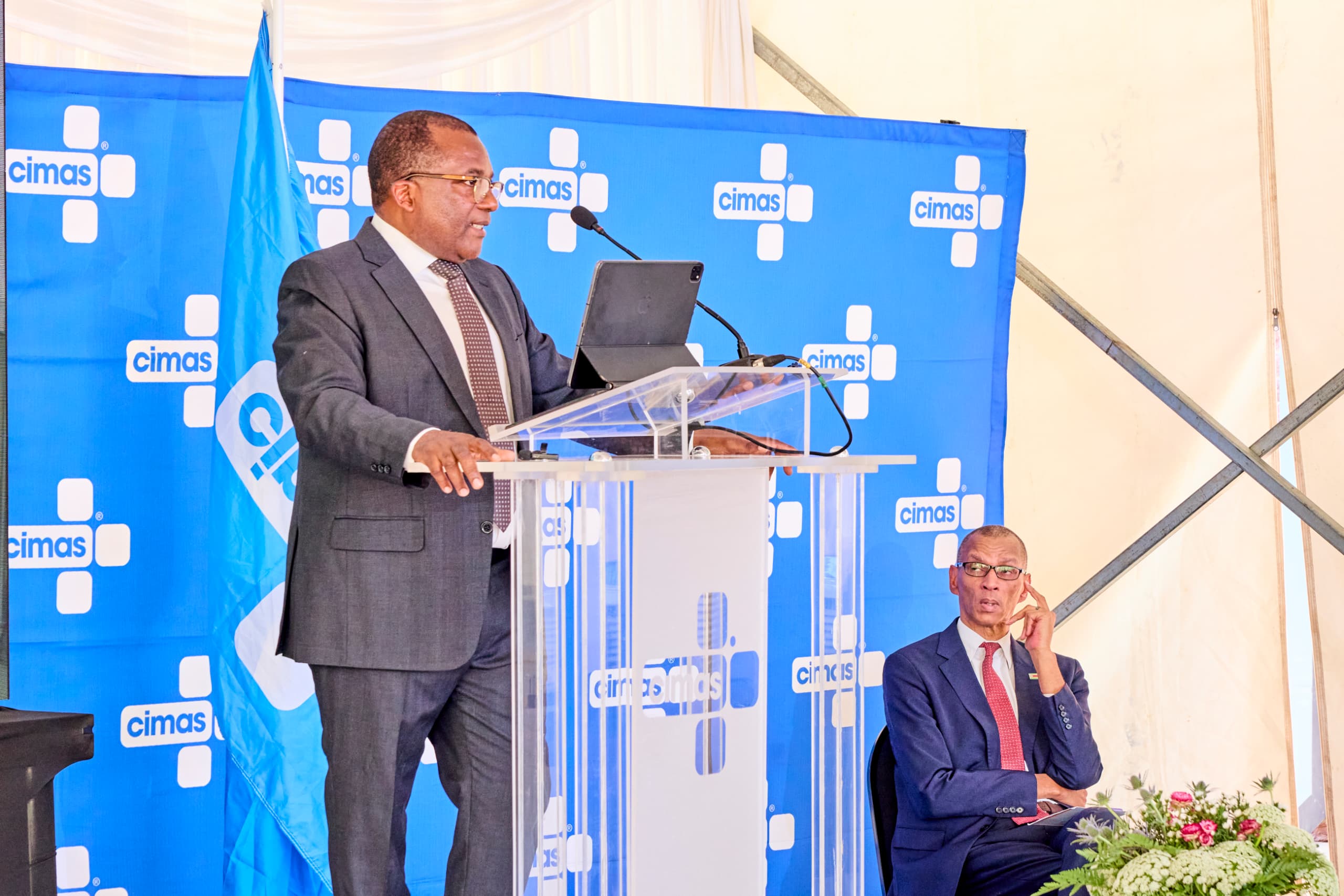
Cimas Health Group Chief Executive Officer, Vuli Ndlovu
BY MUNYARADZI BLESSING DOMA
Authorities and healthcare stakeholders should make General Practice more attractive to young doctors so as to strengthen Zimbabwe’s system and ensure patients have access to trusted first-line medical care, Cimas Health Group Chief Executive Officer, Vuli Ndlovu has said.
Speaking at the renaming ceremony of the Cimas Van Praagh Medical Centre to Madeline Nyamwanza-Makonese Medical Centre last Friday, Ndlovu expressed concern over the shortage of young general practitioners, saying many medical graduates were opting for clinical specialities or leaving the country.
He added that general practitioners (GPs) were critical to the healthcare system as they provided the first point of contact for patients and helped coordinate their treatment.
“My concern is that we are not producing enough young GPs. Too many of our youngest graduates, our brightest graduates, go straight into clinical specialities, or even leave the country.
“If we lose the generalist, we lose the front door, the gatekeeper of healthcare,” said Ndlovu.
He called for a shift in how general practice was viewed, arguing that it should be an ambitious career choice for young doctors rather than a temporary stage before specialising.
“We need to make general practice an ambitious first choice for young doctors, not a hallway,” added Ndlovu.
The remarks highlight the need for healthcare authorities and other stakeholders to create an environment in which general practice is professionally rewarding and attracts young medical graduates.
Ndlovu expressed hope that general practitioners within the Cimas Health Group network would eventually specialise in family medicine, which was described as essential to maintaining continuity of care.
“My hope is that every GP in our network will go on to specialise in family medicine. The family doctor knows the whole patient, the whole household and the whole story. This is the speciality that holds the health system together.”
It is said family medicine enables doctors to develop a broader understanding of patients’ health needs, including their medical histories and household circumstances, while helping coordinate care across different healthcare services.
Turning to the renamed medical centre, Ndlovu said it demonstrated the value of integrated healthcare, bringing several services together under one roof to improve convenience for patients.
The centre combines general practice, eye care, wellness services and radiology, allowing patients to access different services without having to travel across the city.
Ndlovu said the model was built around the understanding that healthcare outcomes depended on the professionals delivering services rather than buildings alone.
“A building does not heal anyone. A doctor, a nurse, a pharmacist, who is trusted and properly supported does. It’s not a building,” said Ndlovu.
He added that Cimas Health Group had expanded its operations to almost 50 operating units across more than 19 locations, with its workforce growing from about 300 to 1 300 over the past decade.
It was added that about a third of the workforce comprises clinicians, underlining the importance of investing in healthcare professionals to sustain the group’s growth.
Ndlovu also highlighted the Cimas Health Education Fund (CHEDU), which has supported the training of medical professionals since its establishment in 2007.
The fund initially supported undergraduate training for doctors, pharmacists and laboratory scientists before expanding to support medical specialists from around 2015.
He added that the programme had contributed to the training of about five percent of the country’s specialist doctors, many of whom were working in both private and public hospitals.
Ndlovu reiterated that legacy of Dr Madeline Nyamwanza-Makonese, who had devoted her life to developing the next generation, should be carried forward through continued investment in healthcare professionals.