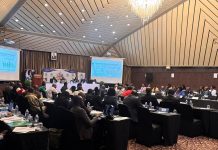

Dr Manners Ncube, Ministry of Health and Child Care National TB and HIV Technical Officer
BY MUNYARADZI BLESSING DOMA
While Zimbabwe has made great strides in its fight against tuberculosis (TB), earning its removal from the list of the world’s 30 high TB burden countries, health experts warn of a serious challenge being posed by drug resistant tuberculosis (DR-TB).
It is reported that DR-TB remains a serious public health threat that requires sustained investment, early diagnosis and improved access to treatment.
According to the World Health Organization (WHO), Drug-Resistant Tuberculosis (DR-TB) is a form of the disease caused by Mycobacterium tuberculosis bacteria, that do not respond to standard first-line anti-TB drugs.
When the bacteria develop resistance to these medications, treatment becomes more complex, requiring stronger and more expensive second-line drugs.
Dr Manners Ncube, National TB and HIV Technical Officer in the Ministry of Health and Child Care, says the most common form is Rifampicin-Resistant or Multi-Drug Resistant Tuberculosis (RR/MDR-TB), which no longer responds to rifampicin, one of the most powerful first-line anti-TB medicines.
Reports are that patients with DR-TB require specialised treatment regimens and close monitoring to achieve successful outcomes.
It is said DR-TB is air borne, as it spread when an infected person coughs, sneezes, laughs, talks or sings.
Dr Ncube added that delay is the recognition of drug resistance or prolonged periods of infectiousness may facilitate increased transmission and further development development of drug resistance.
He further revealed that DR-TB is a form of antimicrobial resistance where TB bacilli are resistant to any of the TB medicines.
“Persons who do not take their TB medicines well, including contacts and those previously treated for TB are at a risk of DR-TB.
“Currently, only 31 percent of expected cases are detected,” said Dr Ncube.
He also explained what causes DR-TB saying, “Drug-resistant TB is essentially a man-made phenomenon. MDR-TB develops due to error in TB management such as the use of single drug to treat TB.
“The failure to identify preexisting resistance.
“The initiation of an inadequate regimen using first line anti TB drugs, variations in bioavailability of anti-TB drugs, delayed diagnosis and treatment.
“Inappropriate drug regimen, poor adherence due to low patient DOT coverage and HIV and AIDS,” said Dr Ncube.
Dr Ncube revealed that although Zimbabwe has significantly reduced its TB burden over the years, the country continues to face a dual burden of TB and HIV as well as DR-TB.
Dr Ncube said the country’s TB incidence was estimated at 203 cases per 100,000 population in 2024.
He also revealed that the country recorded more than 20,000 TB notifications in 2024, an increase from about 19,500 cases in 2023
And despite this progress, an estimated 14,000 TB cases are still missed each year, highlighting the need to strengthen active case finding and improve access to diagnostic services.
Dr Ncube added that nearly half of all TB patients in Zimbabwe are also living with HIV, although the TB/HIV co-infection rate has declined from 54 percent in 2021 to 49 percent in 2024.
And to strengthen the fight against DR-TB, Zimbabwe has expanded its diagnostic capacity across the country.
“The public health sector now has 188 GeneXpert machines, including 18 GeneXpert XDR machines used to detect drug resistance, 20 Truenat machines, three Line Probe Assay sites and 61 digital X-ray machines.
“GeneXpert MTB/RIF Ultra remains the gold standard for diagnosing drug-resistant TB, allowing patients to be diagnosed earlier and started on appropriate treatment.
“The Ministry of Health and Child Care is also scaling up modern treatment regimens for patients with drug-resistant TB.
“These include the BPaL (M) regimen, SHORRT regimen and individualised treatment for patients who require longer therapy. The programme aims to improve treatment outcomes while reducing the burden associated with lengthy treatment,” said Dr Ncube.
It was also revealed that the country had set an ambitious targets to strengthen its response to drug-resistant TB.
“The country plans to detect 2,680 RR/MDR-TB patients between 2021 and 2026 and increase treatment success from 57 percent recorded in 2016 to 75 percent by 2026.
“It also aims to reduce TB incidence and mortality by 80 percent compared to 2015 levels.”
Sadly despite these gains, it is said several challenges continue to undermine the national response.
These include shortages of GeneXpert cartridges, limited laboratory capacity, inadequate access to essential diagnostic tests, logistical barriers affecting patients, declining partner support, supply chain challenges for medicines and inadequate social support for people undergoing treatment.
Health authorities also note the need for continued capacity building for health workers and the implementation of a national Anti-TB Drug Resistance Survey.
And to address these challenges, the National TB and Leprosy Control Programme is reported to be prioritising expansion of rapid molecular diagnostic services, wider access to drug susceptibility testing, decentralisation of DR-TB services, strengthening medicine supply systems and improving patient monitoring and follow-up. Universal access to the BPAL (M) regimen also remains a key priority.
Dr Ncube reiterated that ending TB in Zimbabwe will depend on “early diagnosis, improved treatment adherence, reducing stigma and ensuring that no patient is left behind.”
It was also emphasised that the importance of finding the thousands of people who remain undiagnosed each year, as undetected cases continue to fuel transmission within communities.
And as the country continues working towards ending TB, strengthening the response to DR-TB will remain critical in protecting public health and saving lives.