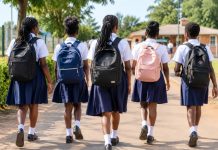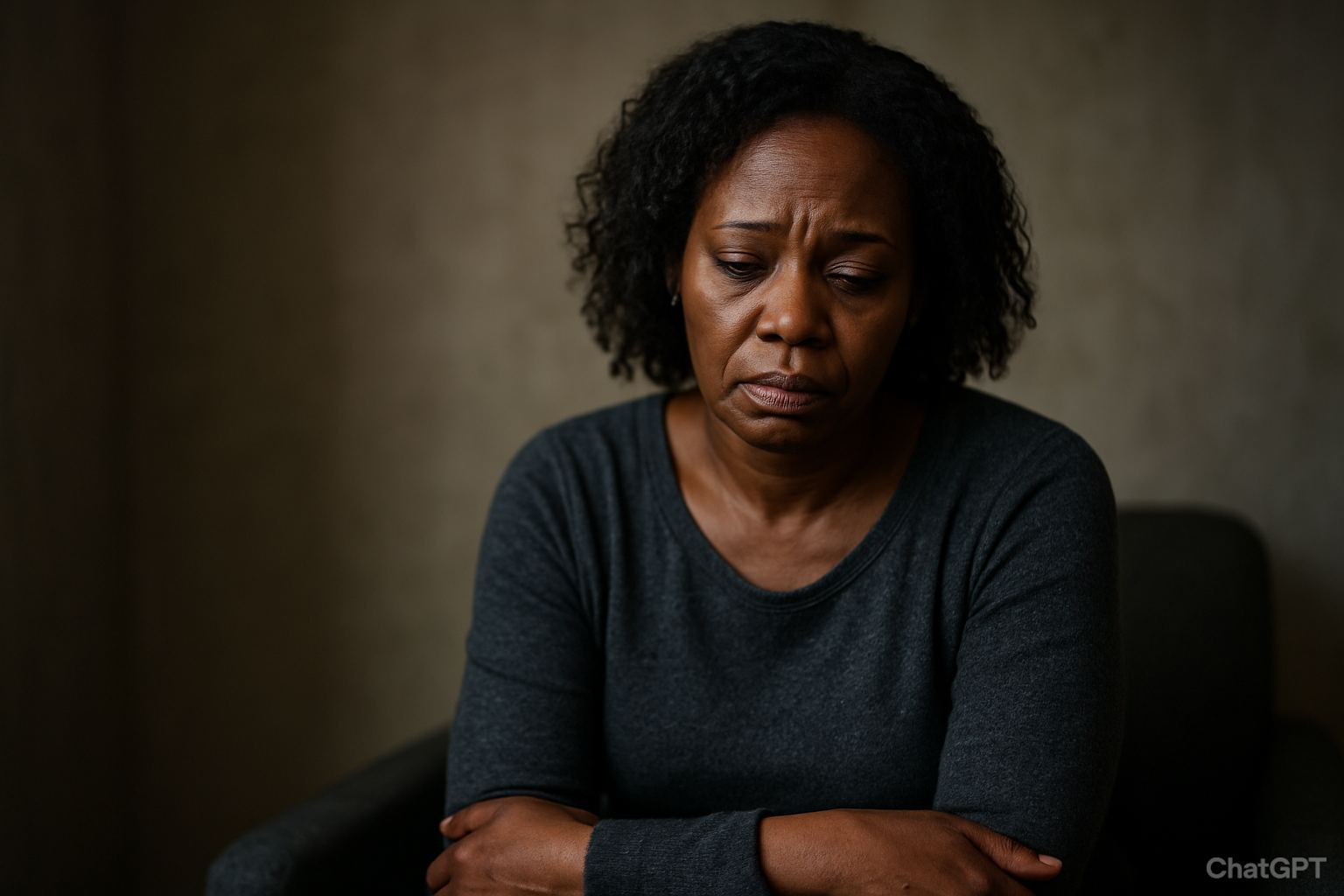
a mother in distress (image imagined by AI as the mother pleaded for anonymity)
BY MUNYARADZI BLESSING DOMA
When Marita (name changed to protect her and her child’s identity) gave birth 17 years ago, she was as joyful as any new mother.
That joy, however, quickly turned into confusion when she realised she had given birth to an intersex child.
According to the World Health Organisation (WHO), “intersex people are born with physical, hormonal, or genetic characteristics that do not conform to the typical binary biological definitions of male or female.
“Intersex variations are natural biological variations and not related to a person’s sexual orientation or gender identity.”
Health personnel tried to explain the situation to her, but their explanation was not enough to give her peace of mind.
While most women hope to receive love and support from their husbands after giving birth, for Marita it was not to be.
As soon as her husband discovered that their child was intersex, he disappeared.
“Ini zvakaita kuti baba vatize, vachiti umm, kwedu hakusati kwambozvarwa mwana akadai (having an intersex child led to my husband abandoning us, as he said no one in his family had ever been born like that),” Marita opened up.
Her story paints a picture of pain, as she was left alone to raise her child.
As if that was not enough, her husband’s family also ostracised her, leaving only her parents standing by her side.
“My life journey has been very difficult because I had to endure a lot of issues alone.
“My husband left me when the child was born.
“Right now I only have my parents supporting me as his whole family has also rejected me.
“Even if I call them when the child is admitted in hospital, they don’t come. My husband doesn’t even take my calls if he knows it’s something to do with the child,” narrated Marita.
She added that while she fully supports her child’s participation in life, as a mother she cannot help but worry when she sees the struggles her child goes through daily.
“At school my child is good in sports, all sports you can name but they struggle with acceptance.
“They are good in soccer, so they played female soccer, but their team is always accused of fielding a male player.
“Seeing my child struggle like this really breaks my heart,” further narrated Marita.
Marita revealed that one time, her child was abused after they were asked to undress so peers could check their genitalia.
“One day they came back home, crying and I wondered what was wrong.
“I asked them what is wrong, and they said they had been asked to undress so that peers could see their genitalia.
“Even as they narrated their ideal, it really pained me as a parent, no child deserves to go through that pain.
“My hope is for my child to live in a society where there is love and acceptance,” narrated the distraught mother.
Despite the challenges, Marita believes that one day, gee child just like others, will live without fear, victimisation and stigmatisation.
“There’s need for awareness so that people are educated on what an intersex person is. I have hope that my child just like others, will live in a society with love for one another, without stigma, I know it is possible.”
Another mother, who also requested anonymity out of fear of victimisation, shared a similar story. She explained how difficult it is to watch her child constantly struggle for recognition.
The woman said her family also abandoned her after discovering that she had an intersex child.
“I have been living a very difficult life ever since my family discovered that my child is intersex.
“I face so many challenges which I can’t even begin to narrate to you, because it is very difficult to be in this situation.
“It is not easy to live such a life, because we were abandoned.
“I don’t regret how my child was born so I show love and support to them.
“The rejection I faced led me to take care of my child alone,” she narrated.
She revealed that at school life is not easy for the child, and she is always worried about the abuse directed towards them.
“Seeing my child suffer rejection really affects me as a parent, because I want the best for them, I want them to be happy and live to their full potential but sadly society is cruel.
“I applaud organisations which continue to fight for the recognition of intersex persons,” she said.
Just like Marita, the mother revealed that she loves her intersex child just the same way she loves others.
“There’s no difference in how I love my children, you can never tell with how I treat them.
“As a Christian, I believe children are a gift from God so I don’t regret how my child was born.
“I wish I could even connect with other mothers, becuase in most cases, it is us as mothers who bear the brunt of such challenges.
“We can conquer all this stigma with love, so first step is to truly love our children,” she added.
An intersex adult revealed that parents often face the challenges first, as they are immediately asked about the sex of their new born child.
They added that in some cases, mothers are accused of giving birth to intersex children because of incestuous sex.
“It is difficult because remember when a woman gives birth, people will ask her mwanai (what’s the sex of the child).
“So as a mother it is difficult to say anything if you are not sure of what to say.
“Sometimes also, the mother is accused of having bad luck or a bad omen following them.
“They can also be accused of incest, so imagine facing such ridicule as a parent. It’s the worst experience, because you are hoping for love and support,” they narrated.
They added: “sadly families have been broken. “My wish is for something to be done for the recognition of intersex persons,” they said.
While intersex persons continue to face challenges of recognition, members of the community hope that the Harare High Court challenge mounted by the Health Law and Policy Consortium (HLPC) this September, through its partnership with the Intersex Community of Zimbabwe (ICoZ), seeking to address systemic legal and administrative failures, will see the light of day.
And it is sad that for far too long, intersex persons in Zimbabwe have endured exclusion, discrimination, and harm, something which needs urgent correction.