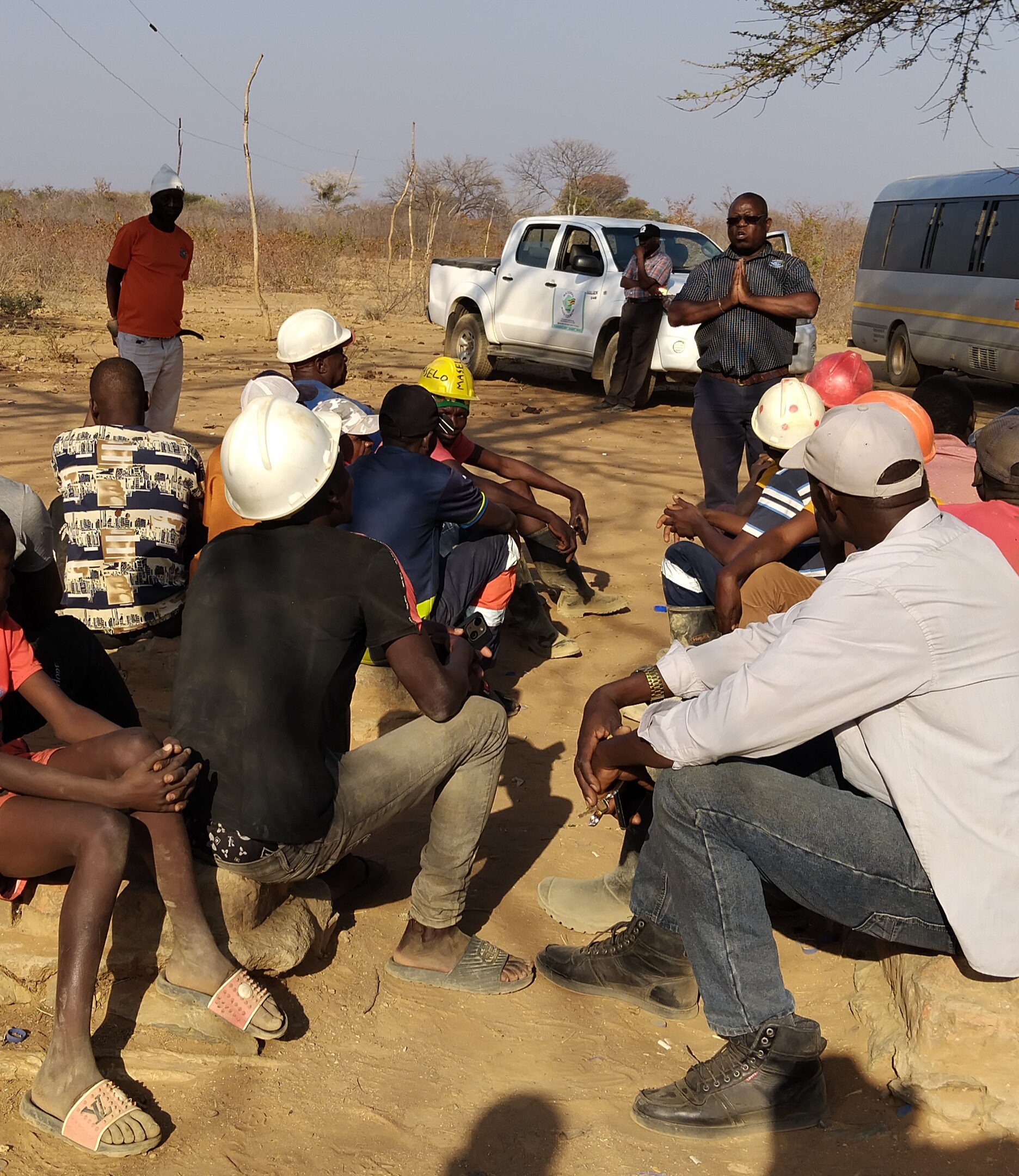
Gokwe South DAC Isaki Chiwara leading a session with small-scale miners
BY MUNYARADZI BLESSING DOMA
Reaching men with health information in mining communities has long been a challenge, because in most cases, they are busy digging for the precious stones.
And in most cases, anyone who is unknown to them is perceived an intruder.
But then just like the rest of us, they also need health services and in their case, what a better way than taking (the service) to them.
The uncertainty that is associated with most mining sites, may even make the most dedicated health personnel to shy away from these communities.
And in order to reach these mining communities, the National AIDS Council (NAC) with support from partners, introduced a powerful strategy, the Peer-led Monitoring model, which has led to improved health outcomes.
According to the National Institute of Health, a peer-led monitoring model helps small-scale miners with HIV prevention by leveraging trusted community members, often fellow miners or peers, to track service quality, reduce stigma and provide on-site health education.
It is said the approach is particularly effective in transient mining communities because it brings HIV services directly to the workplace, facilitating increased testing, treatment and behaviour change.
“Peer monitors who are part of the mining community, are trusted more than outsiders, allowing them to overcome barriers to access.
“They help reduce stigma, which often prevents miners from seeking HIV testing and care.
“Peer educators provide on-site HIV education and in some cases, distribute condoms directly to miners, which is crucial for reducing STI cases and preventing new infections,” read the report from NIS.
District AIDS Coordinator for Gokwe South, Isaki Chiwara, said the model is a major success, evidenced by improved health outcomes.
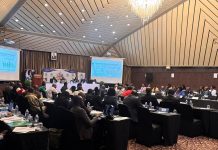
Gokwe South DAC Isaki Chiwara leading a session with small-scale miners
“The peer is a miner who communicates with his colleagues at their level and we have modular sessions on a regular basis.
“They are mandated to have two sessions a month, where they talk about issues to do with gender-based violence, HIV, sexually transmitted infections, non-communicable diseases like high blood pressure and diabetes.
“They also talk about family planning,” said Chiwara, in an interview after one session.
Chiwara further revealed that the approach is designed not only to share information but to build community awareness and responsibility.
“The idea is that they conscientise their community, so when they come here, like today, I felt from a professional point of view, let me just give a discussion on HIV and AIDS and TB, so that they probably have this confidence to say someone from a higher level has come to talk to us,” added Chiwara.
It was added that one of the major motivations behind the programme is the persistent challenge of reaching men with health services.
And it was also revealed that mining sites provide a strategic entry point because men are more accessible at workplace than at community meetings.
“The main objective is to make sure we reach men at their workplaces. It is very difficult in this community if you call a meeting to get men.
“You will find a lot of women attending, so this model works.
“And in terms of sexual and reproductive health information, it is easier to get them at the mines,” he added.
He further revealed that through the programme, they are also creating demand for services.
“Men don’t come to the health facility because they are busy mining, so we give them information and they know that they could be suffering from an infection, then they demand the service.”
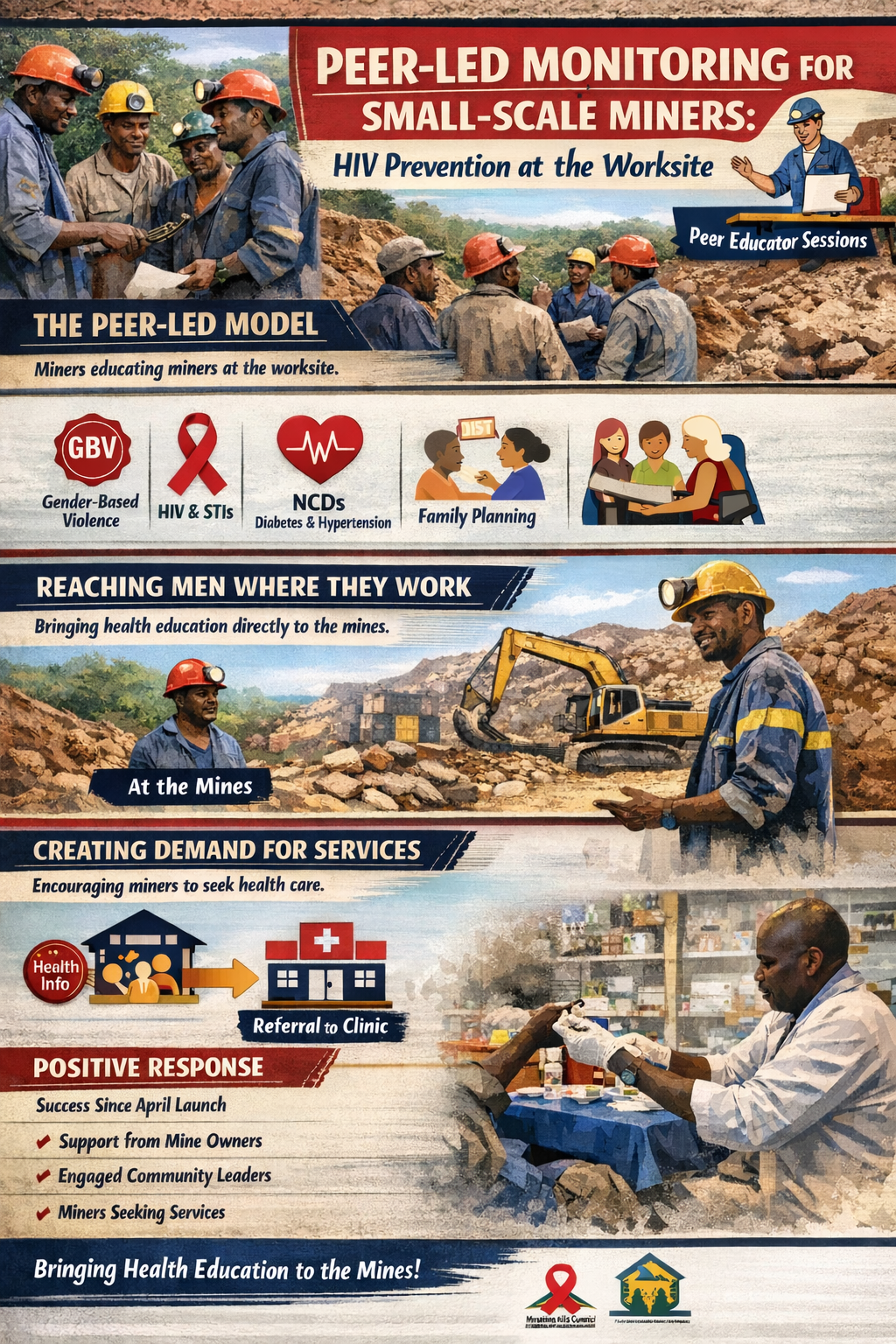
graphic presentation of the Peer-led Monitoring model
Several small-scale miners expressed gratitude with the health officials for the programme, because to them, it meant they are equally important.
Tawanda Mpofu said since the programme was introduced, health seeking behaviour had greatly improved.
“They come here with several things like condoms, because remember some of the people who work here are coming from faraway places and they won’t be with their wives, so they need the condoms.
“This programme has really changed our lives, because we are now more health conscious than before, we really thank the health officials for doing this for us,” said Mpofu.
Similar sentiments were also echoed by Evidence Maketo who said he had joined small-scale mining from a young age.
“I came here when I was really young, when schools closed during the Covid-19 lockdown but I’m really grateful with the help that we are getting here in terms of health information.
“Because without any information, you will end up getting sick, so we appreciate all the services that we continue to get,” added Maketo.
And as the programme continues, it was added further that expanding it could strengthen HIV prevention efforts among hard-to-reach populations, while promoting overall wellbeing in small-scale mining communities.
The success of the programme reflects the growing recognition that workplace-based health education can play a significant role in ending new HIV infections and improved public health outcomes in mining areas.