illustration of stigma index
BY MUNYARADZI BLESSING DOMA
For many people, the church is a place of comfort, healing and acceptance.
But for one man living with HIV, the place he once called his spiritual home, became a source of pain and rejection.
Chikomborero (name changed to protect his identity), was a respected member of his church (name withheld) and served as a leader for several years.
He was known for his commitment, as he led to make the church a better place for others, especially the newly converted.
Be it leading in church programmes or community outreach activities, Chikomborero was always there and this made him a darling of the leadership.
However it all crumbled when Chikomborero opened up about his HIV status to a fellow church member, whom he considered a brother and close friend.
Whilst Chikomborero had opened up to this friend, the issue spread to other members of the church and then to the leadership.
And instead of support, whispers and judgment characterised his experience in a church he had served with everything he had.
The first signs he saw was when a few church members started avoiding him after learning that he was living with HIV. And some people stopped greeting him the way they used to, while others kept their distance during church services.
“You know at first I thought maybe I was imagining things.
“But with time, it became clear that people were talking about me and it got worse when the church leadership called for a meeting.
“Whilst most meetings had a clearly laid out agenda, this one didn’t have any and (in the meeting) I was advised that because of my ‘situation’, I had to be removed from my position,” narrated Chikomborero.
Chikomborero speaks (voices altered to protect his identity)
He described the moment as deeply humiliating, as he had served the church faithfully for years.
But suddenly, he was no longer considered fit to lead.
“This removal from my position did not only affect my role in the church, leading to my final decision to leave, but it also affected my emotional well-being.
“I felt judged and isolated in a place where I had expected compassion and eventually the discomfort became too much to bear and I left,” added Chikomborero.
Chikomborero’s experience reflects a major challenge faced by many people living with HIV, who continue to encounter stigma and discrimination in different spaces, including religious institutions.
Health experts say stigma remains one of the biggest barriers in the fight against HIV as the fear of judgment can discourage people from disclosing their status, seeking support or even accessing treatment.
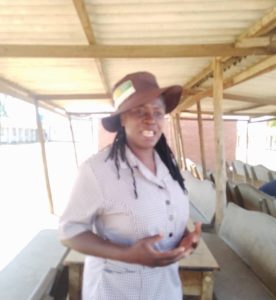
Nyadzisai Kakodzi, Community Health Worker
Nyadzisai Kakodzi, a Community Health Worker from Chitungwiza, says HIV stigma remains one of the barriers to fighting HIV.
“We still have a lot of stigma in the communities and it is cross-cutting because we have got children who were born HIV positive; if they want to enter relationships, they are afraid of disclosing their status.
“Some even think that because they are living with HIV they cannot marry,” said Kakodzi.
She added that even adults too, find themselves in this debacle, where they fear disclosing their status to relatives, because they will be stigmatised.
“Some people ended up even alleging that they have been bewitched, so that they don’t disclose their status.
“Even the case of some employees, they are not free to tell their bosses about their status, because in some cases, the issue will become workplace gossip.
“Then we also have some religious institutions where some leaders preach that being HIV positive is a punishment from God so that also fuels stigma.
“We need to encourage the community to support those who are HIV infected and affected and in this case, we call for everyone, because stigma is derailing all efforts that have been made,” emphasised Kakodzi.
She added that religious institutions have an important role to play in reducing stigma by promoting compassion, understanding and accurate information about HIV.
And Chikomborero is one of the many people who have been let down by an institution which was supposed to provide compassion.

Pastor Desire Chiredzero
Pastor Desire Chiredzero believes the church should be a place of compassion, where the true gospel of love should be preached.
“The problem for me is not only the stigma, but the problem is the type of message being pushed on the pulpit.
“It’s a wrong doctrine to start with, to say that HIV is punishment for sin. The generation we are living in is always looking to blame whereas the Bible doesn’t say that. John 9 has a story of a man born blind and the question that the disciples asked was guess what, who sinned? The parents or the man that he was born blind? None was the answer.
“Most of these problems are solved by just a simple solution, basic biblical teaching. Love; it covers a multitude of sins. The Bible asked us to be patient with one another, choosing to remain calm, gentle, and loving rather than angry or reactive when dealing with the faults, differences, or slow growth of others.
“Lastly I would follow the example of Jesus by embracing those who are outcast. Luke 7:36-50 Jesus looked past the social “label” of a sinner and saw a person in need of grace, treating her with dignity while those around them only saw her reputation,” said Pastor Desire.
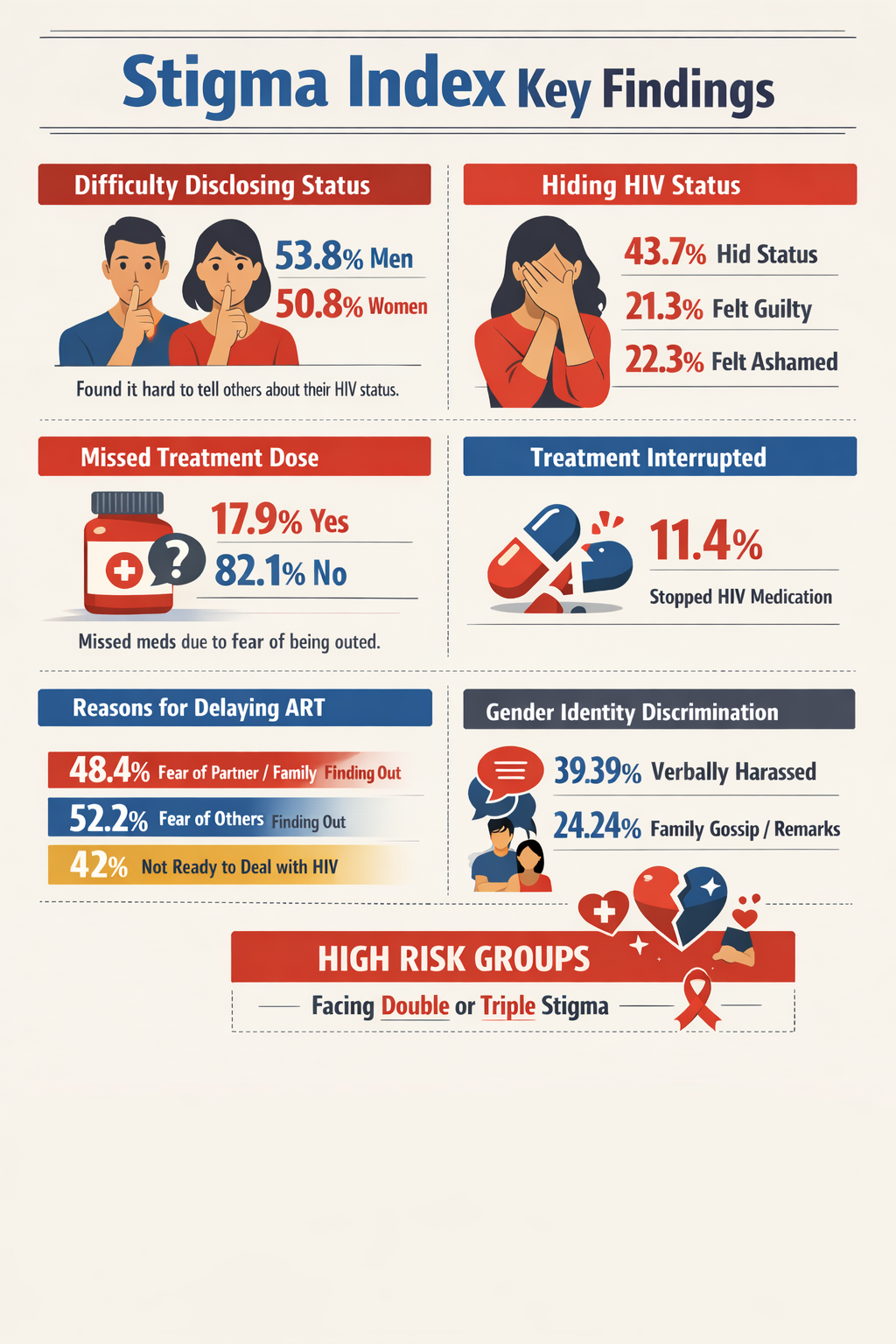
Zimbabwe’s latest stigma index 2.0, reports that there are more males at 53.8 percent, than females at 50.8 percent respondents who expressed difficulty in telling people about their HIV positive status.
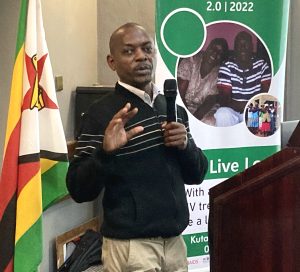
Tonderai Mwareka, Programs Officer at ZNNP+
Tonderai Mwareka Programs Officer at the Zimbabwe National Network of People Living with HIV (ZNNP+), further revealed that more females at 43.7 percent, reported hiding their HIV status from others with 21.3 percent feeling guilty and 22.3 percent being ashamed of being HIV positive.
He added that the index had also shown that some people had missed a dose of their treatment because of fears about someone knowing their HIV status.
“A significant percentage (11.4 percent) had at some point interrupted their HIV treatment.
“Reasons for delaying restarting ART included some people saying, I was worried that my partner, family or friends would find out my status (48.4 percent).
“I was worried other people (not family or friends) would find out my status (52.2 percent), I was not ready to deal with my HIV infection (42 percent),” reported Mwareka.
He further emphasised on the importance of close examining of the People Living with HIV (PLHIV) Stigma Index, which is a standardized process of gathering evidence on how stigma and discrimination impacts the lives of people living with HIV.
“The PLHIV Stigma Index provides a tool to assess and detect changing trends in relation to stigma and discrimination experienced by PLHIV.
“The rigorous research process is designed to broaden understanding of the extent and forms of stigma and discrimination faced by PLHIV.
“The intention of the Stigma Index is to generate age, gender and location (urban vs. rural) disaggregated data that can be used as a local, national and global evidence-based advocacy tool allowing public access for a better understanding of the PLHIV context.
“To empower PLHIV as individuals, their networks and local communities, in conformity to the GIPA (Greater Involvement of People living with HIV and AIDS) Principle.
“The PLHIV Stigma Index both fosters change within communities as it is being used, as well as a tool to advocate for changes in laws, policies, programs and practices according to the index data,” he said.
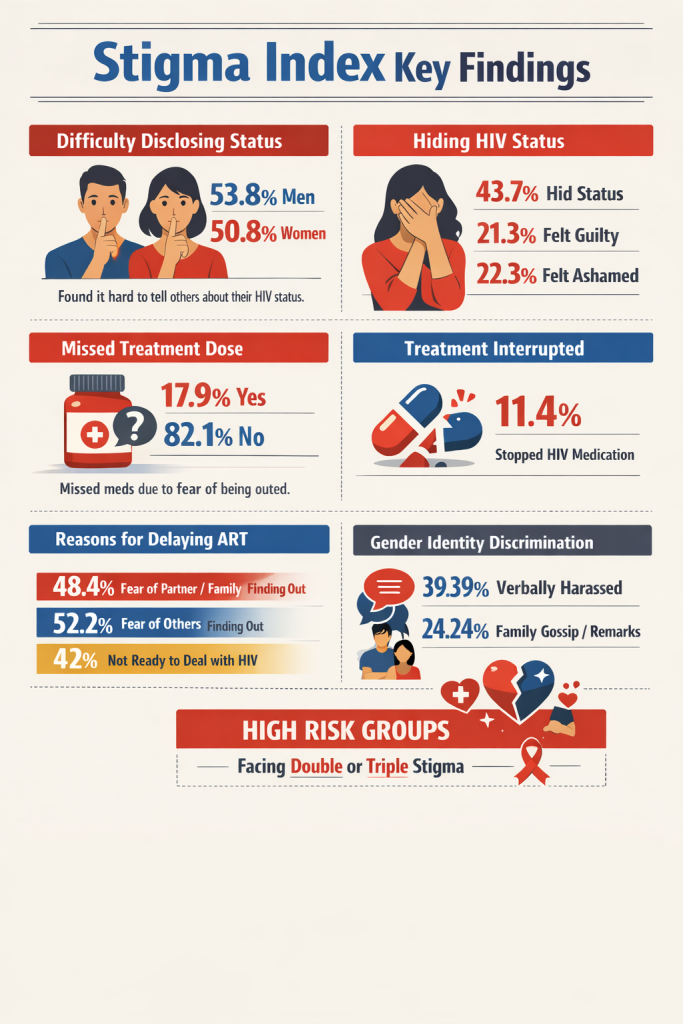
illustration of stigma index
He also revealed that the Index was developed to be used by and for people living with HIV and was created to reflect and support GIPA principle, where PLHIV networks are empowered to lead the whole implementation of the PLHIV Stigma Index study.
“In Zimbabwe, the first PLHIV Stigma Index was conducted in 2014 with 65.5 percent of the study participants reporting that they had experienced one or more forms of HIV-related stigma and discrimination with the follow-up being in 2022 where 69.7 percent of PLHIV experienced one or more forms stigma and discrimination.”
He added that to reduce HIV stigma, there was need to support the full implementation of the Global 2025 Targets; 10-10-10, in particular the last 10 which focuses on a society free of HIV related stigma and discrimination.
In order to deal with HIV stigma which is threatening the gains made (in the HIV fight) Mwareka further reported that there is need for continual sensitization of key sectors of the society such as law enforcement agents, religious leaders, community gatekeepers, the media and healthcare service providers on anti-stigma and anti-discriminatory strategies and actions.
“There is need for implementation of HIV-Stigma free workplace programs.
“This can be achieved through awareness raising among private sector leadership, managers, supervisors, peer educators and other significant cadres within the work setting.
“In addition, labour laws should protect against unethical practices (such as forced HIV testing prior to recruitment).
“Setting up and supporting community and PLHIV-led monitoring mechanisms meant to monitor and mitigate HIV-related stigma and discrimination.
“Promoting human rights, people centred and HIV sensitive services within the public health delivery system.
“And promoting and encouraging HIV status disclosure to intimate partners and within families to foster adherence and informed decision making,” said Mwareka.
He further revealed that since the majority of respondents reported that they faced discriminatory practices within their own families and the society at large, there is need to institute measures to address stigma and discrimination among PLHIV as there is evidence that respondents in this study were subjected to gossip, verbal abuse, exclusion from social gatherings, and physical abuse due to their HIV status.
Mwareka further called for increasing public awareness and addressing myths and misconceptions associated with HIV and AIDS at different levels of the community and interventions that would help to deliver key messages that discourage HIV related stigma in the community.
“We also need to link young people living with HIV agencies like Zimbabwe Youth positives and Zvandiri where they can get safe havens to share their concerns and be empowered through life skills.
“More focus on psychosocial needs of young people living with HIV as they transition into adulthood to eliminate internalized stigma.
“Increase awareness among teachers due to their interactions with the young people at school.
“Have peer champions for schools to ensure that learners are not negatively affected by external stigma from the teachers and other students.
“Strengthen School health programs to include stigma and use social media platforms for information dissemination for the young and school going children-development of ICT platforms,” added Mwareka.