BY GODFREY KOTI
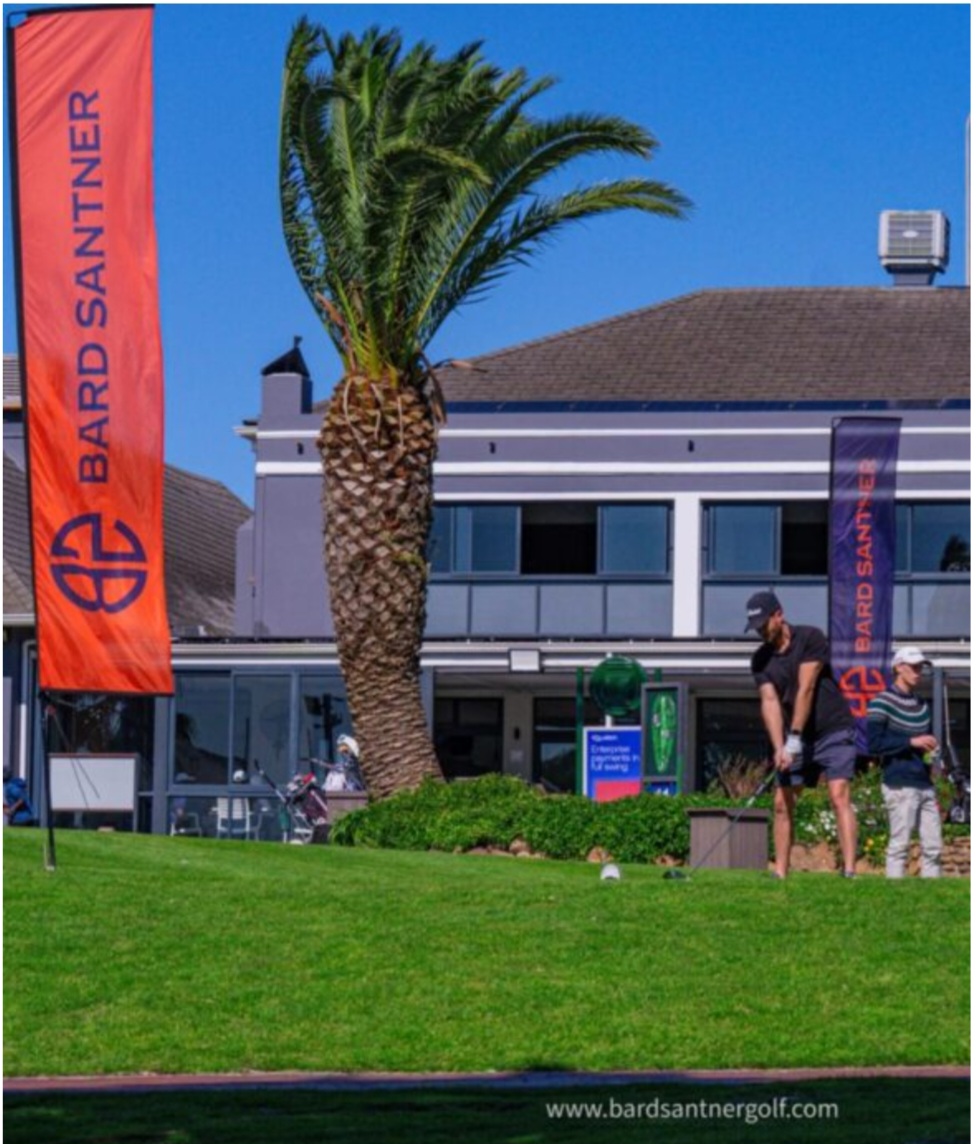
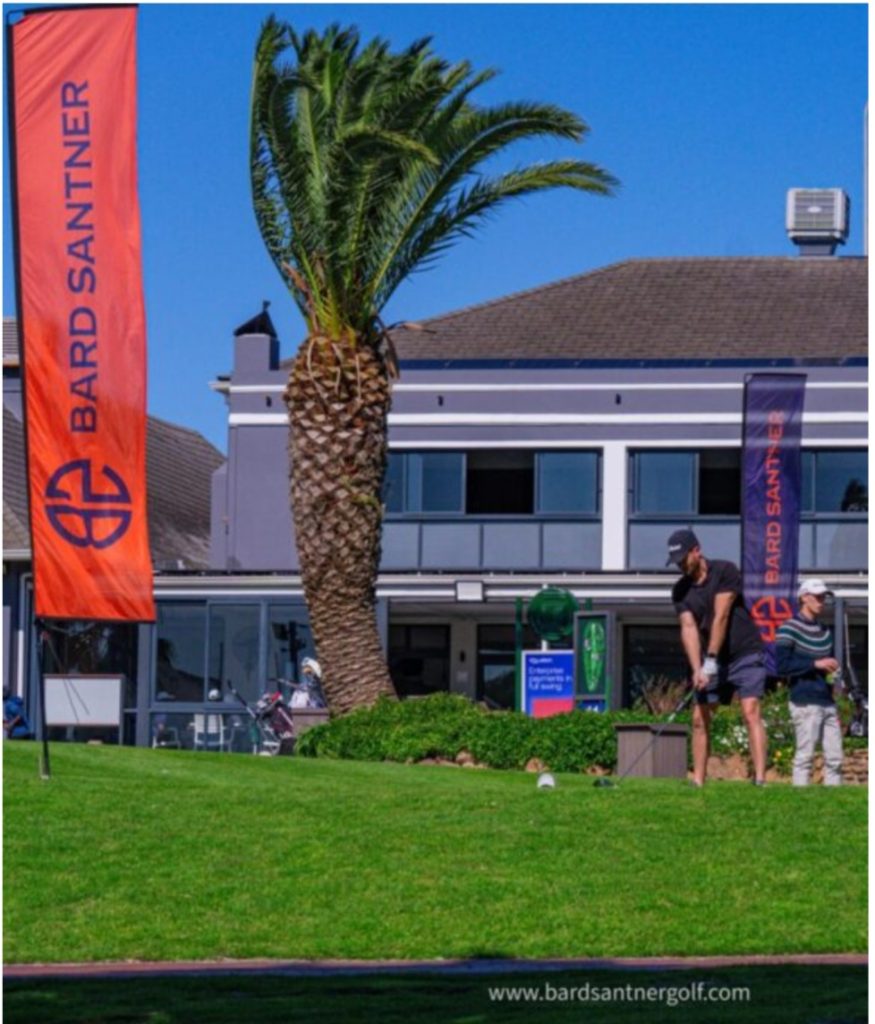
THE morning cold and breezy mist was still clearing off the iconic and spectacular Table Mountain when the first tee shots echoed across the parkland terrain of King David Mowbray Golf Club.
As the fog rolled off the Atlantic and beneath the towering shadow of Devil’s Peak, the opening drive – Round 1 – roared into life on the historic fairways of the King David Mowbray around 9:20am on September 14.
Set beneath Table Mountain and Devil’s Peak, this century-old parkland course blends heritage with championship standard conditioning — a fair but thoughtful test for golfers of every level.
The tournament was played across four courses.
The Bard Santner Coastal Classic 2026, which ran from September 14-18, stands as a premier invitation-only tournament uniting regional corporate leadership and elite golf talent under the banner of Zimbabwean financial advisory firm, Bard Santner, which specialises in corporate finance, asset management, wealth management services, treasury bills and remittances.
Beyond a showcase of elite sportsmanship, the four-day tour served as a dynamic networking hub, blending corporate synergy with the natural beauty of Cape Town to foster regional collaboration and empower a new era of African golf to ultimately drive business.
From David Mowbray, action moved to De Zalze Golf Club for Round 2 on September 15.
Designed by Peter Matkovich in a Stellenbosch valley, De Zalze weaves around the Blaauwklippen River with sweeping views of vineyards and mountain ranges.
On September 17, Round 3 shifted to Clovelly Golf Club.
A tight par-72 on the Cape Peninsula with elevated greens, sharp dog-legs and views over the Silvermine River — backed by a caddie team known for its local know-how.
And the final, fourth round, was at Rondebosch Golf Club.
A Bob Grimsdell parkland design over 6000m, with tree-lined fairways, 40-plus bunkers and two rivers — a fitting stage for the final round.
Back to the initial round, it offered immaculate parkland conditions, but the mild morning quickly gave way to the strategic chess match that defines Bard Santner’s Coastal Classic.
Golfers from Zimbabwean business entities and spheres exchanged handshakes at the first tee, setting off on a tournament designed to test every facet of their game.
For the field of regional executives, seasoned amateurs, and rising stars, this was no ordinary weekend-like round.
This was the culmination of a regional vision driven by Bard Santner to foster unity and build corporate relationships through the spirit of golf.
With the iconic Cape Town skyline serving as the backdrop, the tournament played during the week – Monday to Friday – reached a dramatic climax as high as the Table Mountain peak on September 18.
It wasn’t just individual talent and skill that triumphed at Coastal Classic, but the collective celebration of African sportsmanship, heavily backed by a sponsor committed to nurturing young talent and expanding the footprint of African golf.
In the dramatic final at the foot of Table Mountain, former banker Webster Rusere held his nerve to edge Timothy Kambarami by just two points and claim the inaugural Bard Santner Coastal Classic after four rounds of tightly contested golf.
Rusere finished on 134 points, with Kambarami pushing him all the way on 132 in a tournament that remained finely poised until the final round.
Rusere’s winning campaign was built on a strong start and steady accumulation of points throughout the week.
He recorded 38 points at King David Mowbray, 36 at De Zalze, 35 at Clovelly and 25 at Rondebosch to finish at the top of the standings.
The closeness of the final leader-board underlined the quality of the competition.
Kambarami finished just two points behind Rusere, while Fungai Fundira and Jeremiah Chatindo shared third place on 126 points, with Alex Masere fifth on 121.
For tournament convener Tendayi Gwatiringa, the tight finish was a fitting reflection of the quality of the field.
“The quality of golf made this an exceptionally tight competition. With just two points separating Webster and Timothy at the top, it went down to the final round. That is exactly the competitive spirit we wanted to create,” Gwatiringa said.
After his narrow win, Rusere said:
“I am privileged to have been invited to participate, thankful that my game peaked at the right moment and managed to consistently flash the golf ball down the fairways. Winning the coveted prize of a trip to watch the DP World Tour-sanctioned AfrAsia Bank Open in Mauritius against seasoned campaigners is a dream that is yet to sink in!
A toast to Bard Santner – you have set a new benchmark and redefined excellence.”
Rusere’s victory came with an additional prize, a trip to watch the AfrAsia Bank Mauritius Open in December, giving the Coastal Classic champion an opportunity to experience professional golf on an international stage.
AfrAsia Bank was represented at the tournament’s prize-giving ceremony and later dinner by Yamini Doyekee.
Speaking at the dinner held after the event, Bard Santner Chief Executive Senziwani Sikhosana said the tournament was the next chapter of a tradition that began a year earlier with the group hosting monthly golf tournaments under the Bard Santner Race to SA Challenge which culminated in the winner receiving an all-expenses paid trip to the Nedbank Golf Challenge in Sun City, South Africa.
He said what initially started as a corporate initiative to build the Bard Santner brand has now gradually developed into something more productive, meaningful and beneficial, with the tournaments creating a business community around the game of golf.
“Some of you will remember the monthly tournaments. Month after month, with the winners going on to the Investec and Nedbank tournaments here in South Africa. We ran them to build a brand. What we found was something better. We found an enthusiasm, a love of the game, that told us this was not just marketing and branding.
This was community. And out of that community came business.
Real business.
Transactions that came to us because someone had spent hours on the fairway with us and decided we were people they could trust.
This year, that tradition continues.
The winner of this tournament will go on to the AfrAsia Bank Mauritius Open in December.
And we are honoured to have Yamini, representing AfrAsia, with us tonight. Thank you for making the journey. Mauritius is a place we intend to know well.
That is why we believe in this sport.
Golf is the only game where you are expected to call a penalty on yourself when nobody saw it.
Think about what that means for people in our business. We hold other people’s money. Their savings. Their pensions. Their remittances. Their trust.
Every one of those is a promise they cannot verify on the day they make it. They are trusting that when nobody is watching, we call the penalty on ourselves.
So when we come onto a golf course, we are not here to be entertained. We are learning how to behave when the stakes are small.
Because our clients expect us to carry the same integrity we learn out there into every transaction we do for them.”
Sikhosana told the delegates about how his career started in the late 1990s at NMB Bank in Harare and why he holds its former managing director Julius Makoni as his local banking role model.
“In 1992, Dr Julius Makoni and his colleagues established National Merchant Bank, the first wholly Zimbabwean merchant bank.
Consider what that required. These were men who had held senior positions at the World Bank, at IFC, in the City of London. They could have stayed. Instead they came home and built an institution at a moment when the question of whether Zimbabweans could run a serious bank was still, to some people, an open one.
I was a young banker then in the late 1990s.
What I took from Julius was not mere technique.
It was professionalism.
Top Standards.
He understood something many of us missed: that an indigenous institution must never present itself as an apology. The letterhead matters.
The boardroom matters. The way you receive a client matters. Not because these things are decoration, but because they are the visible evidence of an invisible discipline. If a bank is careless with the small things a client can see, what is it doing with the things the client cannot?
That is the finesse you will recognise in Bard Santner,” Sikhosana said.
He then explained what Bard Santner core business is and its value proposition.
“Now, what we do.
Seven divisions. Treasury. Lending. Remittances. Corporate Finance. Advisory. Asset Management. Wealth Management.
Seven businesses, but one institution, and one proposition: we remove friction in your financial transactions.
So each of those seven divisions exists to take one piece of that thicket off your desk.
Treasury clears the currency problem. Remittances clears the corridor.
Lending clears the working capital gap. Corporate Finance and Advisory clear the structuring.
Asset Management and Wealth clear the question of where the money goes once it is earned. Seven divisions, one job.”