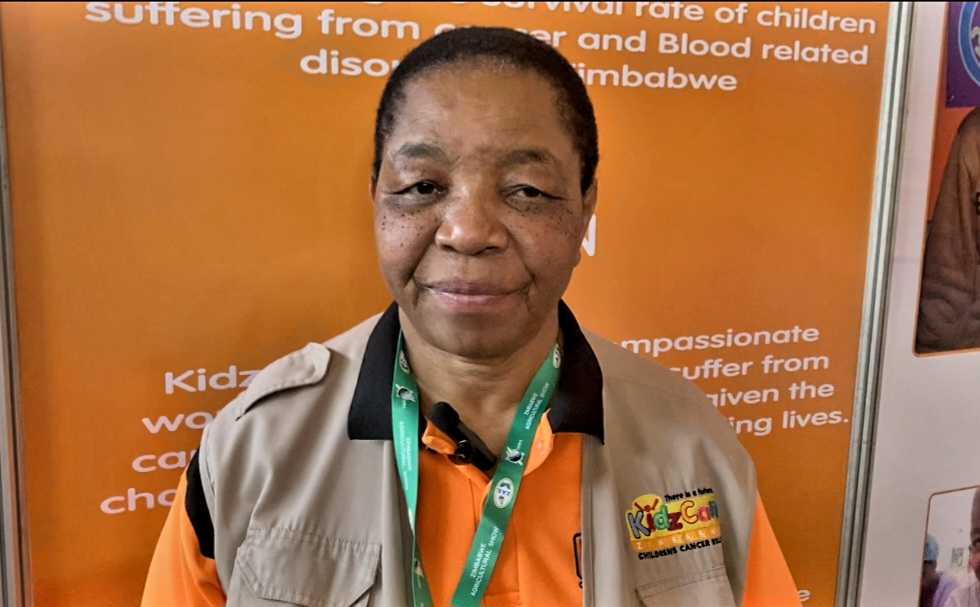
Sister Charity Kawadza, KidsCan Zimbabwe, Health and Awareness Coordinator
BY MUNYARADZI BLESSING DOMA
Parents and caregivers have been urged to pay close attention to changes in their children’s health and seek medical attention early, as childhood cancer can be successfully treated when detected in time.
Speaking at the Harare Agricultural Show, KidsCan Zimbabwe, Health and Awareness Coordinator, Sister Charity Kawadza said childhood cancer is real and is affecting children in Zimbabwe, urging parents not to ignore unusual symptoms.
Kawadza said cancer in children is a disease which affects the body cells and this disease overtakes the body parts and then it becomes a pain. She added that it can develop as a lump and it can also be inside or it can show outside.
“Parents out there, examine your child, listen to your child, then take action,” Kawadza said.
She said parents often tend to delay seeking medical attention for their children, yet early detection could make a significant difference in the outcome of treatment.
“I think in most cases parents tend to take longer for children than they do for themselves. So if they can do it earlier, then we can save a life,” she said.
Kawadza said some of the common childhood cancers include leukaemia, kidney cancer, cancer of the eye, lymphoma, brain cancer and bone cancer, with each presenting different warning signs.
She urged parents to look out for unexplained bleeding, bone pain, swelling of joints and persistent pain, particularly when such symptoms are unusual for the child.
For kidney cancer, Sister Kawadza said parents could notice a lump or swelling in the abdomen, while eye cancer could present through a change in the normal colour or appearance of the eye.
“When you look at the eye, it now looks glassy and when you look at it at night, it reflects back to you like a cat’s eye,” she said.
Kawadza said any noticeable difference between a child’s eyes should be treated as a warning sign and investigated by health professionals.
“A child who’s got an eye which is different from the normal colour, please, that should ring an alarm in you and you must go and see a doctor.”
She also urged parents to check for unusual lumps around the neck, ears and face, as well as persistent headaches, vomiting, loss of sight or an unusually enlarged head, which could be associated with brain cancer.
Children can also develop bone cancer, she said, with pain or swelling affecting the long bones of the arms and legs being among the signs parents should not ignore.
However, Kawadza cautioned parents against attempting to diagnose their children at home.
“The best thing you can do, don’t diagnose it at home. Take a child to the nearest clinic,” she said.
She explained that children suspected of having cancer could be referred from local clinics to larger health facilities, including Parirenyatwa Group of Hospitals in Harare, where KidsCan Zimbabwe supports children receiving cancer treatment.
According to Kawadza, KidsCan Zimbabwe works with the Ministry of Health and Child Care and provides a range of support services to children with cancer and their families.
The organisation assists with chemotherapy, counselling, accommodation for families who need to remain in Harare during treatment, investigations such as blood tests, X-rays and scans, as well as nutritional support.
Kawadza said the organisation had also witnessed children surviving cancer and going on to pursue careers in various fields.
“Children can survive cancer. Please go early and you can save a child’s life,” she said.
She said childhood cancer awareness should not only be confined to designated awareness periods, urging communities to openly discuss the disease and help dispel myths surrounding it.
She noted that February is significant for cancer awareness, with World Cancer Day observed on February 4 and International Childhood Cancer Day on February 15, while September is observed as Childhood Cancer Awareness Month, represented by the gold ribbon.
Kawadza urged members of the public to support childhood cancer programmes through donations and awareness activities.
“We are saying donate anything, everything. It can be a dollar, it can be good clothes, it can be food, anything can be donated to help somebody suffering from cancer,” she said.
She said the key message for parents and caregivers was to observe their children closely and act whenever something appeared unusual.
“Look after that child, observe if there’s anything not quite right for a child, issues of play, issues of eating. Just be concerned about the child,” Kawadza said.
Kawadza reiterated that early action could give children a better chance of surviving cancer and returning to normal lives.