

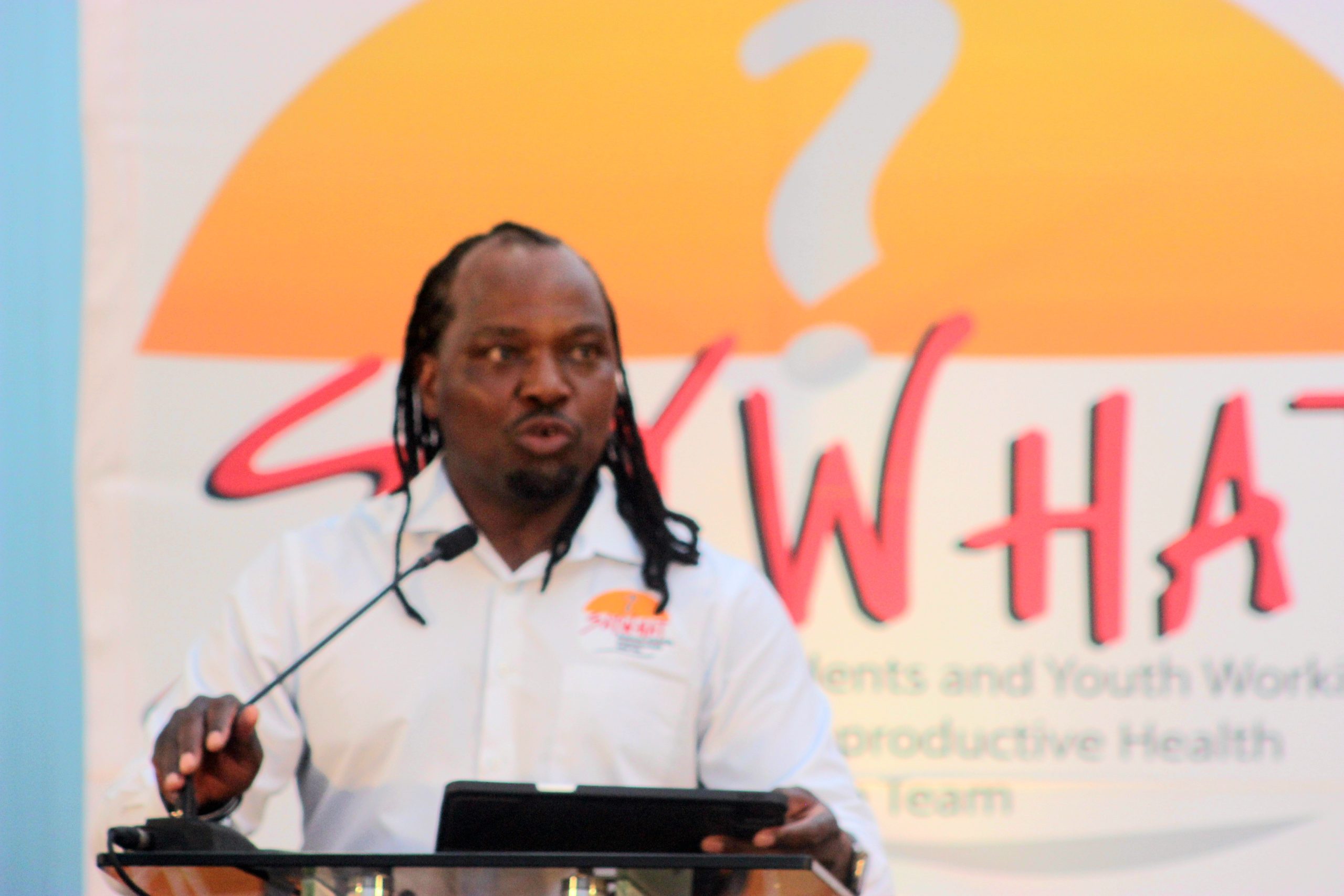
Jimmy Wilford, SAYWHAT Executive Director (pic by Kudakwashe Pembere)
BY MUNYARADZI BLESSING DOMA
Student-led initiatives backed by evidence can influence national agenda, informing institutional reforms and sparking Parliamentary engagement, SAYWHAT Executive Director, Jimmy Wilford has said.
Wilford said this today (Monday 24 November) on Day 1 of the two-day 15th National Students Conference, which was held at the Harare Institute of Technology (HIT).
Running under the theme “A crystal vision for students’ health and education,” the conference which also had a Research Indaba, was attended by several local and Southern African participants.
“Along this journey, the Research Indaba has become a cornerstone of our identity as SAYWHAT.
“A platform where ideas meet evidence, from its conceptualization in 2019 to the inaugural fellowship in 2021 to the first
Indaba that took place in 2022, the launch of our first research book in 2023, the study and the bold regional collaborations.
“Each milestone has strengthened our resolve to make advocacy data-driven and impactful.
“Research has moved has moved from the margins to the very centre of student-led advocacy, it now drives policy briefs, informs institutional reforms, and sparks Parliamentary engagement,” said Wilford.
He added: “in 2023, our book, Empowering Young Voices, Unveiling the Hidden Realities of Young People in Zimbabwe, was more than a publication.
“It became a policy instrument endorsed by fellow development partners and recommended for Parliamentary review, providing that student-led evidence can influence national agenda.”
He added that research matters, as it helps to transform, reiterating that passion without evidence is persuasion without power.
“So you can have passion as young people, but If you don’t have evidence, it’s very difficult for Parliamentarians or policymakers to come up with policies that can impact you in the future.”
Wilford added that the gathering was not just meant to share findings, but to ignite ideas that will shape the next chapter of student-led advocates in Zimbabwe and beyond.
He also gave an account of the 15-year journey of the National Students Conference, which he said had begun as a modest convening targeting students in teachers’ colleges and agricultural colleges only, to a national platform attracting several participants from the country and beyond.
“Today, it stands as a national platform, engaging 50 tertiary institutions in Zimbabwe and beyond, where student-led advocacy influences health, education, policy reforms, and program design that shape the well-being of young people.
“This evolution is not by chance, it reflects a deliberate pursuit of clarity and resilience in the community,” said Wilford.
He added that through the Young Researchers Initiative, they had mentored over 90 fellows across the country who are working on several issues including drug and substance abuse, mental health, disability inclusion, gender-based violence, climate change, and reproductive health and drugs.
“These are not abstract topics, they are lived realities, shaping the futures of the millions of young people.”
Speaking at the same conference, Accountability Lab East and Southern Africa Regional Director, Dr McDonald Lewanika, echoed similar sentiments saying research by young people was essential for effective policymaking.
He however urged them to remain open to criticism.
“As researchers it is important for us to be sceptical, I think the greatest hallmark of a producer of knowledge is scepticism,” he said.
Lewanika added that researchers need to develop thick skins when it comes to feedback, criticism or advice.
He added: “research findings are not facts; they are conclusions based on limited data.
“Different researchers may arrive at different outcomes, but what strengthens the work is its ability to withstand review and interrogation.”
He said youth-led knowledge production ensured policy positions accurately reflected the experiences of the young population.
Findings from the conference will be used in upcoming engagements with Government ministries, Parliament and regional partners as part of efforts to strengthen youth participation in national policy formulation.


