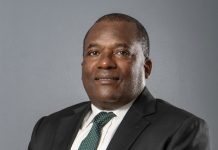
Jeremia Manyika, Advisor: Equality and Rights for all at UNAIDS (pic by Akim Moyo)
BY MUNYARADZI BLESSING DOMA
Communities should be at the centre of the country’s HIV response so that several set targets are met, Jeremia Manyika, Advisor: Equality and Rights for all at UNAIDS has said.
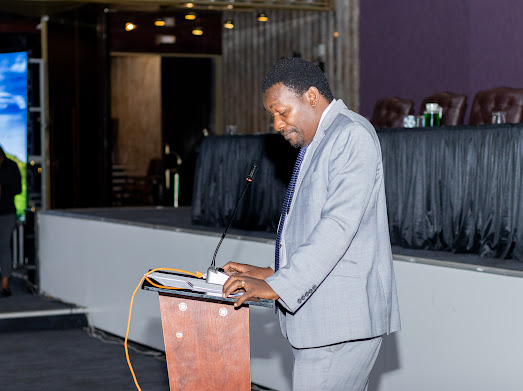
Manyika revealed this at the Zimbabwe National HIV and AIDS Strategic Plan (ZNASP) V (2026-2030) development inception meeting which was held in Harare.
Putting communities at the centre of the HIV response means actively involving and empowering the communities mostly affected by HIV in the design, delivery and evaluation of prevention, treatment and support services.
“As UNAIDS we are saying we need to see communities at the centre of the response.
“We need to finance communities, we need to deliver HIV services through and with communities.
“We cannot achieve without the communities,” said Manyika.
He added that they rally behind supporting the efforts around indigenous financing considering that donor funding has dwindled as the government has to sustain the response through accountability mechanisms.
Manyika further revealed that as UNAIDS, they are impressed with work that the government has done in the HIV response.
“We are impressed by the AIDS levy, which is a domestic resource for the response to HIV.
“This levy has been an anchor in terms of really other funding mechanisms coming in to support the HIV response in Zimbabwe.
“We have faced these disruptions, we are disappointed with the disruptions, but as expected, the funding architecture would always change, given the changing times.
“So we are quite hopeful that the government will be able to continue and to sustain the response, anchoring mostly on the AIDS levy.
“But we also appreciate that it presents an opportunity for blended financing.
“There are still other cooperating partners who are willing to support the government of Zimbabwe, particularly on health as a broader initiative for successful further development going into 2030,” he added.
He further reiterated: “we are hoping and believing that the AIDS levy will present a mechanism for blended financing and it will help National AIDS Council and its partners to sustain the response, particularly with communities.”
Dr Owen Mugurungi, Director of AIDS and TB Programme in the Ministry of Health and Child Care, shared similar sentiments that communities should be at the centre of the country’s HIV response.
“Our next HIV national strategic plan should be people-oriented and people-centered.
“We need to hear the voices of the people so that together we can chart the way forward, in terms of what are the things that we need to do to end AIDS by 2030,” said Dr Mugurungi.
According to the National Libary of Medicine, “the principle of greater involvement of people living with HIV (PLHIV) has and will increasingly ensure equitable access to services and engagement of marginalized groups in the HIV response, and to health services more broadly.
“Their leadership and engagement have contributed directly to improved outcomes in access to HIV treatment, prevention, support and care services around the world.
“Their continued and expanded role is especially important for the future success of HIV responses in sub‐Saharan Africa, where the HIV burden remains the greatest.
“The lessons learned from the leadership and involvement of communities of PLHIV and peers in the HIV response hold value beyond HIV responses.”