
ZimParks Spokesperson, Luckmore Safuli
BY MUNYARADZI BLESSING DOMA
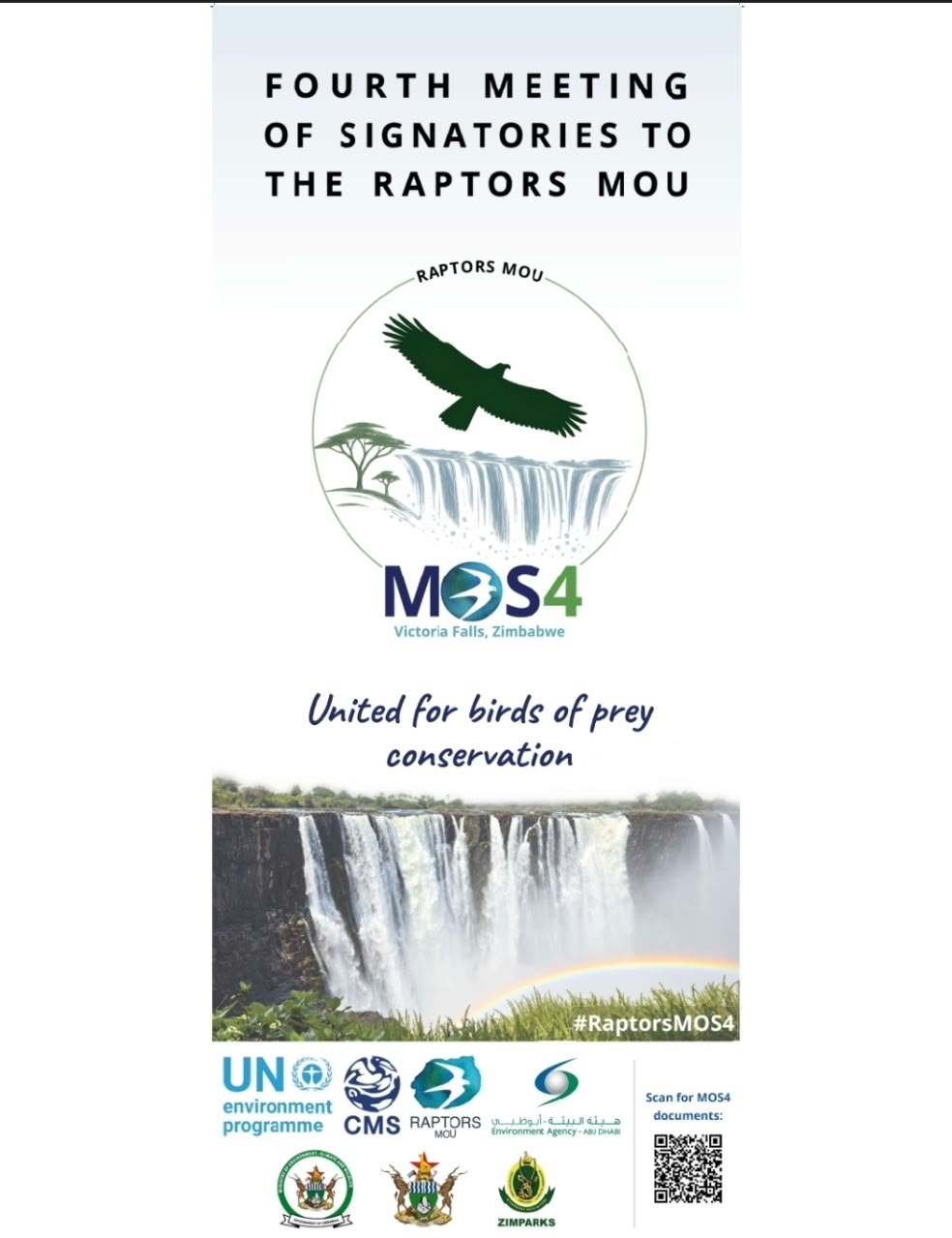
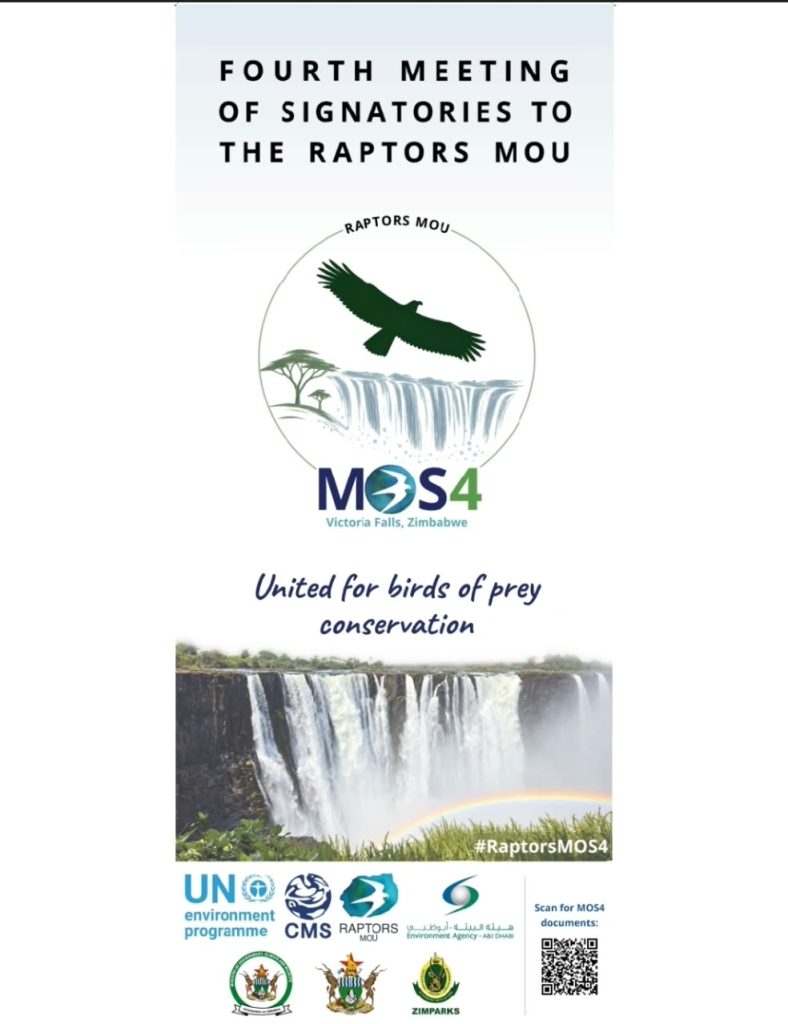
Zimbabwe will host a landmark international meeting on the conservation of migratory birds of prey in Victoria Falls from November 30 to December 2, 2026, bringing together governments, scientists and conservation experts from Africa and Eurasia.
The Fourth Meeting of Signatories to the Memorandum of Understanding on the Conservation of Migratory Birds of Prey in Africa and Eurasia (Raptors MOU MOS4) will be the first of its kind to be held on the African continent.
The meeting is expected to strengthen international cooperation in protecting migratory birds of prey, with more than half of the species covered under the agreement reportedly experiencing population declines.
In a statement, Zimbabwe Parks and Wildlife Management Authority (ZimParks) spokesperson Luckmore Safuli said hosting the meeting demonstrated growing international confidence in Zimbabwe’s conservation leadership.
“Zimbabwe is honoured to host the Fourth Meeting of Signatories to the Raptors MOU, a landmark event that demonstrates growing international confidence in our country’s conservation leadership.
“Hosting MOS4 provides an important platform for Zimbabwe to contribute meaningfully to global efforts aimed at protecting migratory birds of prey and the ecosystems upon which they depend,” he said.
Safuli said the meeting came at a critical time when migratory birds of prey were facing several threats, including poisoning, electrocution and habitat loss.
“Raptors are critical indicators of ecosystem health. The challenges they face, including poisoning, electrocution and habitat loss, require coordinated international solutions.
“MOS4 will provide an opportunity for governments, scientists and conservation practitioners to strengthen partnerships and develop practical actions that deliver measurable conservation outcomes,” he said.
The meeting will review progress made since the Third Meeting of Signatories held in Dubai in 2023 and identify priority actions for the next phase of international cooperation.
Delegates will assess the implementation of species action plans covering the sooty falcon, saker falcon, steppe eagle and vultures in West and Southern Africa.
They will also discuss findings from the Second Conservation Status Assessment Report and strategies to strengthen the protection of internationally important sites along the African-Eurasian migratory flyway.
Other issues expected to come under discussion include proposed amendments to the list of protected species, updates to internationally important raptor sites and the establishment of a Raptor Flight Safety Working Group.
Participants will also consider future priorities for the Technical Advisory Group and possible expansion of the geographical scope of the Raptors MOU.
Safuli said Zimbabwe’s hosting of the meeting followed the country’s accession to the agreement on May 22, 2025, when it became the 66th signatory.
“Zimbabwe’s accession to the Raptors MOU in 2025 reflected our commitment to biodiversity conservation and sustainable natural resource management.
“Hosting MOS4 further reinforces that commitment and positions the country as an active partner in addressing conservation challenges that transcend national borders,” he said.
He added that the decisions reached at the meeting would guide conservation efforts in the coming years.
“The decisions taken at MOS4 will help shape raptor conservation efforts for years to come. ZimParks looks forward to supporting productive discussions that will strengthen international cooperation and secure a better future for migratory birds of prey across Africa and Eurasia,” he said.
The outcomes of the meeting are expected to provide a strategic roadmap for strengthening raptor conservation and accelerating coordinated action across the African-Eurasian region.