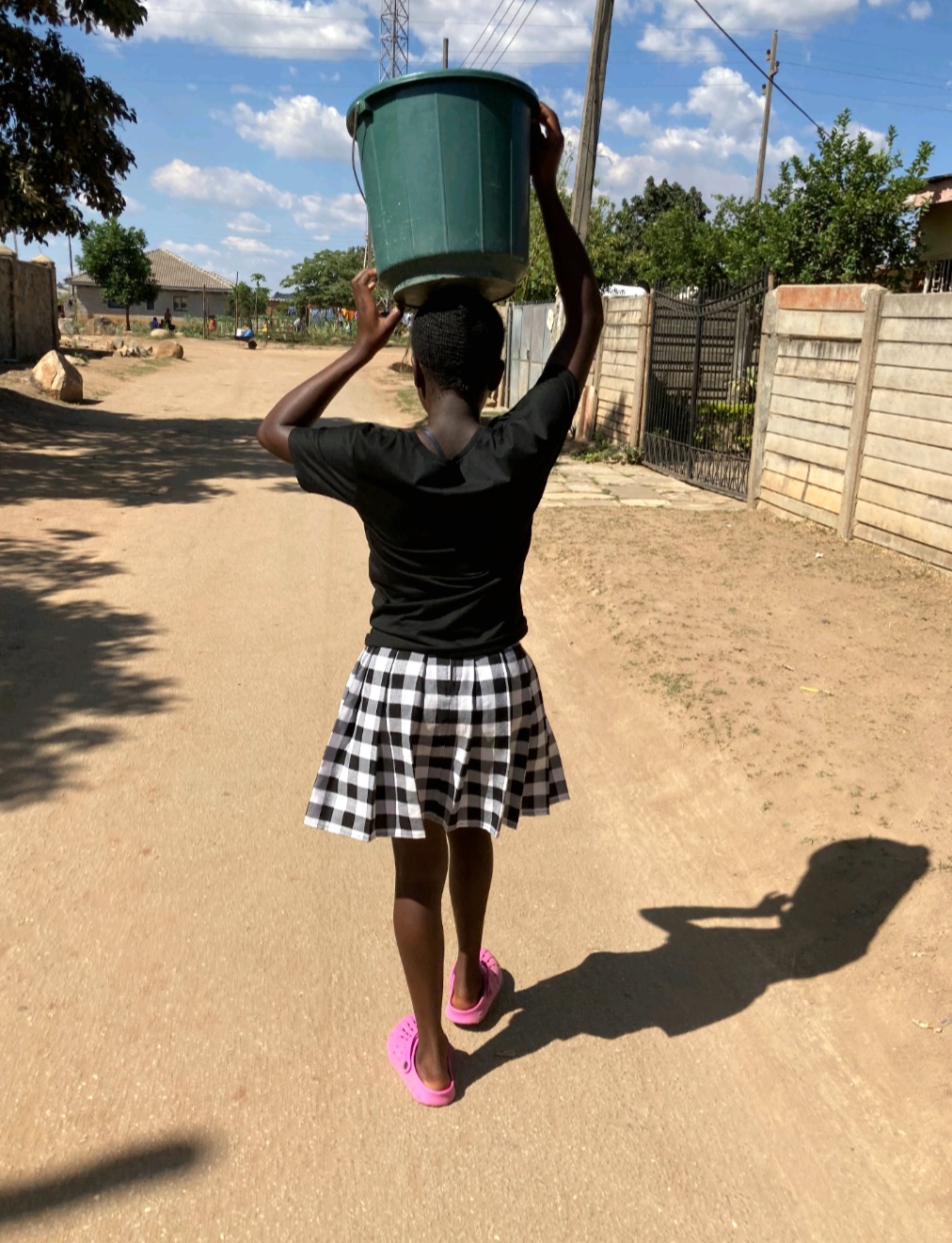
Natasha Nkoma, 14, carries a bucket of water
BY MUNYARADZI BLESSING DOMA
At 4am, while many of her peers are still enjoying the warmth of their blankets, 14-year-old Natasha Nkoma balances a bucket on her head and begins the long walk to the nearest water source.
In her neighbourhood of Tafara, it has been years since water last flowed from the taps.
She tries her luck at a nearby borehole, but finds that it has either dried up or is malfunctioning.
She goes to some nearby wells. These too have dried up and because of the dire situation at her house, she has no choice but to keep searching for the precious liquid.
As she is about to lose hope, Natasha hears voices in the distance and soon discovers that it is women who are also fetching water.
She joins them and luckily for her, they allow her to fill up her bucket first.
And it is a relief for her.
The 20-litre bucket is not enough for Natasha’s family, which comprises her father, sick mother and two brothers.
In most cases, Natasha is accompanied by her mother, but she has not been well for some time.
Natasha makes four trips to the well and she has to do it all in time to prepare for school.
Also not forgetting preparing food for her mum and brothers.
According to Earth Org, climate change, coupled with mismanagement and overconsumption, is causing droughts and water shortages across many parts of the globe.
And aside from the obvious threat to public health, the subsequent effects of water shortages can vary from food insecurity to increased human conflict, highlighting the importance of protecting global water resources and using them sustainably.
According to the United Nations, climate change refers to long-term shifts in temperatures and weather patterns.
And one of the effects of climate change is extreme weather, more frequent and intense storms, droughts and wildfires.
It is added that climate change is directly linked to water shortages, acting as a primary driver of global water scarcity by disrupting the hydrological cycle.
And sadly, in most cases, women and girls are most affected as a result of these water shortages.
It is reported that women and girls are responsible for water collection in 80 percent of households and this crisis disproportionately impacts their health, education and safety, with an estimated 380 million women and girls living in high-risk water-stress areas.
Natasha’s story, and that of others, mirrors the lived realities shared during a recent cross-border media science café, where it was underscored that climate change is not just an environmental crisis, it is a gender and health justice issue.
“Climate change deepens existing gender inequalities because it interacts with social, economic and political power structures that already disadvantage women and girls,” Imali Ngusale, Strategic Lead at African Center for Health, Climate and Gender Justice Alliance (ACHCGA) told journalists during the webinar.
She said women and girls disproportionately bear the brunt of climate shocks.
“Women and girls face heightened risks related to RMNCANH+N, water scarcity, climate induced displacement, and gender-based violence during climate emergencies,” said Ngusale.
Speaking during the same meeting, Teresa Anderson from ActionAid International said lowest income workers, women and communities carry the burden if actions aren’t based on justice.
For Natasha, the climate crisis means missed classes when water queues are long. It means increased household responsibilities when crops fail.
And it also means vulnerability when she must walk long distances alone before sunrise.
The science café further emphasized that climate change amplifies water insecurity, placing disproportionate burdens on women and girls who are traditionally responsible for household water collection. And as water sources shrink, the physical toll increases, alongside risks to safety and schooling.
For Natasha, climate change is not a distant global debate, it is the weight of a water bucket before dawn.
It is the silent sacrifice of education for household survival. And it is the uncertainty of whether the borehole will run dry tomorrow.