

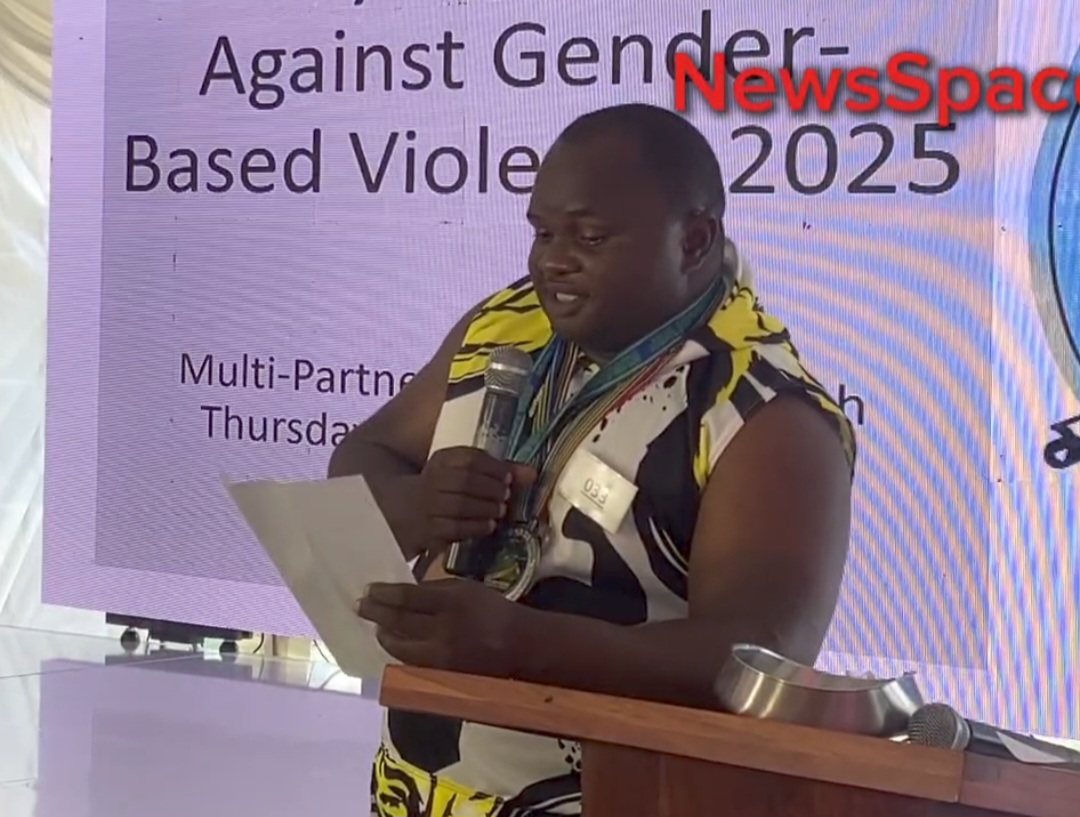
Jonathan Muvingi, Zim Strongest man, Wrestler and anti-GBV Champion
BY MUNYARADZI BLESSING DOMA
Growing up in Bindura, Innocent (name changed to protect his identity) was loved by many because of his amazing football talent.
Many girls were charmed by his skill and as time went by, he met the love of his life and they got married.
As a newly married young man, one day he decided to visit his uncle to get marriage advice but unbeknown to him, this was the worst decision he had made.
While his uncle congratulated him on his marriage, he gave him advice that would change his life.
“I visited my uncle to tell him the good news that I had gotten married.
“My uncle then told me that in order for my marriage to work and for my wife to respect me, I had to beat her up more often.
“Unfortunately I took that advice and, I started beating up my wife,” narrated Innocent.
He added that out of shame for his violent conduct towards his wife, he stopped playing soccer.
Innocent continued with his violent behaviour towards his wife, until he had his Damascus moment one day while walking home.
He saw a group of men gathered and he decided to go and listen to their discussions.
“I went and listened to them and the message was going to be a positive turning point in my life.
“They were speaking about the Population Solutions for Health (PSH) anti-gender based violence campaign, Love Shouldn’t Hurt.
“That message really spoke to me, because of how I was treating my wife,” further narrated Innocent.
He added that from that moment, he made a vow that he was never going to beat up his wife again and he received counselling.
“I got help from PSH and they would always call me, showing me support and I’m happy that I now have a very good relationship with my wife. I’m a changed man.
“I’m now a gender champion, encouraging other men to promote positive masculinity,” added Innocent.
According to UN Women Africa, GBV remains a widespread human rights violation, significantly impacting women and girls across Africa.
And despite legislative efforts, deeply rooted patriarchal norms and unequal power structures continue to perpetuate violence, discrimination and systemic gender inequalities.
It is added that GBV manifests in many forms, including domestic violence, sexual harassment and economic disempowerment, limiting the full participation of women and girls in society.
The UN Women Africa report further adds that a key strategy in combating GBV is the promotion of positive masculinity, which encourages men and boys to embrace healthier, more respectful behaviours, while rejecting harmful norms that fuel violence and inequalities.
It (positive masculinity) emphasizes empathy, accountability and gender equality, enhancing respectful relationships and encouraging men to become allies in advancing gender justice.
According to PSH, the project goal of the #LoveShouldn’tHurt campaign with support from the Swedish Embassy, is to contribute towards reduced GBV against women and girls, including child marriages.
The campaign whose first phase was in 2020, is also accompanied by a secondary call to action message encouraging raising hands to love and not to hurt.
“Campaign theme is premised on the insight that when men perpetrate violence, they do not realise the pain they are inflicting, rather they view it as discipline or even as a sign of love.
“Love Shouldn’t Hurt brings this sentiment to life as a way that doesn’t vilify the perpetrator.
“It reframes their actions, it’s a simple idea that shows what love is, and what it isn’t,” reveals a report from PSH.
It is reported that PSH views positive masculinity as a critical tool for social change.
And key aspects of their approach include challenging harmful norms, whereby PSH encourages men and boys to reject traditional harmful norms that associate manhood with dominance, aggression or control.
According to the UNFPA, in Zimbabwe about 1 in 3 women aged 15-49 has experienced physical violence and about 1 in 4 women has experienced sexual violence since the age of 15.
And in an effort to reduce GBV, UNFPA, works with Ministry of Women Affairs, Gender and Community Development, sister agencies and civil society towards increasing availability and utilization of GBV services by survivors as well as reducing tolerance for GBV in communities.
“The main thrust of the programme is increasing awareness of gender responsive laws and services, the provision of healthcare, psychosocial support and legal aid to survivors of GBV mobilizing men and young people to support gender equality; GBV prevention through community mobilization; and supporting referral and coordination mechanisms at district and community level,” added the report from UNFPA.
The Zimbabwe Republic Police is one of the institutions working to combat GBV through the specialized victim friendly unit.
According to a World Bank report commissioned by the Ministry of Women Affairs, GBV in Zimbabwe is a significant issue, with some reports indicating that approximately 39.4 percent of women have experienced physical violence and 11.6 percent have experienced sexual violence.
And another key finding is that around 40 percent of women aged 15-49 have faced physical and/or sexual violence from an intimate partner.
Another man who is also helping promote PSH’s Love Shouldn’t Hurt campaign messages is Jonathan Muvingi, a wrestler and Zimbabwe’s strongest man.
He revealed that as a wrester and strongman, his aim is to push positive messages of love.
“I know what it is to face a tough opponent in the ring, to push to the limit, and to fight with everything we have.
“Every move requests strength, courage and discipline. But today I’m here to talk about a fight that no one should never ignore.
“A fight that requests even more courage, the fight against gender based violence,” said Muvingi.
He added: “let me be very clear; I do not use my strength to hurt women, and no one should.
“Strength should not be used to hurt women, but to protect them.
“GBV is not just numbers in a report, it’s reality that affects families, communities and nations.
“It happens to women, girls and sometimes men, in our homes, workplace, schools and streets. The scars may not be visible, but they are deep and lasting.
“Strength is not measured by muscles alone but by the courage to protect, the courage to speak and the courage stand against gender based violence.
“True strength is defending those who cannot defend themselves, supporting survivors, and speaking out against every form of violence,” said Muvingi.
It is hoped that with more men like Innocent and Muvingi, this GBV scourge can be eliminated once and for all.
Because it is such men, who can help build a society where women and girls can reach their full potential without hindrance.


