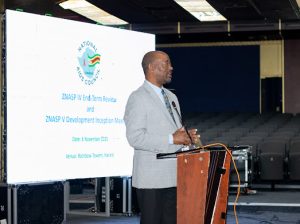
Dr Bernard Madzima, National AIDS Council CEO (pic by Akim Moyo)
BY MUNYARADZI BLESSING DOMA
The Zimbabwe National HIV and AIDS Strategic Plan (ZNASP) V (2026-2030) should achieve all set targets despite funding challenges which the country is facing in its HIV response, Chief Executive Officer of the National AIDS Council (NAC), Dr Bernard Madzima has said.
Dr Madzima said targets such as ending AIDS as a public health threat by 2030, reducing new HIV infections and having zero HIV stigma should be met.
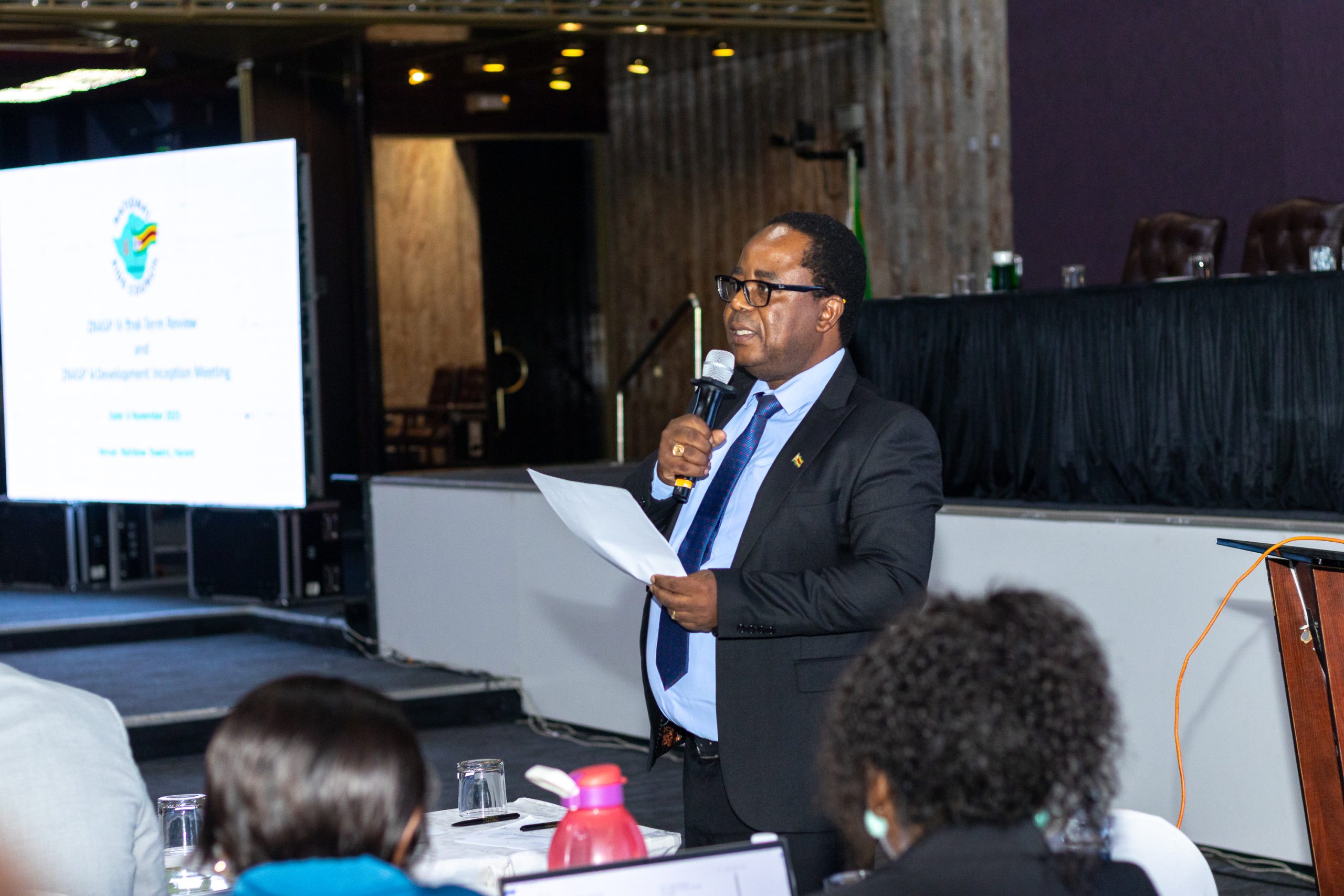
He said this at the ZNASP V development inception meeting in Harare as it, (meeting) was also the end-term evaluation of ZNASP IV (2021-2025).
Dr Madzima said ZNASP IV had its fair share of successes and the challenges faced during its implementation but it was good to note that period, Zimbabwe managed to achieve the 2025 UNAIDS of 95-95- 95.
The target means that 95 percent of people who are HIV positive should know their status and of those who are HIV positive 95 percent of them should be on effective antiretroviral treatment and of those who are on effective treatment, 95 percent of them should have their viral load suppressed.
“We are now going to the next phase of developing the 2026 to 2030 strategy.
“What we are calling this ZNASP V is we really aim to meet the 2030 targets of eliminating new infections by 2030 and of having zero stigma for those who are HIV positive by 2030.
“And zero deaths due to HIV and AIDS by 2030,” said Dr Madzima.
He added that many stakeholders had attended the meeting to come and discuss the strategies which the country has to adopt so that targets are met.
“We have to meet these targets during this period even though we are faced with a funding challenges.
“You are aware that the a lot of the our traditional donors some of them have pulled out, some of them have reduced the funding, so we are really looking at a sustainable way of making sure that we achieve whatever interventions which we have put into the strategy.
“So this calls upon the country to look at domestic resources to fund the HIV program, so the stakeholders were gathered here from all over from the sector from the government ministries, from the private sector, from the civic society and from our partners.
“They are here to shape the way forward, prioritize and reprioritize and make sure that we come up with low-cost high-impact so this is basically the meeting which we are undertaking today.”
He added that the ZNASP V (2026-2030) is going to focus on high priority interventions because of the funding challenge, as the country will look at domestic resources to fund programs.
Dr Madzima added that there was need also to ensure that children of mothers who are born from HIV-positive do not contract HIV.
“We want to ensure that we have a robust prevention of mother-to-child transmission program.
“We need to bring up to speed the child HIV program and make sure that we eliminate transmission of mother-to-child infections.”
Dr Owen Mugurungi, Director of AIDS and TB Programme in the Ministry of Health and Child Care (pic by Akim Moyo)
Dr Owen Mugurungi, Director of AIDS and TB Programme in the Ministry of Health and Child Care, speaking at the same meeting said several issues had to be addressed as the country maps its new HIV strategic plan.
And amongst those issues, Dr Mugurungi said was on how to deal with the challenge of dwindling external support.
“We need to make sure that we have adequate and enough resources mobilized domestically, internally to fight HIV and AIDS and provide an integrated health management system that will deal with the challenges that we face on a day-to-day basis.
“Not just HIV and AIDS, but beyond HIV and AIDS, TB, malaria, cancers, non-communicable diseases.
“This is the theme and this is where we want to go.”
Dr Mugurungi said while the United States government will continue supporting the country’s efforts to fight HIV and AIDS, there was going to be a 40 percent reduction in the support, hence need for more domestic financing.
“We then need to sit down with them and prioritize the issues or the things that are important and what we need to use that money for.
“I do agree that issues around commodities and supplies, because in most cases they involve foreign currency and that would be a priority for this country, because we probably won’t be able to raise enough foreign currency to buy all the medicines and laboratory things that we require.
“We think we can prioritize the resources there.
“We also, as I said, want to make sure that there is frontline support, so the support is going to the service delivery level and the frontline will be critical.
“So the next steps for me would be, of course, to locate the contents of the MOU and discuss and agree on our targets and how we’re going to implement that.
“But I’m sure the things are coming, once they get here, we will be able to tell them what it is,” said Dr Mugurungi.