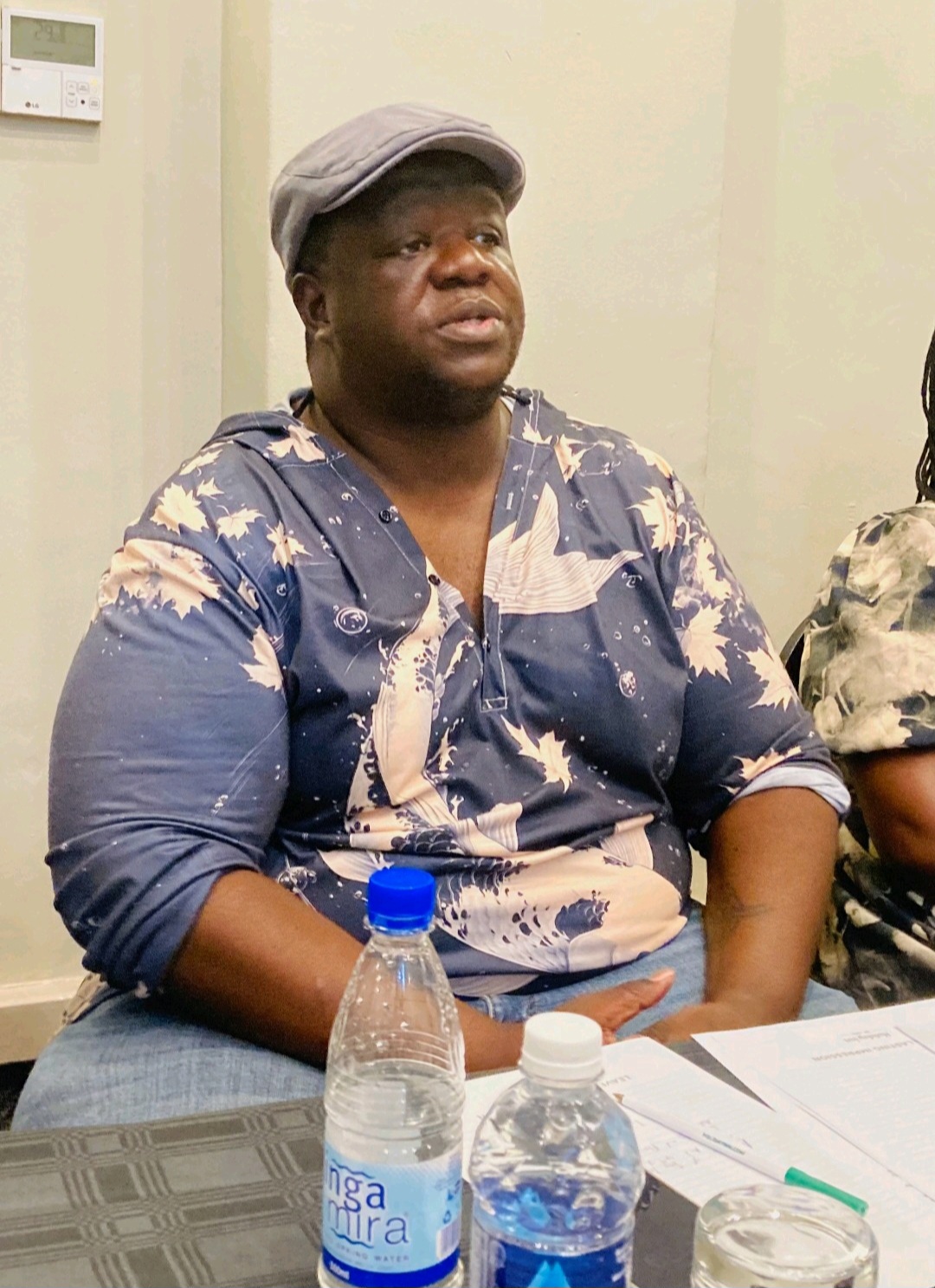
Tinashe Mundawarara, HLPC Board Chair
BY MUNYARADZI BLESSING DOMA
The Health Law and Policy Consortium (HLPC) through its partnership with the Intersex Community of Zimbabwe (ICoZ), has mounted a High Court challenge, seeking to address the systemic legal and administration failures that have perpetuated exclusion, discrimination, and harm against intersex persons in the country.
The case filed on September 19, 2025 at the High Court of Harare, has seven applicants which include intersex minors and adults, as well as HLPC and ICoZ.
Respondents in the matter are the Registrar-General of Zimbabwe, the Minister of Home Affairs and Cultural Heritage, Minister of Health and Child Care, Minister of Justice, Legal and Parliamentary Affairs and the Attorney-General of Zimbabwe.
According to the World Health Organisation (WHO), “intersex people are born with physical, hormonal, or genetic characteristics that do not conform to the typical binary biological definitions of male or female.
“Intersex variations are natural biological variations and not related to a person’s sexual orientation or gender identity.”
Speaking at a media forum on Monday, Tinashe Mundawarara, Board Chair for HLPC in parts of their founding affidavit, said the lack of legal safeguards to regulate or prohibit non-essential medical interventions on intersex children also violates Section 52 of the Constitution, which guarantees the right to bodily and psychological integrity.
“Intersex minors are subjected to irreversible and non-consensual procedures to conform to binary sex categories, causing lifelong harm and undermining their dignity.
“The failure of the Respondents to recognise intersex children as a distinct group and to provide mechanisms for issuing accurate identity of the child documents violates the best principle enshrined in Section 81 of the Constitution.
“Section 81 (1) (c) interests specifically guarantees every child the right to a birth certificate. By failing to ensure that intersex children are issued birth certificates that reflect their unique biological reality, the Respondents deny them a fundamental right and create barriers to accessing essential services such as healthcare and education. “This omission undermines the best interests of intersex children, which should be paramount in all matters concerning them.
“The failure of the Respondents to recognise intersex persons as a distinct group and to provide mechanisms for issuing accurate identity documents violates Section 35 of the Constitution.
“This section guarantees every Zimbabwean citizen the right to accurate identity documents, including birth certificates, national IDs, and passports,” said Mundawarara.
It was added that “the current binary categorisation of male and female excludes intersex persons, perpetuating systemic marginalisation and discrimination.
“The current gaps in the law and administrative failures by the Respondents constitute ongoing violations of intersex persons’ constitutional rights, including their rights to equality, non-discrimination, and dignity as enshrined in Sections 56 and 51 of the Constitution.”
The founding affidavit further revealed that HLPC seeks that the High Court intervenes to compel the Respondents to establish a third sex marker option on identity documents, develop procedures for amending sex markers, and prohibit non-essential medical interventions on intersex children.
“The 6th Applicant (HLPC) believes that failure to act on these issues leaves intersex persons in Zimbabwe vulnerable to further systemic exclusion, discrimination, and harm, in violation of their constitutional rights.
“And in conclusion, this application is brought in the public interest and in furtherance of HLPC’s mandate to promote equity, human rights, and access to Justice for marginalised groups, including intersex persons,” added Mundawarara.
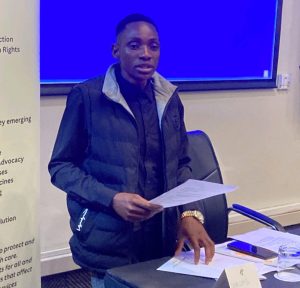
Kuda, ICoZ Director
Kuda, ICoZ Director said for decades, intersex individuals in Zimbabwe have lived in silence, fear and invisibility.
“Intersex people are born with sex characteristics such as chromosomes, hormones, or anatomy that do not fit typical definitions of male or female.
“However, due to deep-seated social stigma, taboos, and widespread ignorance, intersex individuals have experienced; non-consensual medical interventions, often performed during infancy or early childhood.
“Legal invisibility, due to lack of appropriate recognition in birth certificates and identity documents.
“Discrimination and exclusion, particularly in education, employment, and healthcare, violence and rejection, frequently from their own families or communities,” said Kuda.
Kuda added that as a result, many intersex persons have been forced to live in silence, with their experiences ignored in legal, medical, and policy spaces.
It was also revealed that over the years, ICoZ has, “conducted national consultations to document and gather evidence of human violations.
“Engaged with regional and international human rights mechanisms to amplify intersex voices.
“Advocated for bodily autonomy, legal identity recognition, and an end to me unnecessary surgeries on intersex infants.”
Kuda added that their participation in this court case is not coincidental, as it represents the culmination of years of resistance, resilience, and collective advocacy.
It was reiterated that the court case is historic because, “for the first time, the Zimbabwean legal system is being challenged to recognize the rights of intersex individuals as equal human beings under the Constitution.
“The case calls on the courts to: affirm the bodily integrity and autonomy of intersex people, ensure state accountability for past and ongoing medical violations.
“Mandate legal and policy reforms to protect intersex rights going forward.”
It was further added that, “this case is not just about one individual-it is about an entire community that has been made invisible for too long. It is about ensuring that no intersex child will endure what so many others have suffered in silence.”