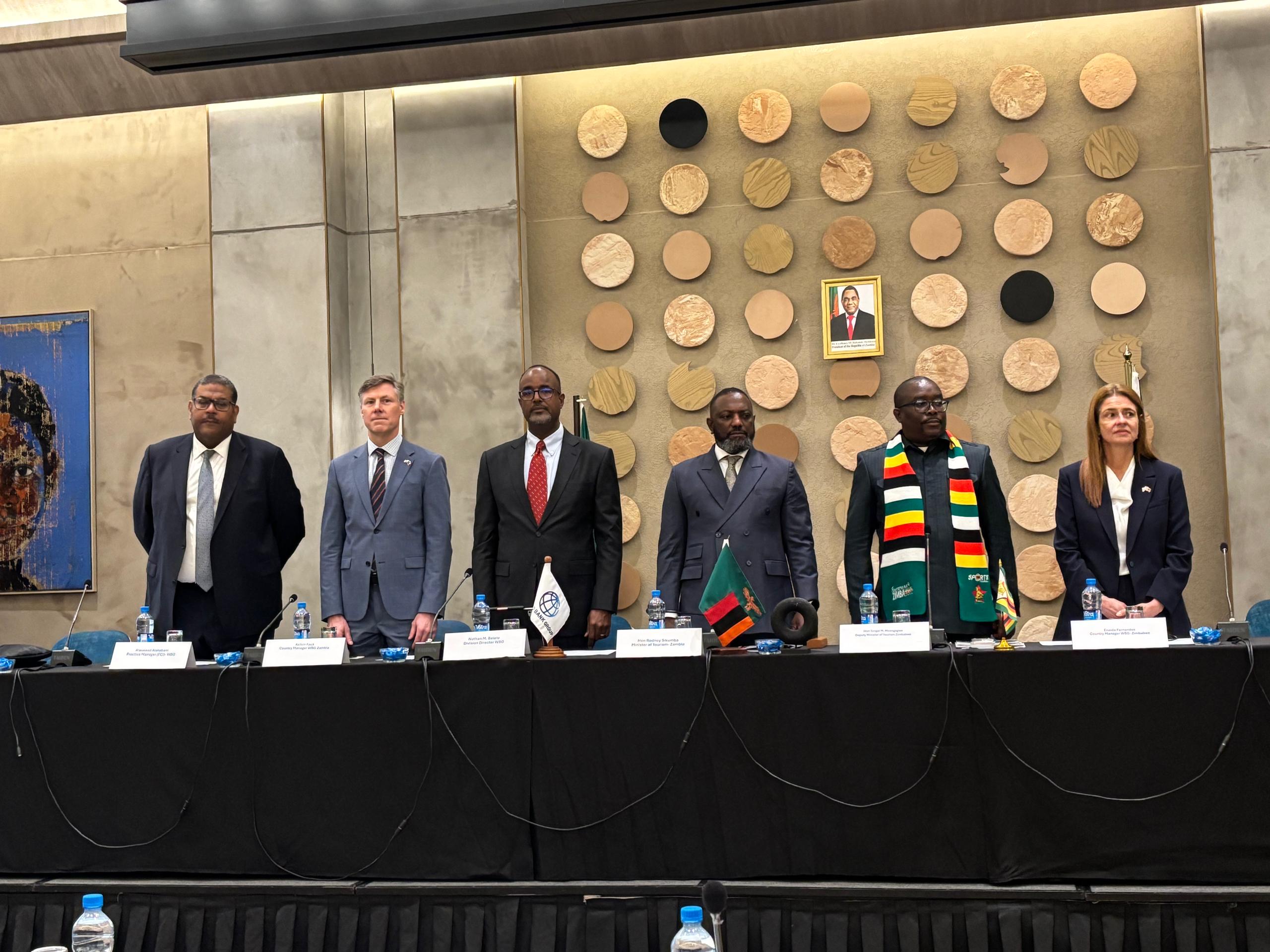

Deputy Minister of Tourism and Hospitality Industry, Tongai Mnangagwa
BY MUNYARADZI BLESSING DOMA
Zimbabwe and Zambia should work together to create a seamless and efficient border crossing, which will enhance the countries’ tourism offering and promote sustainable economic development.
President Emmerson Mnangagwa and his Zambian counterpart Hakainde Hichilema, have articulated a clear and united vision: that the people of the two nations should move freely and easily across the shared border.
The call was made by Deputy Minister of Tourism and Hospitality Industry, Tongai Mnangagwa at the High-Level Dialogue on Tourism and Trade Cross Border Management in Livingstone, Zambia on Wednesday (November 19, 2025).
“For we are one people, separated only by the river,” said Deputy Minister Mnangagwa.
He added that both leaders recognise that Victoria Falls is a God-given asset entrusted to Zambia and Zimbabwe—our shared heritage, our pride, and a sacred blessing we must guard and nurture jealously.
“Every visitor drawn to the Falls ultimately brings value and revenue to our two nations. As we gather here today, we do so in the spirit of cooperation and collaboration, building on the strong foundation laid by our countries’ fore fathers who forged a strong brotherly bond during the torturous liberation struggle for our sovereignty and independence,” said Deputy Minister Mnangagwa.
He added that the dialogue was coming hot on the heels of a fruitful Bi-National Commission where areas of mutual benefit and cooperation were agreed upon.
“Guided by the vision of our Presidents, we as Ministries of Tourism remain committed to ensuring seamless, hassle-free movement for visitors. “Victoria Falls and Livingstone—two vibrant tourism hubs at the heart of the KAZA region—thrive when our collaboration is strong, when our borders are easy to cross, and when our people work together in harmony.
“Today, we sit here with the key arms of Government from both Zambia and Zimbabwe—those entrusted with border facilitation, security, immigration, customs, transport, and tourism.
“We are here to deliberate on how best to implement the vision of our two Presidents.
“Their call is clear: to create a seamless border experience for both tourists and traders.
“Movement of people, goods, and services across our shared frontier must be smooth, efficient, and welcoming,” said Deputy Minister Mnangagwa.
He reiterated that the task was to ensure that the vision is put into practical action.
And he further called for strengthening of the cooperation, harmonisation of the processes and build a border system.
Deputy Minister Mnangagwa also expressed gratitude to the World Bank for funding and facilitating the cause.
“The assessments completed in 2024 have provided valuable insights into the challenges we face in maximizing the benefits of this tourism and trade corridor.
“Issues related to border management, customs, immigration, infrastructure, environment, and tourism offerings have been highlighted.
“Today, we gather to address these challenges collectively and chart a path forward.
“It is my fervent hope that, from the deliberations today, we will emerge with a clear action plan, complete with timeframes and mechanisms for monitoring and evaluation, so that we can track progress and ensure this vision becomes a reality for our nations, our people, and the generations to come.”
Zambian Minister of Tourism Rodney Sikumba, said the meeting was advancing a new chapter in the countries’ partnership as two sister nations, bound by geography, history and a shared vision for deeper integration, sustainable development and mutual prosperity.
“This high-level ministerial meeting on cross-border tourism and trade facilitation is a strategic undertaking that builds directly on the commitments made during the inaugural bi-national commission held in Harare on 14 November 2025 and other bilateral engagements by the two countries.
“At that commission, our Presidents, reaffirmed their commitment to strengthening cooperation in trade, transport, energy and infrastructure.
“A key outcome was the decision to extend operating hours at the Victoria Falls Border Post to 24 hours, a practical step to ease congestion, improve accessibility and boost tourism and trade. “Today’s meeting is therefore tasked with translating that strategic vision into concrete measures that will transform the Livingstone–Victoria falls border into a modern, efficient and people-centred gateway,” said Minister Sikumba.
Minister Sikumba said the objective was clear; “to create a facilitation point rather than a bottleneck, a model of smart, sustainable and environmentally responsible border management.
“This vision is anchored in our existing cooperation frameworks, including the memorandum of understanding on tourism, the joint tourism technical committee and our successful experience at the Chirundu One Stop Border Post.
“This initiative also aligns with our shared commitments under the Kavango-Zambezi Transfrontier Conservation Area, the African Continental Free Trade Area, the COMESA simplified trade regime and our obligations under the UNESCO World Heritage Convention.”
He added that the success of this transformative agenda will depend on unity of purpose and the strength of the collaboration.
“It will require seamless coordination among our ministries responsible for tourism, trade, transport, home affairs, finance, and the environment, as well as strong participation from the private sector, communities, and our development partners,” he added.
Speaking at the same meeting, World Bank Division Director-Malawi, Tanzania, Zambia and Zimbabwe, Nathan Belete, said they (World Bank Group) commended the leadership in advancing these tourism initiatives.
Belete said the tourism initiatives “are extremely vital for unlocking the full potential of the countries’ shared economies in accelerating inclusive growth and creating more and better jobs that are essential to keep pace with the working-age population of our region.”
He added that the World Bank Group is on a mission to help countries turn growth into local jobs, unlocking opportunities and hope for people no matter where they live.
“We are putting job creation at the heart of everything we do because jobs are the surest path out of poverty.
“Notably, women and youth are at the heart of the tourism sector, holding a significant share of tourism employment.
“The World Travel and Tourism Council estimates that about one-third of direct tourism jobs are held by women, and roughly one-fifth by youth aged 15 to 24.
“This highlights the sector’s immense potential for inclusive job creation, particularly in hospitality, guiding, and crafts—empowering communities and fostering equitable development,” said Belete.
He added that the tourism sector stands as a beacon of resilience and opportunity adding that since COVID-19, it has rebounded strongly in both countries.
“International arrivals reaching about 1.6 million in Zimbabwe and 2.2 million in Zambia in 2024.
“This impressive recovery speaks to the enduring appeal of the countries as tourist destinations, while also underscoring the importance of sustained investment to realize the ambitious national development strategies of both countries. “Trade between our two nations has also seen significant progress, totaling US$460 million in 2024.
“The recent signing of two memorandums of understanding in September 2025 marked an important new chapter in our partnership.
“The establishment of a bilateral commission and the focus on private sector development, including the launch of the Zambia-Zimbabwe Oil and Gas Pipeline (ZIZOP) project, will enhance energy security and create new avenues for collaboration and prosperity,” added Belete.