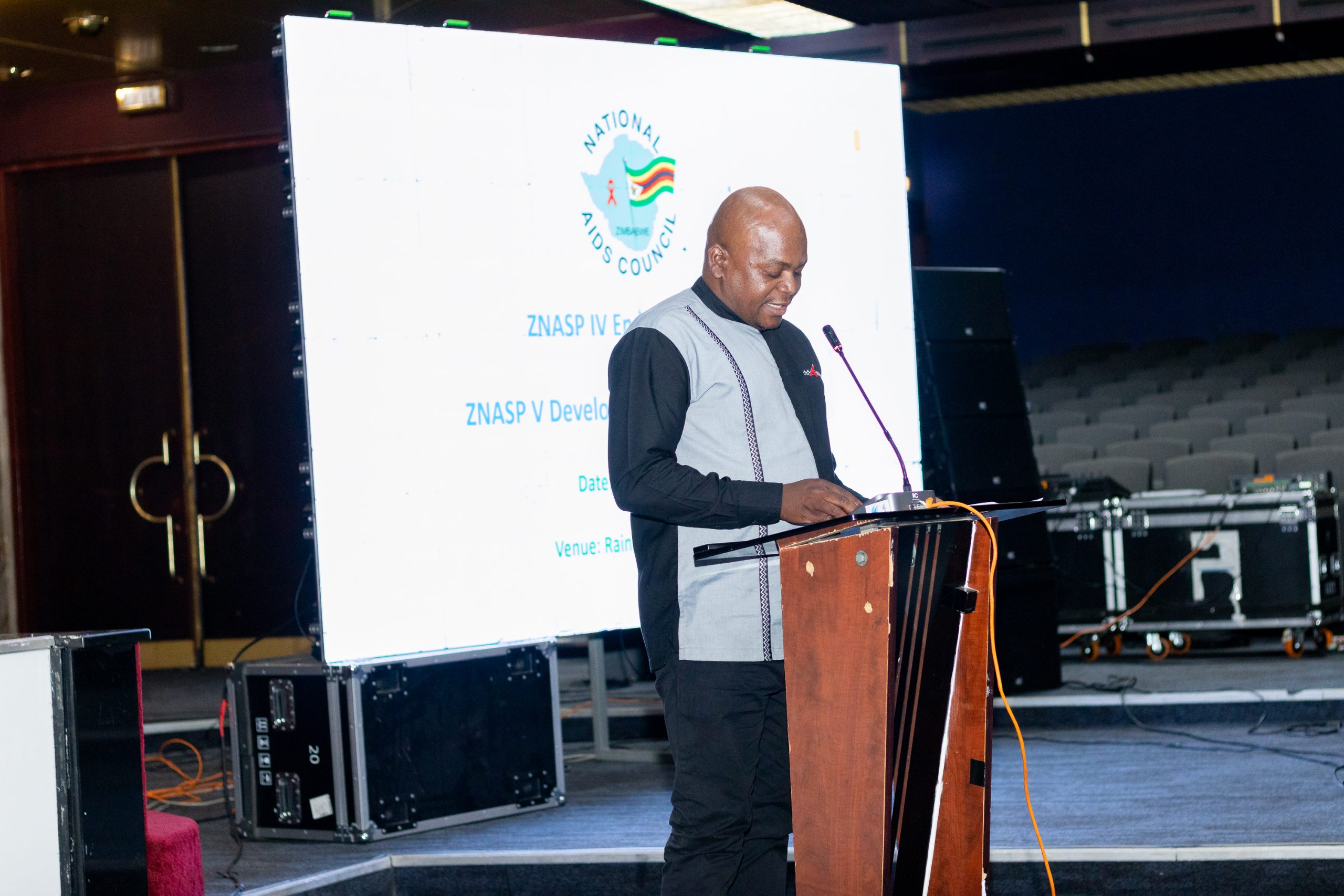

Reason Machengere, the Executive Director of the Zimbabwe Business Council on Wellness (pic by Akim Moyo)
BY MUNYARADZI BLESSING DOMA
The Zimbabwe National HIV and AIDS Strategic Plan (ZNASP) V (2026-2030) should enhance coordination of the private sector so as to improve the country’s response and reach UNAIDS 2030 target.
The call was made by Reason Machengere, the Executive Director of the Zimbabwe Business Council on Wellness, at the ZNASP V development inception meeting in Harare.
The meeting was also the end-term evaluation of ZNASP IV (2021-2025), which shapes the country HIV and AIDS response.
UNAIDS 2030 target is to end the AIDS epidemic as a public health threat and the private sector is important in this endevour through funding, developing workplace programmes, leveraging expertise and forming public-private partnerships.
“There are four or five focus areas that we want to see in the upcoming ZNASP V.
“The first one being coordination within private sector.
“The previous ZNASP spoke about private sector coordination and we believe that it is important for coordination by private sector to be enhanced,” said Machengere.
According to BioMed Central, “the private sector is a major provider of health services in many countries but is a relatively untapped resource for reducing congestion in high volume public HIV facilities and increasing access to HIV services, particularly for clients who already use the private sector as their first point of care.
“Private banks, corporates, and clients themselves can also be a resource for generating additional financing for HIV and reducing reliance on donor funding.”
UNAIDS reports that, “being part of an effective response to AIDS generates goodwill and demonstrates a company’s commitment to good corporate citizenship and to the well-being of its employees, customers and communities.”
Machengere also applauded the National AIDS Council (NAC) which has supported the Zimbabwe Private Sector HIV and Wellness (ZIPSHAWA), which is an initiative of several business associations.
He said the purpose of ZIPSHAWA is to work through into the national response.
“One of the weaknesses that we continue to have is the issue of data collection, it is very important.
“We are also going to increase the national response,” said Machengere.
Machengere added that they will also be working with the State on key areas they want to participate and focus on.
And he said the private sector should also work on health financing.
“As we have said, a lot of taxes are being introduced, but we are also calling for business friendly policies and also domestic financing frameworks, and also inclusion of private sector from coming up with various services, collection, efficient utilization of resources, and so forth.
“So, private sector should partner the Ministry of Health, National AIDS Council, in ensuring that really more resources come from private sector, but the partnership should not end at the collection point.
“It is also in all the way to how those resources then get utilized by our health response system.
“So, this is one of the key areas that we will be advocating for.
“It should extend to how resources are utilised within our health response system,” he said.
Machengere added that with the AIDS Levy, it is testament that “it is possible to collect, ring-fence, and use resources effectively.
“Once the money is collected, it goes directly to NAC, where it is audited periodically, and there have been no major problems.
“We believe this blueprint can guide the administration of other health taxes currently being introduced.”